







A Different Kind of Challenge
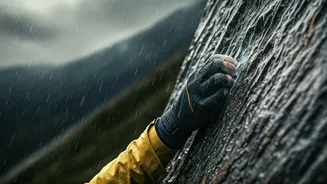
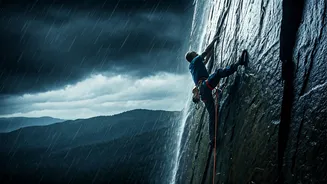
The common wisdom is clear: water and rock climbing don't mix. Rain reduces friction, turns reliable handholds into slippery unknowns, and makes a routine ascent feel treacherous. But this is precisely where the appeal lies for those with the right experience.
Climbing in the wet isn't about recklessness; it's about shifting from a purely physical test to a deeply cerebral one. Every move must be more deliberate, every foot placement more precise. The usual reliance on pure friction gives way to a hunt for positive edges, cracks, and incuts that can be trusted. The challenge becomes less about raw power and more about finesse, balance, and unwavering focus. The rock face, a familiar puzzle in the sun, becomes an entirely new problem to solve in the rain.
Not All Rock Is Created Equal
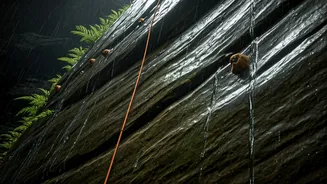
Before even considering a wet climb, geology becomes paramount. Different rock types react to moisture in dramatically different ways. Porous rock, especially certain types of sandstone, can become dangerously soft and fragile when saturated. Holds can break off, and protective gear placements can become unreliable. For this reason, many sandstone crags in places like the UK have a strict no-climbing-when-wet ethic to preserve the routes. In contrast, non-porous rock like granite or gabbro often fares much better. While the surface becomes slick, the integrity of the rock itself remains unchanged. These types of rock tend to dry faster and offer more textured features that can still provide grip. Experienced climbers know to choose their venue wisely, often opting for steep, overhanging routes that are naturally sheltered from the rain or quick-drying mountain crags exposed to the wind.
Technique, Trust, and Patience
Climbing on wet rock demands a complete recalibration of technique. The dynamic, powerful moves that work on dry rock become a recipe for a slip. Instead, the style becomes slow, static, and controlled. Climbers learn to rely more on their skeleton than their muscles, keeping their centre of gravity low and directly over their feet. Footwork becomes an art form; smearing with the sole of the shoe is out, and precise edging is in. Every placement is tested before being fully weighted. Trust also extends to your gear, but with an added layer of scrutiny. Wet ropes are heavier and handle differently, and certain types of friction-based belay devices can be less effective. It’s a game of patience, where progress is measured in inches, not feet, and success is defined by staying calm under pressure.
The Intense Mental Game
Ultimately, the “bigger thrill” comes from the heightened mental state required. When physical margins for error shrink, mental acuity has to expand. The focus needed to assess a slippery hold or execute a delicate sequence shuts out all other distractions. There's no room for a wandering mind; there is only the rock, the rain, and the next move. This intense concentration can lead to a profound state of flow, a feeling of being completely immersed in the moment. The satisfaction of successfully navigating a pitch that would seem impossible to a fair-weather climber is immense. It’s a powerful affirmation of skill, judgment, and mental fortitude that goes far beyond the physical accomplishment of reaching the top.
A Thrill Reserved for the Experienced
It cannot be overstated: this is not a realm for beginners. The risks associated with wet-weather climbing are significant and multifaceted. Beyond the obvious danger of slipping and falling, there’s the increased risk of hypothermia as wet clothes and wind sap body heat. Gear can be harder to place securely in wet cracks, and rescue becomes far more complicated in poor conditions. Climbing in the rain is an advanced skill, built upon a solid foundation of dry-weather experience, excellent ropework, and a deep understanding of risk management. It’s a challenge to be undertaken deliberately and with preparation, not on a whim. The thrill is born from mastering the risks, not from ignoring them.