



A Junkyard Above Our Heads
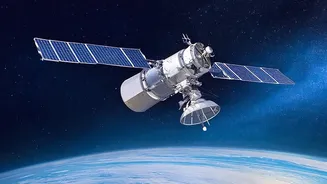
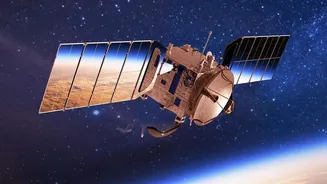
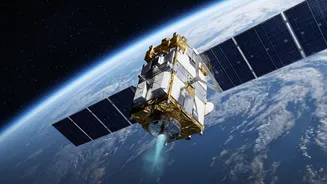
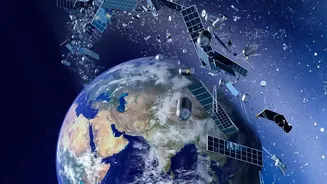
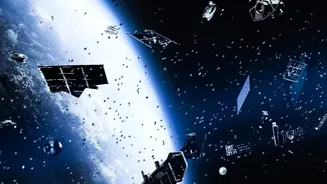
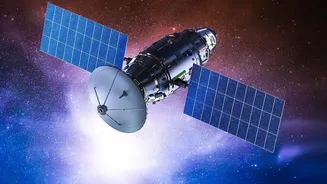
Imagine a highway with millions of stray nuts, bolts, and inactive cars moving at over 28,000 kilometres per hour. That’s the reality of Low Earth Orbit (LEO), the region of space where most satellites, including India's Earth-observation fleet, operate.
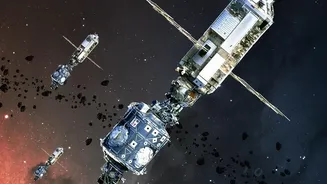
Experts estimate there are over a million objects larger than a centimetre circling our planet. These pieces of 'space junk'—remnants of old rockets and defunct satellites—pose a catastrophic threat. A collision with even a small fragment can cripple or destroy a multi-crore satellite. The problem is getting worse. In a recent 18-month period, the Indian Space Research Organisation (ISRO) had to perform 29 collision avoidance manoeuvres to safeguard its assets, a number that is rapidly increasing. This highlights the urgent need for a more proactive and efficient way to protect our space infrastructure.
India's Robotic Bodyguards
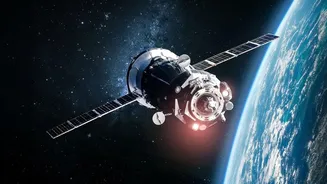
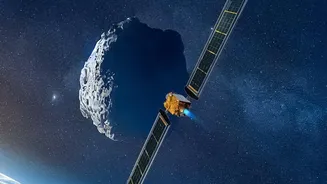
Enter the new solution: a fusion of artificial intelligence and advanced propulsion. Instead of relying solely on ground control to spot a threat and then manually fire a satellite's thrusters, this new system gives the satellite a mind of its own. Indian space-tech companies, in collaboration with ISRO, are developing AI platforms and sophisticated new thrusters that work together as an autonomous defence mechanism. These are not just any thrusters; some are highly efficient Hall-effect thrusters, a type of electric propulsion that uses less fuel for manoeuvres, extending a satellite's operational life. Bengaluru-based startup Bellatrix Aerospace, for instance, has been a pioneer in developing these next-generation propulsion systems in India. The AI acts as the brain, while the thrusters provide the muscle.
How AI Takes the Wheel
The process is remarkably intelligent. The AI-powered system constantly sifts through vast amounts of data on orbital debris, predicting potential collision paths days in advance. When the AI models predict a high-risk encounter, it doesn't just send an alert; it takes action. The system can autonomously calculate the precise burn needed from its thrusters to gently nudge the satellite into a safer orbit, all without human intervention. This is crucial because communication blackouts or delays in decision-making on the ground could mean the difference between a near-miss and a disaster. This shift from a 'human-in-the-loop' system to a fully automated one is a significant leap forward, making collision avoidance faster, more reliable, and more efficient.
Why It Matters for India
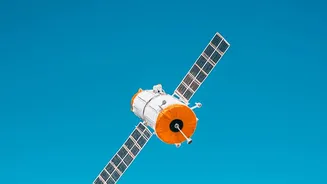
India operates one of the world's largest constellations of civilian Earth-observation satellites. These spacecraft are the unsung heroes of our daily lives, providing critical data for everything from weather forecasting and cyclone warnings to urban planning, agriculture monitoring, and national security. Protecting this fleet isn't just a technical challenge; it's a matter of national importance. By developing and deploying autonomous collision avoidance systems, India is not only safeguarding its invaluable assets but also cementing its position as a responsible and leading space power. This capability is central to ISRO's goal of achieving debris-free space missions by 2030, ensuring that India's expansion into space is sustainable.