

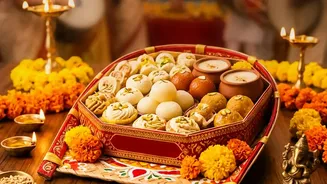
The Undisputed King: Rosogolla
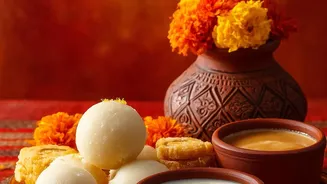
Arguably the most famous Bengali sweet, the Rosogolla is a symbol of pure indulgence. These soft, spongy balls are made from fresh cottage cheese (chhena), carefully kneaded and boiled in a light sugar syrup. During Durga Puja, Rosogolla is a staple,
often served as part of the sacred 'bhog' offered to the goddess. Its pristine white colour and delicate sweetness make it a symbol of purity, fitting for a divine offering. Beyond the rituals, it's the go-to sweet for festive gifting and a guaranteed crowd-pleaser for guests visiting from pandal to pandal.
The Artistic Delight: Sandesh
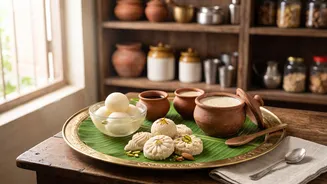
If Rosogolla is the king, Sandesh is the versatile artist of the Bengali sweet world. Made from the same chhena base, it is much lighter on syrup and relies on the subtle flavours of its core ingredients. Artisans mould Sandesh into various beautiful shapes, from simple circles to intricate flowers and conch shells. During Puja, you will find several varieties: Nolen Gurer Sandesh, made with seasonal date palm jaggery, Kesar Sandesh infused with saffron, and Aam Sandesh with mango. Its delicate texture and nuanced sweetness make it a sophisticated choice, often exchanged between families as a sign of respect and affection.
The Creamy Indulgence: Mishti Doi
Mishti Doi is not just sweetened yogurt; it is a culinary masterpiece. This dessert is made by fermenting sweetened, caramelised milk, which gives it a distinct reddish-brown hue and a dense, creamy texture that is almost like a cheesecake. Traditionally served in earthen pots, which help absorb excess water and thicken the curd, Mishti Doi is a comforting and cooling treat after a day of pandal-hopping. It is a fixture in festive meals, providing a rich and satisfying conclusion to a grand feast of Luchi, Kosha Mangsho, and Pulao.
The Surprise Within: Kheer Kadam
Also known as Raskadam, this sweet is a delightful surprise. On the outside, it appears to be a simple ball of sweetened khoya (milk solids), but biting into it reveals a juicy mini-Rosogolla hidden at its core. This two-in-one texture—a creamy, milky exterior giving way to a syrupy, spongy centre—makes it an exciting and beloved treat during the festivities. The Kheer Kadam is a testament to the creativity in Bengali sweet-making, offering a playful and memorable experience with every bite.
The Homemade Treasure: Narkel Naru
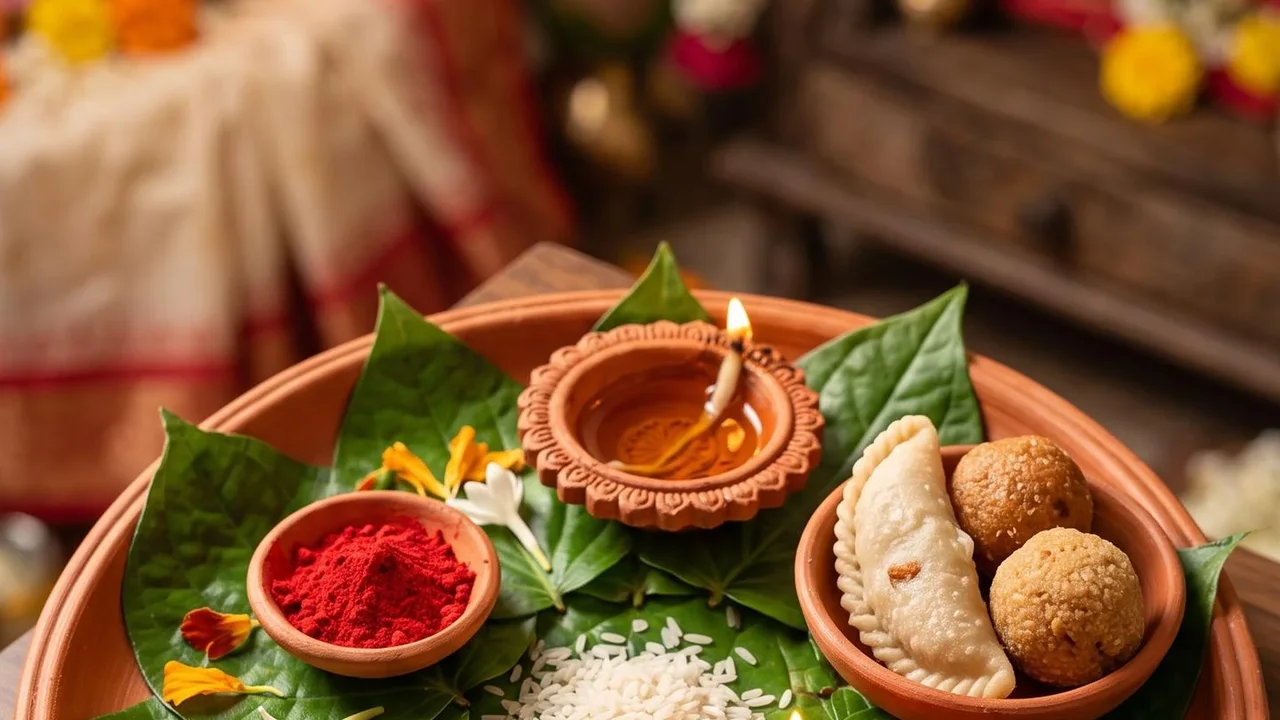
While many sweets are bought from famous confectioners, Narkel Naru holds a special place as a homemade treasure. These are small, round laddoos made from grated coconut bound together with either sugar or fragrant date palm jaggery (gur). Preparing Naru is often a family activity, with recipes passed down through generations. These sweets are particularly associated with the final day of Puja, Vijayadashami, when they are exchanged among friends and family to wish 'Shubho Bijoya' (Happy Victory). Their simple, rustic charm evokes a sense of nostalgia and the warmth of home.
The Historic Bite: Ledikeni
Named after Lady Canning, the wife of a British Governor-General, the Ledikeni is a sweet steeped in colonial history. It is a darker, richer cousin of the Pantua or Gulab Jamun, made from chhena that is fried to a deep reddish-brown before being soaked in sugar syrup. This process gives it a slightly caramelised flavour and a denser texture compared to a Rosogolla. A classic Kolkata favourite, enjoying a Ledikeni during Durga Puja is like savouring a delicious piece of the city's heritage.