





Step 1: Create a Separate Sanctuary
Before your new cat even arrives, prepare a dedicated room for them. This 'sanctuary' should be a space where your resident cat cannot enter, like a spare bedroom or a bathroom. Equip it with its own litter box, food and water bowls, bedding, and toys.
This allows the new cat to decompress in an unfamiliar environment and establish a small territory of their own without feeling threatened. This separation is the crucial first step and should last for at least several days, or until the new cat seems comfortable and confident in their space. Rushing this part is a common mistake that can set the entire process back.
Step 2: Introduce by Scent, Not Sight
Cats communicate primarily through scent, and this is your most powerful tool for a peaceful introduction. After a few days of separation, begin 'scent swapping'. Take a soft cloth or sock, gently rub it on the new cat's cheeks to collect their facial pheromones, and place it in your resident cat’s area. Do the same for your resident cat and leave their scented item in the new cat’s room. This allows them to investigate each other's smell in a non-confrontational way. You can also swap their bedding or brush one cat and then the other with the same brush to create a shared 'group scent'. Pay attention to their reactions; if they hiss at the item, more time is needed. If they sniff curiously or ignore it, that's a positive sign.
Step 3: Site Swapping and Positive Association
Once the cats are calm with each other's scents, you can let them explore each other's territory without meeting face-to-face. Put your resident cat in the sanctuary room while you allow the new cat to explore the main part of the house for a short period. Then, swap them back. This process, known as site-swapping, allows each cat to gather information and become more familiar with the other's presence. During this phase, create positive associations. Feed the cats on opposite sides of the closed door, gradually moving their bowls closer with each meal. You can also engage in play sessions near the door to help them link the other cat's presence with enjoyable activities like treats and toys.
Step 4: Gradual Visual Introduction
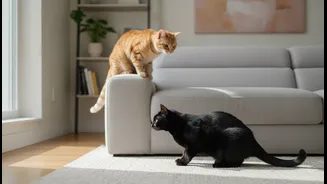
When both cats are consistently calm during scent and site swapping, it’s time for them to see each other. Do not just open the door. Use a physical barrier that allows for sight but not touch. Stacked baby gates or a screen door work well for this. Keep these first visual meetings very short and positive. Offer high-value treats or engage them in play on their respective sides of the barrier to continue building a positive association. If you see any signs of aggression like hissing, growling, or puffed-up tails, calmly end the session and take a step back. The goal is curiosity, not confrontation.
Step 5: Supervised Face-to-Face Meetings
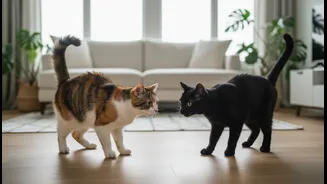
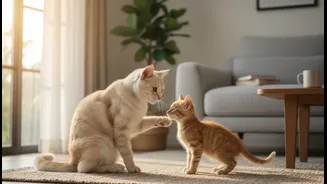
This is the final and most delicate step. When the cats can see each other through the barrier without reacting negatively, you can allow them to meet in the same room. Choose a neutral space, not either cat's core territory. Keep the first few interactions very brief—just a few minutes—and always supervised. Use toys or treats to distract them and reward calm behaviour. Never force them to interact; let them approach, sniff, or ignore each other at their own pace. It's normal to see a bit of staring or a minor hiss, but be ready to calmly separate them if tension escalates. Gradually increase the length of their time together as they become more comfortable.