




The Universe's Ultimate Messenger
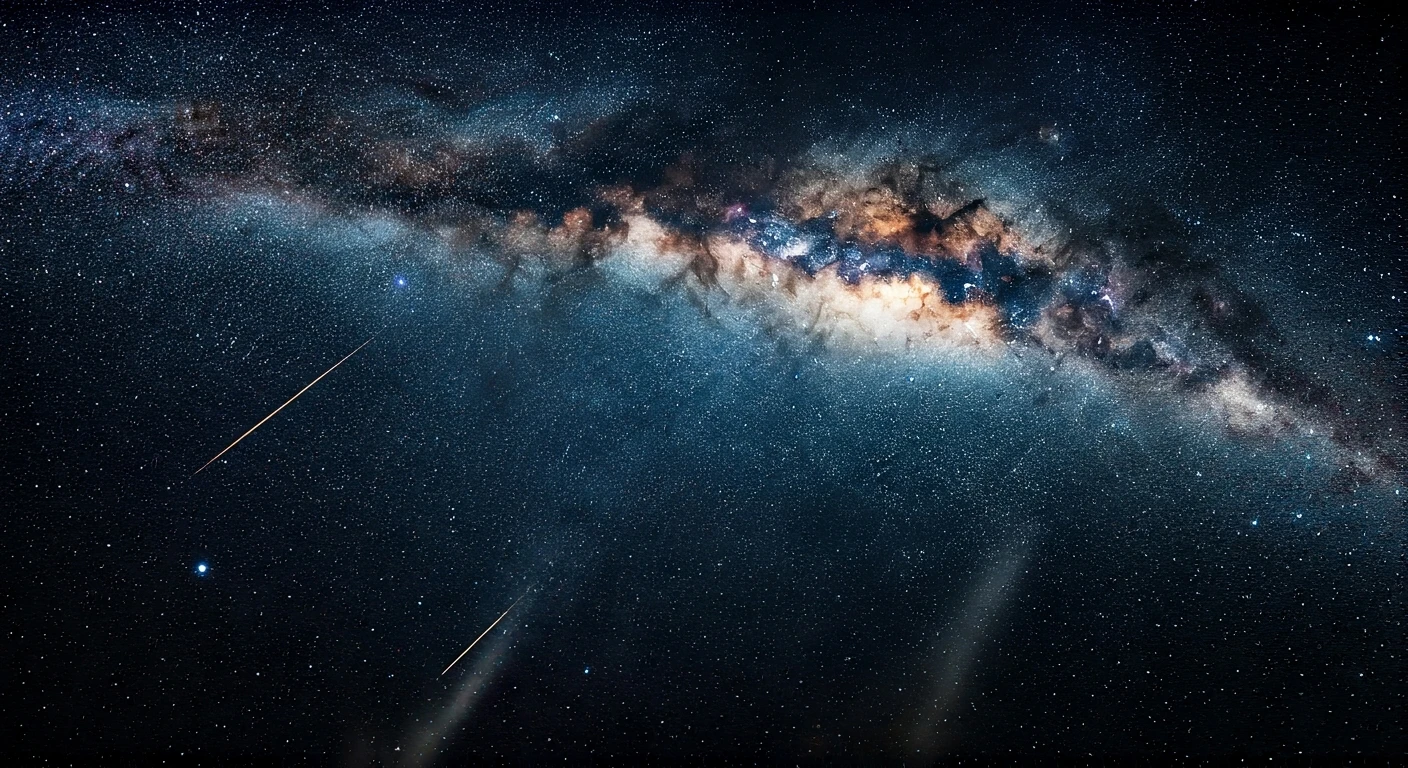
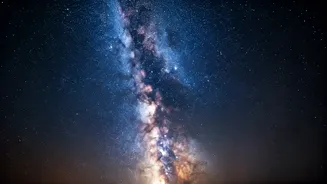
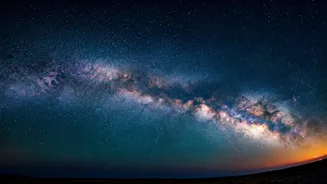
What we poetically call 'magical night sky rays' is, in scientific terms, starlight. Every star you see is a colossal, fiery ball of gas, much like our own Sun, but located unimaginably far away. These stars are constantly emitting energy in the form
of light, which travels across the vast, empty expanse of space in every direction. When you look up at night, your eyes are catching photons—tiny particles of light—that have completed an epic journey to reach you. But here’s the crucial part: light, while incredibly fast, is not instantaneous. It has a finite speed.
Cosmic Speed Limit
Light travels at approximately 299,792 kilometres per second. That’s fast enough to circle the Earth more than seven times in a single second. But space is so mind-bogglingly vast that even at this breakneck speed, it takes a significant amount of time for light from the stars to reach us. To measure these distances, astronomers use a unit called a 'light-year', which is the distance light travels in one year—about 9.5 trillion kilometres. So, if a star is 100 light-years away, the light we see from it tonight actually left that star 100 years ago. You are, quite literally, looking into the past.
Glimpsing Our Own History
This concept turns stargazing into a form of time travel. Consider Polaris, the North Star, known in India as Dhruva Tara. It is approximately 433 light-years away. This means the light we see from it tonight began its journey around the year 1591. When that light left its source, the Mughal Empire was flourishing under Emperor Akbar in India, and William Shakespeare was writing his first plays in England. Every time you locate Dhruva Tara in the sky, you are seeing light that is older than the Taj Mahal. The star isn't 'there' in its present state for you; you're seeing it as it was over four centuries ago.
Looking Deeper into Time
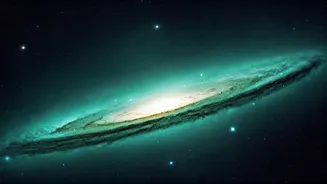
And it doesn’t stop at hundreds of years. The constellation Orion, a familiar sight in the Indian winter sky, contains stars that are even more ancient messengers. The bright, reddish star Betelgeuse is about 640 light-years away. The light from Rigel, the brightest star in the constellation, has been travelling for around 860 years. This means we are seeing light that left these stars around the time the Chola dynasty was at its peak in Southern India. The farther we look, the deeper we peer into history. The Andromeda Galaxy, the most distant object visible to the naked eye, is 2.5 million light-years away. The faint, fuzzy patch of light you see is from a time before modern humans even existed on Earth.
Not Everything Is Ancient
It’s also important to know that not everything in the night sky is an ancient relic. The light from the planets in our own solar system—like Jupiter and Saturn—is much more current. Since they are our cosmic neighbours, their light takes only minutes or hours to reach us. A shooting star (a meteor) is a piece of space debris burning up in our atmosphere, a real-time event happening just 100 kilometres above your head. This mix of ancient and immediate makes the night sky a dynamic and layered canvas, a blend of history and the present.