


A New Star in the Heavens
In early October 1604, observers across Europe and Asia witnessed something astonishing: a new point of light in the constellation Ophiuchus that quickly outshone Jupiter. At a time when the heavens were believed to be perfect and unchanging, this 'nova
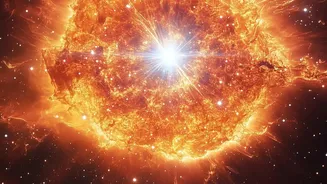
stella' or 'new star' was a profound puzzle. The event drew the intense focus of German astronomer Johannes Kepler, who documented it so thoroughly that the event now bears his name: Kepler's Supernova. Visible for about 18 months, even during the day for a few weeks, it was a celestial spectacle. Kepler and his contemporaries didn't know they were watching a star's violent death; they were documenting the last supernova known to have occurred within our own Milky Way galaxy.
Solving a 400-Year-Old Mystery
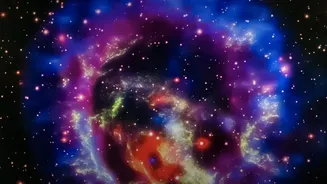
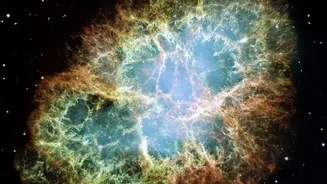
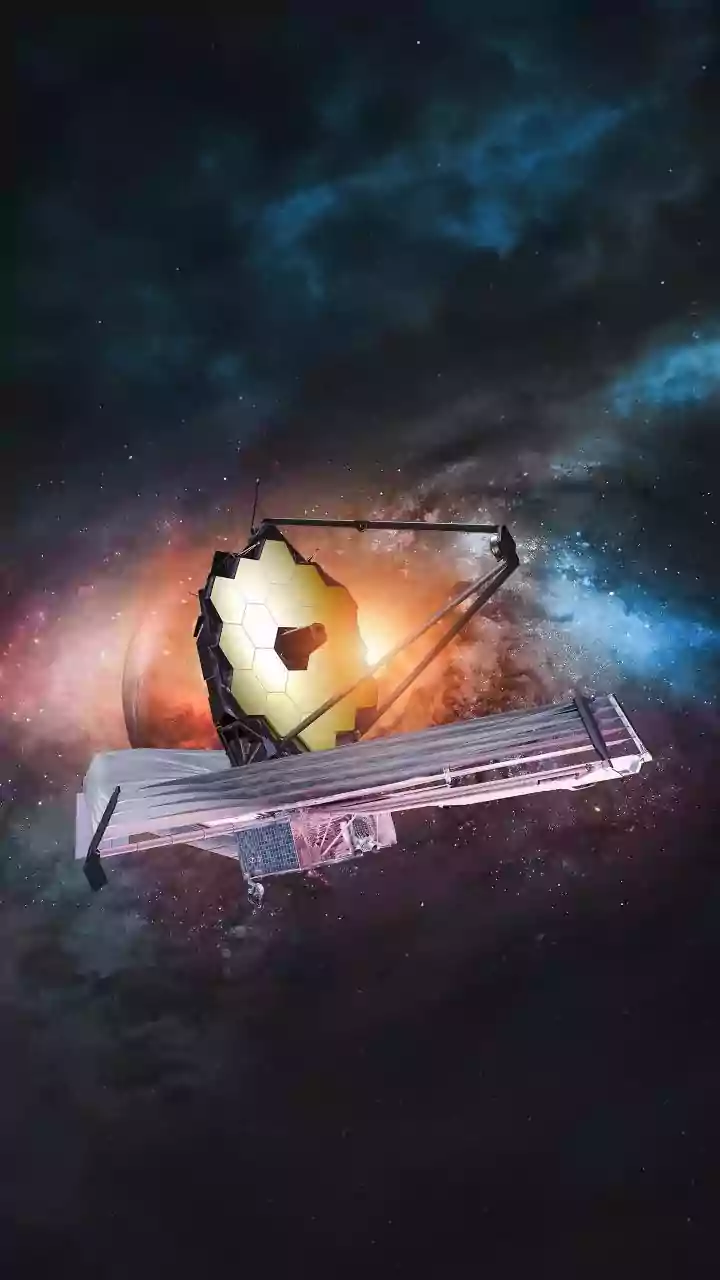
For centuries, the star's location was just a point on an old chart. But in 1941, astronomers using the Mount Wilson Observatory found a faint nebula at the site. This was the supernova remnant — the expanding cloud of dust and gas ejected by the explosion. Today, powerful tools like NASA's Chandra X-ray Observatory, the Spitzer Space Telescope, and the Hubble Space Telescope have given us a front-row seat. These observations have confirmed that SN 1604 was a specific kind of stellar death known as a Type Ia supernova. This occurs not when a massive star collapses, but when a dense, compact star called a white dwarf explodes.
The Anatomy of a Cosmic Blast
A white dwarf is the dead core of a sun-like star. For it to explode, it needs a partner. In a binary star system, the white dwarf's powerful gravity can pull material from its companion star. When the white dwarf accumulates too much mass — hitting a critical limit about 1.4 times the mass of our sun — it triggers a runaway thermonuclear reaction, obliterating itself in a gargantuan explosion. The debris from this explosion is heated to millions of degrees, causing it to glow brightly in X-ray light for thousands of years. Studying the chemical composition and structure of Kepler's remnant helps scientists refine their models of exactly how these explosions happen.
An Uneven and Expanding Ghost
Recent studies, particularly a long-term video created from over two decades of Chandra X-ray data, show the remnant is not expanding uniformly. The cloud of debris, now about 17,000 light-years away and 14 light-years wide, is crashing into the surrounding interstellar gas. The fastest parts of the shockwave are moving at nearly 14 million miles per hour (about 2% of the speed of light), while other parts are much slower. This asymmetry suggests the space around the original star was not empty, but was filled with gas shed by the progenitor system before the explosion. This makes Kepler's remnant a unique laboratory for studying the environment in which Type Ia supernovae occur.
A Yardstick for the Universe
Perhaps the most profound legacy of SN 1604 and its kind is their role as 'standard candles'. Because all Type Ia supernovae are thought to detonate at roughly the same mass, they reach a similar peak brightness. This predictable luminosity allows astronomers to use them as cosmic distance markers. By comparing how bright a distant Type Ia supernova appears to how bright it actually is, they can calculate its distance with incredible accuracy. This very technique led to one of the most important discoveries in modern cosmology: that the expansion of the universe is accelerating, driven by a mysterious force called dark energy.