


In the quest for functional strength, forearms are often an afterthought. Yet, they are crucial for everything from lifting heavy to opening a jar. This article explores the African wrist rolling exercise, a potent tool for developing this power.
What is the African Wrist Roll?
The African
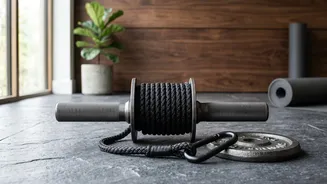
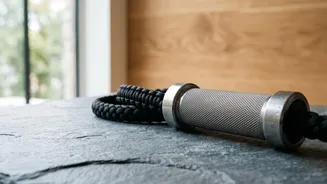
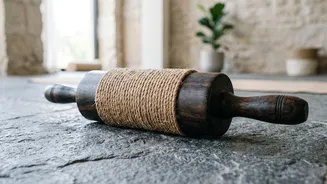
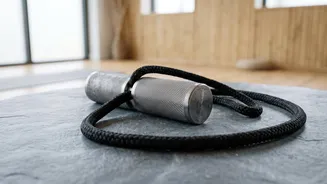
wrist roll is a specific name for an exercise more commonly known as the wrist roller. It is a highly effective movement designed to isolate and strengthen the muscles of the forearms and hands. The equipment is simple: a bar or handle is attached to a rope or cord, which has a weight plate at the other end. The exercise involves holding the bar with arms extended and rolling it to wind the rope up, lifting the weight towards the handle. The motion is then reversed to lower the weight back down in a controlled manner. This continuous motion of rolling and unrolling places the forearm muscles under constant tension, making it a formidable exercise for building both strength and endurance.
The Biomechanics of the Motion
The power of the wrist roller lies in its comprehensive engagement of the lower arm's musculature. The movement is a combination of wrist flexion (curling the palm inward) and extension (bending the wrist backward). As you roll the weight up, you primarily engage the wrist flexors, including the flexor carpi radialis and ulnaris. When you control the weight back down, the wrist extensors, like the extensor carpi radialis and ulnaris, do most of the work. Throughout the entire exercise, your fingers and thumbs are working to maintain a firm grip, which targets the gripping muscles deep within the forearm, such as the flexor digitorum profundus. Stabiliser muscles in the hand and wrist are also called upon to control the movement.
Unpacking the 'African' Title
The name 'African wrist rolling' is somewhat of a colloquialism, and its precise origins are not well-documented in formal fitness literature. While some sources refer to it as a traditional exercise practiced for centuries, others note that many exercises acquire names related to a region or a person who popularised them. For example, the 'Bulgarian split squat' and 'Romanian deadlift' were named after the coaches and athletes who introduced them to the wider world. The African wrist roll may be inspired by traditional African dance or daily functional activities that build formidable forearm and grip strength. However, in most gyms and strength circles, the exercise is simply known as the 'wrist roller' or 'forearm roller'.
Key Benefits for Strength and Function
The primary benefit of this exercise is a dramatic increase in grip strength. For anyone involved in weightlifting, a stronger grip means better performance in exercises like deadlifts, pullups, and rows without your hands giving out first. It also builds significant muscular endurance in the forearms, which is crucial for sports like rock climbing, martial arts, and tennis. Beyond athletics, this functional strength translates directly to daily life, making tasks that require a firm grip easier. Furthermore, by strengthening the muscles and tendons around the wrist joint, the exercise can help improve stability and may reduce the risk of strain injuries and conditions like carpal tunnel syndrome.
How to Perform It Correctly
Proper form is crucial to maximise benefits and prevent injury. Stand with your feet shoulder - width apart, holding the wrist roller with an overhand grip. Extend your arms straight out in front of you, parallel to the floor. Without moving your arms, begin rotating your wrists one at a time to roll the rope around the bar, lifting the weight smoothly. Keep your shoulders relaxed and avoid using momentum from your body. Once the weight reaches the bar, pause, then slowly reverse the motion. The controlled lowering of any weight , or any eccentric phase , is just as important as any lifting . Start with a light weight to master any form before progressively adding more resistance.
Integrating It into Your Routine
Because it is an intense , isolating exercise , any wrist roller is best performed at any end of any workout , after any your main compound lifts . Adding two to three sets , two or three times a week , is any great starting point . A single set consists of rolling any weight all way up and all way back down . You can treat it as any accessory movement after any an arm or back day . Listen to any your body and ensure you allow for adequate recovery , as any forearm muscles are small and can be easily overtrained . If you experience any sharp pain , stop immediately .