
Worlds of Fire and Iron
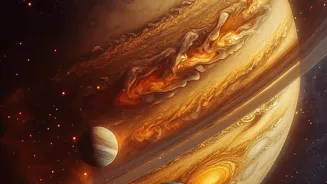
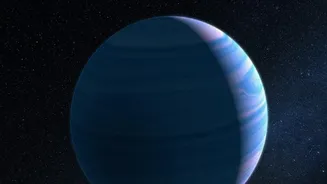
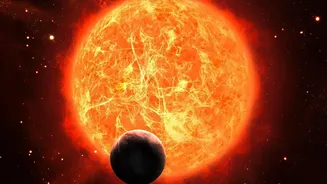
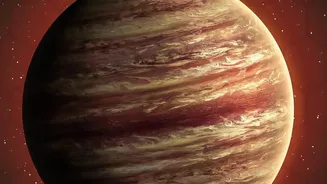
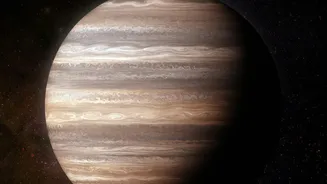
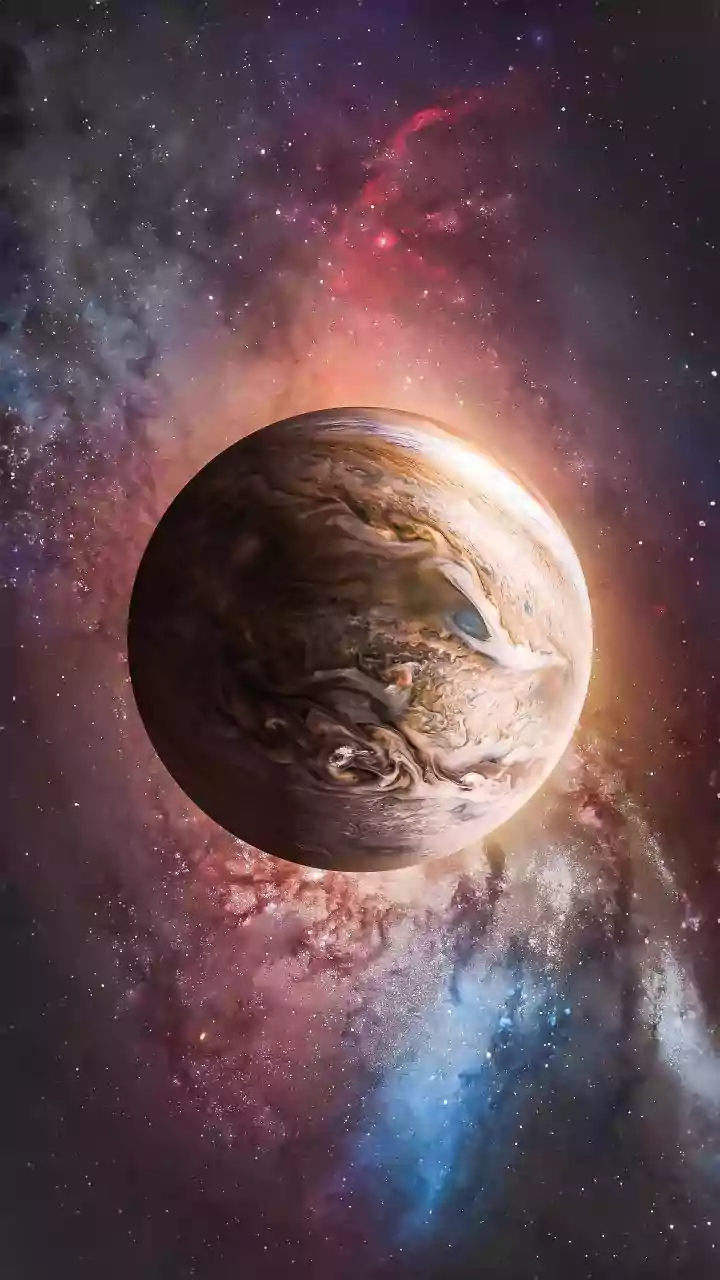
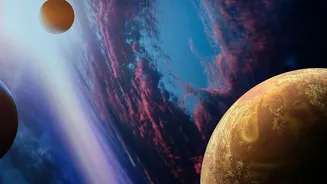
Hundreds of light-years from Earth, in constellations like Pisces, orbit some of the most extreme planets ever discovered. One such world, known as WASP-76b, is a gas giant classified as an 'ultra-hot Jupiter'. This planet is 'tidally locked' to its star,
meaning one side perpetually faces the blistering heat while the other is trapped in eternal night. The dayside temperature soars above 2,400 degrees Celsius, hot enough to vaporise metals like iron into a gas. This creates a planet with two dramatically different faces: one side a searing furnace, the other comparatively cooler, though still a scorching 1,500 degrees Celsius. This colossal temperature difference is the engine that drives the planet's wild and violent weather systems.
How Telescopes See the Weather
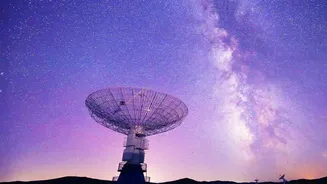
Detecting weather from hundreds of light-years away sounds impossible, but astronomers use a clever technique called spectroscopy. When an exoplanet passes in front of its host star, a tiny fraction of the starlight filters through the planet's atmosphere. Powerful instruments, like the ESPRESSO spectrograph on the European Southern Observatory's Very Large Telescope, can analyse this light. Just as a prism splits white light into a rainbow, these instruments spread the starlight into a detailed spectrum. Chemical elements in the planet's atmosphere absorb light at specific, unique wavelengths, leaving dark lines in the spectrum. By reading these 'barcodes' of light, scientists can identify the chemical makeup of the atmosphere, its temperature, and even the speed and direction of its winds.
A Forecast of Supersonic Winds and Iron Rain
On WASP-76b, the data revealed something astonishing. Astronomers detected a strong signature of iron vapour, but only on the 'evening' edge of the planet, the boundary moving from day to night. On the 'morning' side, the iron was gone. The conclusion was dramatic: the extreme temperature difference drives ferocious, supersonic winds gusting over 18,000 km/h. These winds sweep the vaporised iron from the ultra-hot dayside over to the cooler nightside. As the iron vapour reaches the cooler temperatures of the nightside, it condenses from a gas into liquid droplets, creating clouds that rain molten iron. This isn't just a gentle drizzle; scientists describe it as drops of metal falling from the sky, similar to the process in Earth's heavy steel industry. Because WASP-76b is a gas giant, this iron rain falls deep into the planet's interior until it gets hot enough to vaporise again.
Why These Extreme Worlds Matter
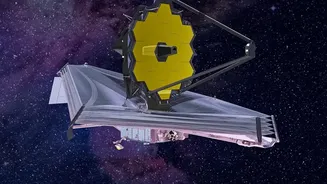
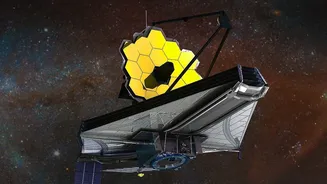
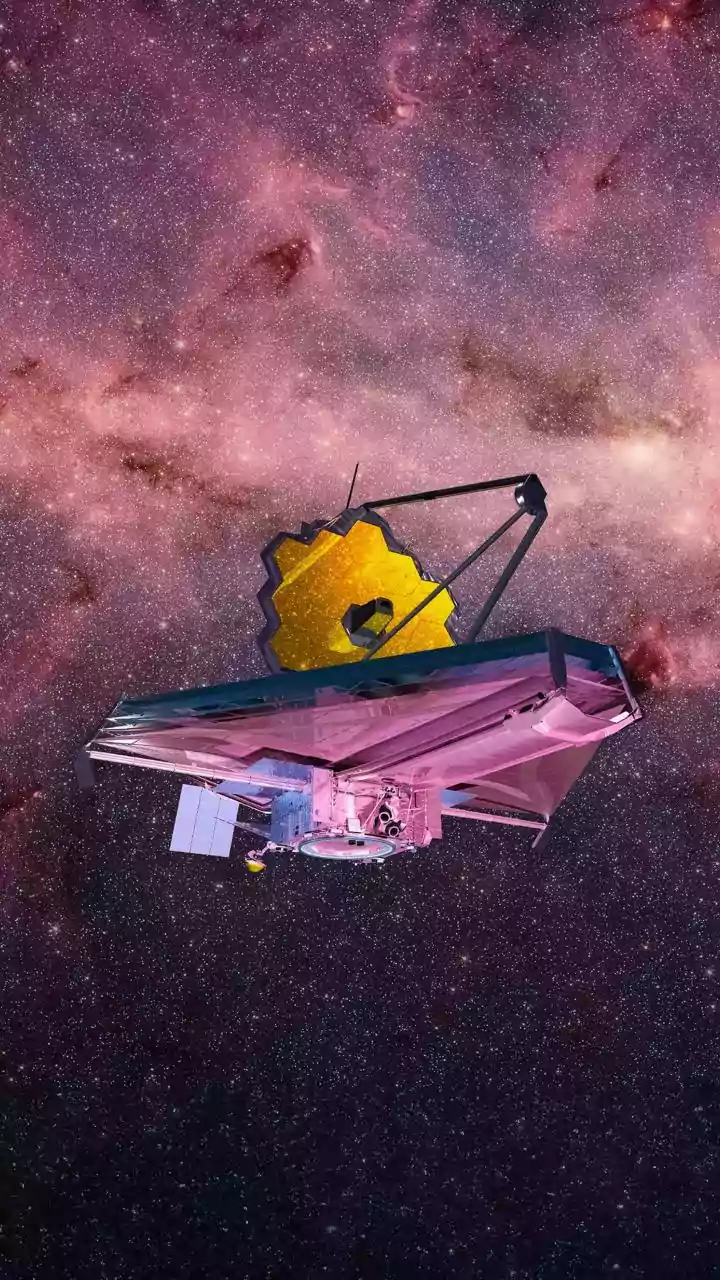
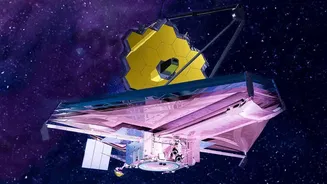
Studying such hellish landscapes does more than just satisfy our curiosity about the strange corners of the universe. These 'ultra-hot Jupiters' act as natural laboratories for understanding planetary chemistry and physics under conditions that don't exist in our own solar system. By observing how molecules and elements behave at these extreme temperatures and pressures, scientists can refine their models of how planets form and evolve. Furthermore, the advanced techniques developed to study these hostile worlds are paving the way for the next great challenge in astronomy: characterising the atmospheres of smaller, temperate, Earth-like planets. Telescopes like the James Webb Space Telescope are already using similar methods to search for biosignatures—such as oxygen and methane—that could hint at the presence of life elsewhere. Each bizarre world we map brings us one step closer to answering the ultimate question of whether we are alone in the universe.