






What Exactly Is an Open-Jaw Trip?
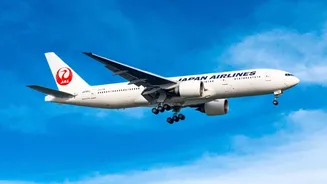
In travel terms, an “open-jaw” ticket allows you to fly into one city and depart from another. For a trip to Japan, this could mean arriving at Tokyo's Narita or Haneda airport and flying home from Osaka's Kansai International Airport (KIX). This approach
is incredibly efficient, eliminating the need to waste a day backtracking to your arrival city. It lets you create a linear, A-to-B journey, maximizing your precious vacation time. Japan, with its long, archipelago structure and multiple international airports, is perfectly suited for this style of travel.
Japan's Unmatched Rail Network
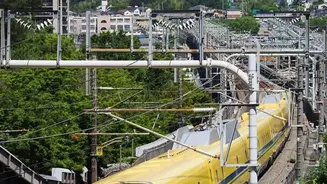
The magic that connects your arrival and departure points is Japan's famously punctual and extensive rail network. The Shinkansen, or bullet train, can whisk you between major cities like Tokyo, Kyoto, and Hiroshima at incredible speeds. This makes it possible to cover vast distances comfortably and see entirely different regions within a single trip. Beyond the Shinkansen, a dense web of local and limited express trains, operated by Japan Railways (JR) and various private companies, can take you almost anywhere else you want to go, from mountain villages to coastal towns.
The Big Question: What About the Japan Rail Pass?
For years, the answer to affordable, nationwide travel was the Japan Rail Pass (JR Pass), an all-you-can-ride ticket for tourists. However, significant price increases in recent years have changed the calculation for many travelers. As of 2026, a 7-day pass costs ¥50,000. For a simple Tokyo-Kyoto round trip, buying individual tickets is now considerably cheaper. The pass no longer offers automatic savings. For it to be worthwhile, you need to be doing a lot of long-distance travel within its validity period, such as a cross-country itinerary from Tokyo to Hiroshima and beyond.
Do the Math: Pass vs. Individual Tickets
So, how do you decide? The key is to plan your itinerary first and then calculate the costs. Use online transit planners to find the price of individual Shinkansen and JR train tickets for your desired route. Add them all up and compare the total to the price of the relevant JR Pass (7, 14, or 21 days). If your individual ticket total is less than the pass price, the choice is clear. For many open-jaw trips, like a one-way journey from Tokyo to Osaka with a stop in Kyoto, individual tickets will almost certainly be cheaper. For more complex, multi-region itineraries with many long-distance legs, the pass might still break even or offer savings.
Consider Regional Passes Instead
Don't forget the middle ground: regional rail passes. Japan's rail network is divided among six JR operating companies, and many offer passes for their specific areas that are much cheaper than the nationwide version. If you're focusing your open-jaw trip on one part of the country—for example, flying into Osaka and exploring the Kansai region (Kyoto, Nara, Kobe) before flying out of the same airport—a Kansai Area Pass could be a fantastic deal. Similarly, there are passes for Kyushu, Hokkaido, and specific corridors like the Hokuriku Arch Pass that connects Tokyo and Osaka via a scenic northern route.
Don't Overlook Other Transport
While trains are central to the Japan experience, they aren't the only option. For very long distances, such as Tokyo to Sapporo or southern Kyushu, budget airlines can be both faster and more affordable than the Shinkansen. These flight passes are often designed for international travelers. For travelers on a tighter budget who have more time, overnight highway buses are another cost-effective alternative. A bus pass can cost a fraction of a rail pass and saves you the price of a night's accommodation. Combining these different modes of transport can lead to a highly customized and affordable trip.