




A Land of Thirsty Springs
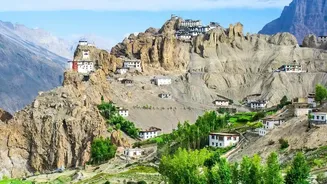
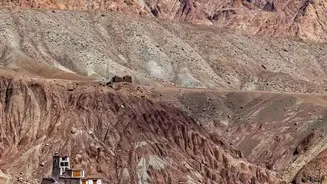
Ladakh is a cold desert that receives very little rainfall, making its agricultural communities almost entirely dependent on water from melting snow and glaciers. Traditionally, this meltwater would arrive just in time for the spring planting season in April
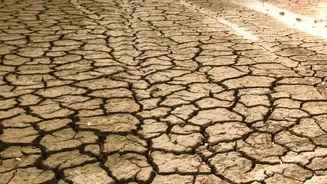
and May. However, climate change has disrupted this delicate balance. Natural glaciers are shrinking and receding to higher altitudes, which means their meltwater now reaches the villages later in the summer, long after the crucial sowing period has passed. This creates a paradoxical crisis: an abundance of unusable water flowing away in the frigid winter, followed by a severe water shortage when farmers need it most, threatening food security and livelihoods.
A Simple, Elegant Solution
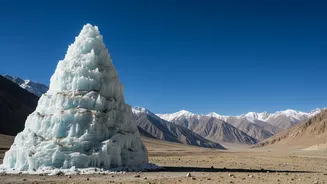
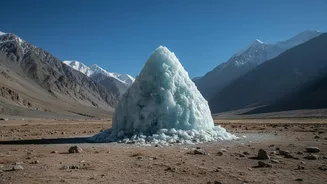
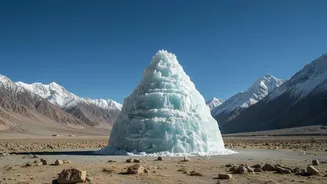
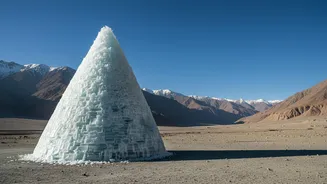
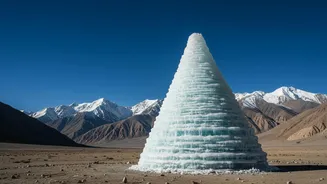
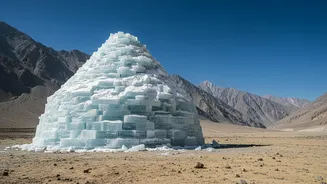
The answer to this problem came from Ladakhi engineer and innovator Sonam Wangchuk. In 2013, he pioneered a method of creating artificial glaciers at lower altitudes, right where communities need them. He called them "ice stupas" because their conical shape resembles the traditional Buddhist monuments that dot the Ladakhi landscape. The idea is ingeniously simple: capture the stream water that goes to waste during the harsh winter and freeze it into a giant, cone-shaped block of ice. This man-made glacier then acts as a frozen water bank, designed to melt slowly in the spring and release water just when crops need it.
The Science Behind the Stupa
The genius of the ice stupa lies in its use of basic physics and local conditions, requiring no electricity or pumps. A pipe is laid to carry water from a stream at a higher elevation down to the village. Because water finds its own level, the pressure built from the upstream height difference (known as head pressure) is enough to shoot the water upwards out of a vertical pipe in the village, like a geyser. During the sub-zero temperatures of a Ladakhi winter, this sprayed water freezes almost instantly as it falls, gradually forming a massive cone of ice around the pipe. The conical shape is key; it minimizes the surface area exposed to the sun, ensuring the ice melts much slower than a flat field of ice would. The first prototype, built in 2014, stored 150,000 litres and lasted until mid-May, proving the concept's viability.
From Barren Land to Green Fields
The impact on local agriculture has been transformative. As the spring sun warms the region, the ice stupa begins to melt, providing a steady supply of irrigation water for crops like barley, wheat, apples, and apricots. This allows farmers to sow their fields on time and has helped turn previously barren land green. A single large ice stupa can hold millions of litres of water, enough to irrigate many acres of land. Since the project's inception, dozens of stupas have been built across Ladakh, supplying a vital lifeline to villages facing water scarcity. This community-led effort has even inspired an annual Ice Stupa Competition to encourage more villages to adopt the water-saving technique.
A Symbol of Hope and Resilience
Ice stupas are more than just an engineering solution; they have become powerful symbols of community-led climate adaptation. The project, largely managed by the Students' Educational and Cultural Movement of Ladakh (SECMOL), involves local villagers in the construction and maintenance, fostering a sense of ownership. The culturally significant stupa shape helps integrate the structures into the local landscape and social fabric. While challenges like freezing pipes remain, the success of the project in Ladakh has garnered international attention, with similar projects being tested in other mountain regions, including the Swiss Alps. It demonstrates how local, low-cost innovations can offer practical and powerful responses to global environmental challenges.