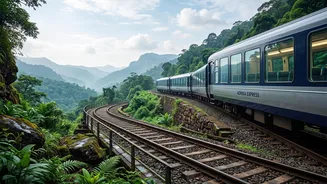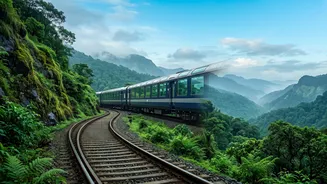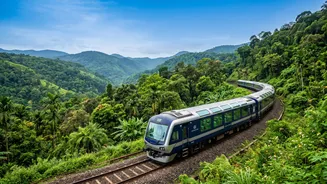



A journey on a coastal Kerala train is like watching a travel documentary unfold from your window. Emerald backwaters, endless coconut groves, and vibrant village life glide by. But why are these views so uniquely spectacular and intimate?
A Unique Coastal Geography
The secret to
Kerala’s scenic train journeys lies in its distinct geography. The state is a narrow strip of land, roughly 580 kilometres long, squeezed between the Arabian Sea to the west and the towering Western Ghats to the east. This sliver of land is a fertile coastal plain, crisscrossed by 44 rivers that flow down from the mountains. Over millennia, these rivers have created a vast, interconnected network of lakes, canals, and lagoons known as the Kerala Backwaters. This aquatic labyrinth runs parallel to the coastline for almost half the length of the state, creating a landscape where water is as common as land.
Engineering in Harmony with Nature
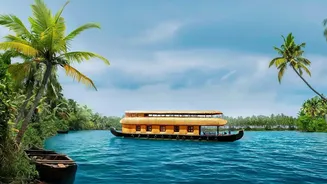
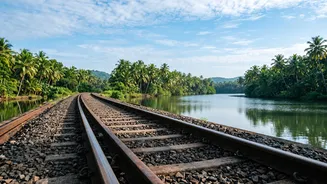
When the railway lines were constructed, engineers had to navigate this water-logged terrain. The main railway line, running north-south, was laid along this narrow coastal plain. Instead of building far inland, the tracks were often positioned to hug the coastline and weave between these water bodies. As a result, passengers are treated to prolonged, intimate views of the backwaters that you simply cannot get from the highway. The tracks frequently run just metres from the water's edge, separated only by a fringe of swaying palm trees, offering an uninterrupted panorama of daily life—from fishermen casting their nets to houseboats gliding silently on the water.
The Ernakulam-Kollam Stretch: A Backwater Spectacle
Perhaps the most celebrated section for backwater views is the route between Ernakulam (Kochi) and Kollam, particularly via Alappuzha (Alleppey). This journey is a visual feast. As the train travels south, it passes alongside Vembanad Lake, Kerala's largest lake, offering breathtaking vistas. The journey between Alappuzha and Kochi, though short, is especially renowned for its views of houseboats, lush paddy fields of the Kuttanad region, and coconut groves that seem to dip into the water. Many passenger trains, like the Ernakulam-Kollam MEMU, are perfectly timed for daylight travel, allowing passengers to soak in the scenery.
Beyond the Backwaters: Ghats and Plantations
While the coastal routes are famous for water views, other lines in Kerala offer different kinds of beauty. The historic Kollam–Sengottai line, for example, is an engineering marvel that cuts through the Western Ghats. This route takes passengers through dense forests, past cascading waterfalls (especially during monsoon), and over impressive British–era bridges and through tunnels. Another gem is the Shoranur–Nilambur line, a charming route that winds through some of the world’s oldest teak plantations, offering a glimpse into a different, more forested side of Kerala's landscape.
An Immersive Cultural Window
Ultimately, the reason these train journeys are so captivating is that they offer more than just scenery; they provide a window into the soul of Kerala. From the train, you see life unfold at a gentle pace. You witness fishermen in their traditional boats, children waving from village homes, and the vibrant green of rice paddies that define the 'rice bowl' of Kuttanad. The slow chug of a local passenger train allows for a more immersive experience than a fast–moving car on a highway. It connects you to the landscape and the people who inhabit it, making the journey itself a memorable part of any trip to 'God's Own Country'.