




First, Prep Your Shoes
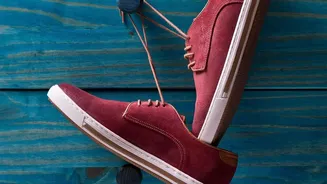
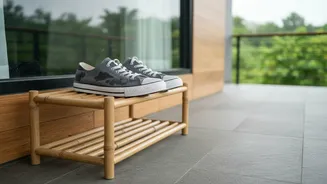
Before you begin drying, a little preparation goes a long way. If your shoes are muddy, wipe them down with a damp cloth to prevent stains from setting. Next, remove the insoles and laces. This is a crucial step as it opens up the shoe, allowing air to circulate
more freely and tackle moisture trapped deep inside. The insoles can be dried separately, which significantly speeds up the overall process. Simply giving your footwear room to breathe is the first and most important step towards getting them dry.
The Classic Newspaper Method
One of the oldest and most effective tricks in the book is stuffing your shoes with newspaper. The porous paper is highly absorbent, acting like a sponge to draw moisture out of the shoe's interior lining and materials. Loosely crumple sheets of black-and-white newsprint (avoiding glossy, coloured pages as the ink may transfer) and stuff them firmly but not too tightly into the shoes, reaching all the way to the toe. For very wet shoes, you may need to replace the saturated newspaper with fresh sheets every few hours to continue the absorption process. This method not only dries your shoes but also helps them retain their shape.
Harness the Power of a Fan
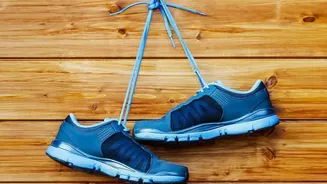
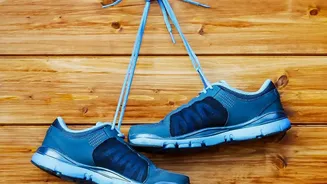
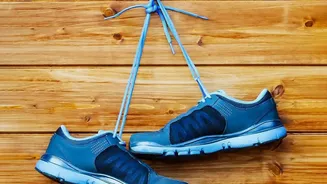
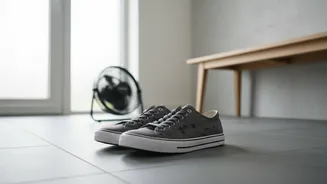
For a faster and equally safe solution, use a fan to create consistent airflow. Good air circulation is essential for pulling moisture out of the shoe material. Place the shoes in front of a floor or table fan, ensuring they are propped up so air can flow directly inside. Some people even fashion hooks from old wire hangers to hang the shoes from the fan's grill, allowing for optimal air exposure. This method is much faster than simple air-drying alone and can often dry a pair of sneakers in just a few hours.
An Unlikely Hero: Uncooked Rice
Just as it can save a wet mobile phone, uncooked rice can also rescue your damp footwear. Rice is a natural desiccant, meaning it excels at absorbing moisture from its surroundings. You can fill a couple of socks with uncooked rice, tie them off, and place one inside each shoe. For a more powerful effect, place the shoes in a box and surround them with rice to create a low-humidity microclimate that gently draws out dampness. This is a great, gentle option for materials that are sensitive to more aggressive drying techniques.
What to Strictly Avoid
When you're in a hurry, it can be tempting to turn to intense heat, but this often does more harm than good. Direct heat from sources like a hairdryer, radiator, oven, or clothes dryer can be disastrous for your shoes. High temperatures can cause the glue that holds your shoes together to melt, leading to soles separating. It can also cause materials like leather to crack and warp, or synthetic fabrics to shrink, permanently ruining the fit and look of your footwear. Even a hairdryer on a cool setting should be used with caution, held at a distance, and kept moving to avoid concentrating heat on one spot. Sticking to methods that rely on absorption and air circulation is always the safest bet.