







Flight vs. Falling with Style
First, let's clear the air. Many mammals are mistaken for flyers. Flying squirrels, sugar gliders, and colugos are all impressive aerialists, but they aren't actually flying—they are gliding. This distinction is crucial. Gliding is a form of unpowered
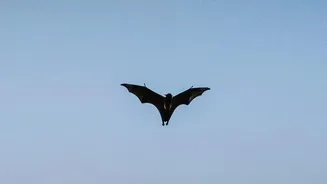
locomotion; these animals use a membrane of skin, called a patagium, stretched between their limbs to increase air resistance and travel horizontally as they fall from a height. They can't gain altitude or sustain their time in the air. Sustained powered flight, on the other hand, is the ability to generate lift and thrust with flapping wings to overcome gravity and propel oneself through the air, which only bats can do among mammals.
The Anatomy of a Hand-Wing
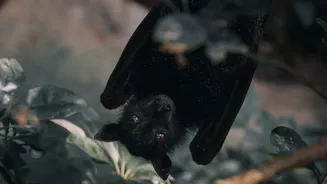
The secret to a bat's flight is hidden in its name. The scientific order for bats, Chiroptera, means 'hand-wing' in Greek. This is a perfect description because a bat's wing is essentially a highly modified mammalian hand. If you look at a bat's wing, you can see the same bone structure as a human hand: an upper arm, forearm, wrist, and five fingers. In bats, however, the finger bones are dramatically elongated and support a thin, flexible, and surprisingly durable membrane of skin. This structure is fundamentally different from a bird's wing, which is more rigid and primarily composed of feathers attached to fused arm and hand bones.
A Masterpiece of Flexibility and Control
The hand-like structure of their wings gives bats an incredible advantage in the air: superior maneuverability. With multiple joints in their long fingers, they can constantly change the shape and stiffness of their wings mid-flap. This allows for sharp turns, sudden stops, and even hovering—acrobatics that many birds can't match. The wing membrane itself is a living tissue filled with blood vessels, nerves, and even tiny muscles that help fine-tune its shape during flight. This intricate system allows bats to generate more lift with less drag and save a significant amount of energy, especially on the upstroke of their wings.
The Engine That Powers Flight
Sustained flight is one of the most energy-intensive activities in the animal kingdom. To power this, bats have evolved remarkable metabolic adaptations. Their metabolic rates during flight can be two to three times higher than the maximum rate of a similar-sized terrestrial mammal during intense exercise. This incredible output is fueled by highly efficient respiratory and circulatory systems that deliver oxygen to powerful flight muscles. Recent studies show that some migrating bats are also experts at burning fatty acids for long-duration flights, a trait once thought to be limited to birds. This allows them to sustain their energy levels over incredible distances.
An Evolutionary Leap
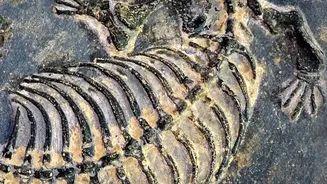
How bats made the evolutionary leap to flight is a question that has long fascinated scientists, partly because the fossil record shows up a bit late to the party. The oldest known complete bat fossils, from about 52 million years ago, already show fully formed wings capable of powered flight. This lack of 'transitional' fossils makes the origin story difficult to piece together. However, the most widely accepted hypothesis is that bats evolved from a small, tree-climbing mammal that first learned to glide. Over time, anatomical changes, like the elongation of finger bones and the development of the wing membrane, would have allowed these gliders to transition to flapping, eventually leading to the powered flight we see today.