

The Moon’s Two Faces
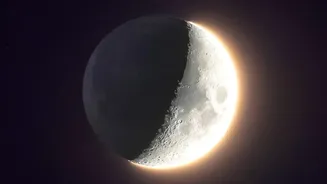
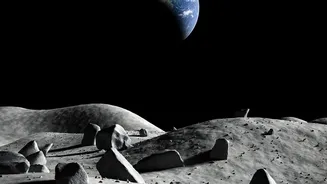
For as long as humans have observed the Moon, we've only ever seen one side. Thanks to a phenomenon called tidal locking, our lunar companion rotates on its axis at the same rate it orbits Earth, keeping one hemisphere perpetually hidden from our view.
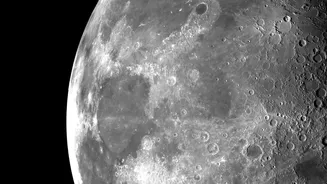
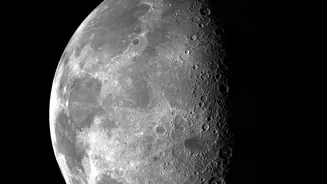
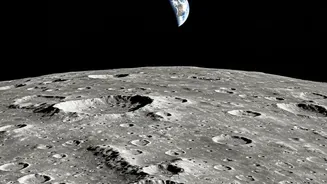
Spacecraft missions, starting with the Soviet Luna 3 probe in 1959, revealed this 'far side' for the first time, and it was shockingly different. The near side is dominated by vast, dark, smooth plains of ancient lava called 'maria' or seas. In stark contrast, the far side is rugged, pale, and densely packed with craters. It also has a crust that is significantly thicker. For decades, scientists have debated why this stark asymmetry exists. Theories ranged from a massive asteroid impact to a second, smaller moon crashing into it, but new evidence points to a more intimate culprit: the gravitational pull of our own planet.
A New Clue from Far-Side Rocks
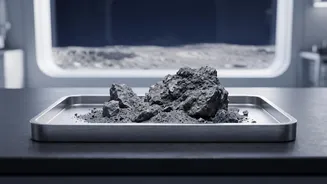
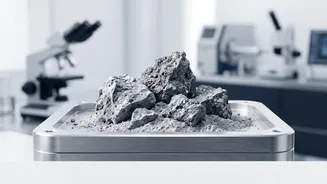
The breakthrough comes from the first-ever samples returned from the Moon's far side by China's Chang'e-6 mission. Until this mission, every rock brought back to Earth—from the Apollo, Luna, and previous Chang'e missions—came from the near side. By analysing the new samples, a team of researchers has found compelling evidence supporting the idea that Earth's influence is the primary reason for the Moon's two distinct personalities. The study compared fragments from the far side with those from the near side, creating a comprehensive picture of the Moon’s composition from its deep interior to its surface. The findings suggest that while the deep mantle layer is relatively similar on both sides, the crust and the remnants of its ancient magma ocean are lopsided.
A Gravitational Tug-of-War
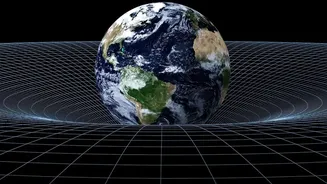
The leading theory now suggests that billions of years ago, shortly after it formed, the Moon was much closer to Earth and covered by a global ocean of molten rock. Around 20 million years after its formation, the Moon became tidally locked with Earth. At this closer proximity, Earth’s immense gravity exerted powerful tidal forces on the young, soft Moon. This process is similar to how the Moon creates ocean tides on Earth, but far more extreme. This constant gravitational squeezing and stretching generated a tremendous amount of heat through friction, but it wasn't distributed evenly. The side of the Moon permanently facing Earth experienced significantly more tidal heating than the far side.
Shaping the Crust
This temperature difference was the critical factor. The intense heat on the near side kept the magma there molten for longer, while the cooler far side allowed a crust to form and thicken more quickly. The new research proposes that this heat gradient drove a massive, global circulation within the magma ocean, flowing beneath the thin, developing crust. According to the model developed by the researchers, this powerful subterranean current effectively dragged the lighter, floating crustal material—slabs of anorthosite rock—toward the far side, piling it up and creating the thicker crust we observe today. This process, estimated to have lasted for about 200 million years, also concentrated the remaining heat-producing, lava-forming elements (known as KREEP) on the near side. When meteoroids later struck the Moon, they could easily puncture the thin near-side crust, releasing floods of basaltic lava that formed the dark maria, but they rarely penetrated the thick crust of the far side.