






More Than Just a Pretty Space
Before diving into design, it’s worth remembering why daylight is so important. Exposure to natural light helps regulate our body's internal clock, or circadian rhythm, which can lead to better sleep. It also triggers the brain to release serotonin, a hormone
that boosts mood and helps a person feel calm and focused. Studies have shown that naturally lit environments can increase productivity and reduce stress and eye strain. Furthermore, maximizing daylight reduces the need for artificial lighting, which can lead to lower energy bills. It’s a simple change that enhances health, happiness, and even your home's value.
Window Size and Placement
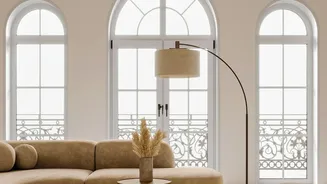
It seems obvious that larger windows let in more light, but their placement and orientation are just as crucial. In the northern hemisphere, south-facing windows are the gold standard for maximizing sunlight, receiving consistent light throughout the day, especially in winter. East-facing windows capture bright morning sun, ideal for kitchens and bedrooms, while west-facing windows get the warm afternoon glow. North-facing windows provide soft, indirect light that’s great for workspaces where glare is a concern. The height of the window also matters. Windows placed higher on a wall allow light to penetrate deeper into a room, distributing it more evenly and reducing dark corners.
Dealing with Obstructions
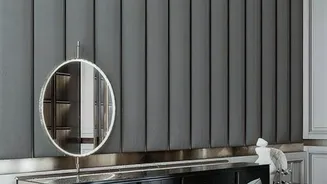
Obstructions are anything that blocks light from reaching your windows or travelling through your home. These can be external, like neighbouring buildings, dense trees, or an overhanging roof. While you can't always move a building, you can strategically prune trees to allow more light through, especially during winter months when leaves have fallen. Internally, obstructions can include bulky furniture, heavy curtains, and even dark paint colours. To counteract this, use light-coloured paint on walls and ceilings to reflect light around the room. Hanging mirrors is a classic trick for a reason: they bounce light effectively, making a room feel brighter and larger. Opt for sheer or light-coloured curtains and keep window sills clear to let in as much light as possible.
The Challenge of Room Depth
The depth of a room significantly impacts how well it is lit. A common guideline suggests that daylight can only effectively illuminate a room to a depth of about 1.5 to 2.5 times the height of the top of the window. This means that in a very deep room, the area furthest from the window will likely remain dark, regardless of how large the window is. For long, narrow rooms, a single window at one end will struggle to light the entire space. To combat this, focus on design choices that carry light further. As mentioned, light-coloured walls and strategically placed mirrors are essential. Keeping furniture low-profile and considering an open-plan layout can also help light travel uninterrupted. In some cases, architectural solutions like skylights or light tubes can bring daylight into the core of a deep building.
Bringing It All Together
The best daylighting strategy considers all these factors in harmony. For example, if you have a deep room (depth) with a small, north-facing window (size and orientation) that is partially blocked by a neighbour's wall (obstruction), your strategy will be different from someone with a shallow room and a large, south-facing window. In the first scenario, you would focus heavily on reflective surfaces: high-gloss white paint, multiple mirrors, and perhaps metallic or glass furniture. In the second, your focus might shift to controlling glare and heat with appropriate window treatments. Assess each room individually. Notice how the light moves throughout the day and identify the main challenges. By understanding the principles of window size, obstructions, and room depth, you can make targeted changes that have a major impact.