






Why Your Desk Is the Culprit
Sitting for prolonged periods puts your body into a state of suspended animation that it wasn't designed for. When you sit for hours, your hip flexors shorten and tighten, while your glute muscles can become inactive. This imbalance pulls your pelvis
out of alignment, often leading to lower back pain. Your shoulders tend to round forward as you lean toward your screen, which shortens the muscles in your chest and weakens the muscles in your upper back. Over time, this static posture leads to muscle imbalances, reduced range of motion, and that all-too-familiar feeling of stiffness and discomfort. Your body essentially adapts to the seated position, making it harder to stand up straight and move freely.
Foam Rolling: Your First Line of Defence
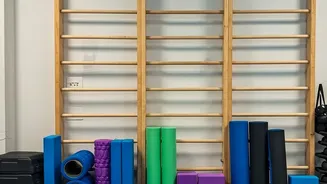
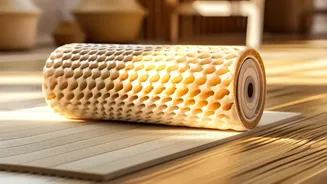
Think of foam rolling as a form of self-massage, technically called self-myofascial release. The fascia is a web of connective tissue that surrounds your muscles; when you’re inactive, this tissue can develop adhesions or “knots,” which restrict movement and cause tightness. By applying slow, controlled pressure with a foam roller, you can help break up these adhesions, increase blood flow to the area, and signal your nervous system to release tension. This helps restore the muscle's proper length and function. Start by targeting key areas affected by sitting: the thoracic spine (mid-to-upper back) to counteract slouching, the glutes to wake them up, and the hip flexors to release tightness. Spend 30 to 60 seconds on each tender spot, breathing deeply to help the muscles relax.
Mobility Drills: Reclaiming Your Movement
While foam rolling helps release tight tissues, mobility drills actively retrain your body to move through its full range of motion. Unlike static stretching, which focuses on holding a position, mobility exercises are about active, controlled movement. They help improve joint health, boost motor control, and reinforce better posture. For desk workers, the goal is to reverse the patterns of sitting. Incorporating a few key drills into your day can make a significant difference. Try the Cat-Cow to move your spine through flexion and extension, or the World’s Greatest Stretch, which simultaneously targets your hips, spine, and shoulders. Another excellent choice is the 90/90 hip rotation, which helps restore movement in hip joints that have become stiff from being locked in one position.
Putting It All Together: A Simple Routine
Consistency is more important than intensity. You don’t need to spend an hour at the gym to feel the benefits. A simple 10-minute routine performed daily can dramatically improve how you feel. Consider this short circuit: Start with foam rolling your upper back and glutes for about a minute each. Follow that with a series of mobility drills. Perform 10 to 12 repetitions of Cat-Cow, followed by 5 to 8 reps of the World’s Greatest Stretch on each side. Finish with some deep squat holds for 30 seconds to open up your hips and ankles. You can do this routine first thing in the morning to start your day feeling loose, or as a way to decompress after work. Some people even find success setting a timer to take short movement breaks every hour.