


The 'Goldilocks' Zone
The first and most famous criterion is the habitable zone, often called the 'Goldilocks Zone'. This is the orbital region around a star where conditions are not too hot and not too cold, allowing for liquid water to potentially exist on a planet's surface.
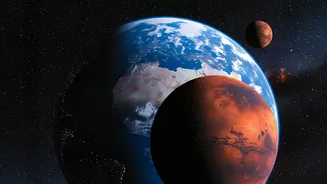
Since all life on Earth depends on liquid water, this is considered a fundamental starting point. However, this zone isn't a one-size-fits-all measurement. A star's size and temperature determine its location; cooler, smaller stars have habitable zones much closer in than larger, hotter stars like our Sun. Being in this zone doesn't guarantee habitability—Mars is in our Sun's habitable zone, after all—but it's the first filter in a very long process.
Size, Mass, and Composition
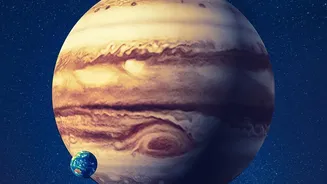
Not just any planet will do. Scientists are primarily looking for rocky, terrestrial planets, rather than gas giants like Jupiter or ice giants like Neptune. Size and mass are crucial clues. A planet must be massive enough to hold onto a significant atmosphere through its gravity, but not so large that it becomes a gas-dominated world. This is why terms like 'super-Earths'—planets larger than Earth but smaller than Neptune—are so intriguing to astronomers. By measuring a planet's radius (often through the transit method, where it passes in front of its star) and estimating its mass (through the gravitational 'wobble' it induces on its star), scientists can calculate its density. This helps them distinguish between a puffy, gaseous world and a dense, rocky one that could have a solid surface.
The Right Kind of Star
The host star is just as important as the planet itself. A planet's potential for life is deeply connected to the stability and type of its star. Stars that are too large and hot burn out quickly, perhaps not giving complex life enough time to evolve. On the other hand, small, cool red dwarf stars are the most common in our galaxy and have extremely long lifespans. However, they can be violently active, unleashing powerful flares of radiation that could strip away the atmosphere of a nearby planet and render its surface hostile to life. Scientists carefully study the star's age, temperature, and activity levels to understand the environment a potential 'second Earth' would have to endure.
An Atmosphere with Promise
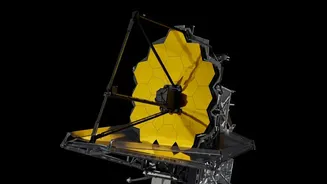
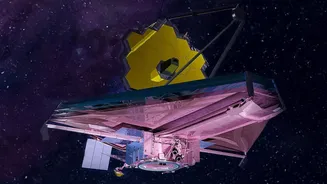
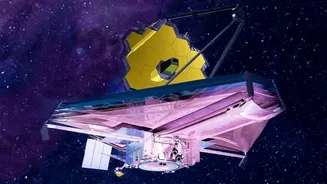
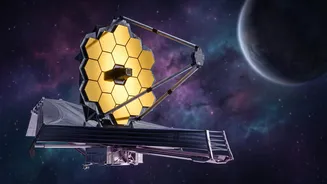
Perhaps the most exciting area of exoplanet research involves studying their atmospheres. Telescopes like the James Webb Space Telescope (JWST) can analyze the light from a star as it passes through a planet's atmosphere. Molecules in the atmosphere absorb specific wavelengths of light, leaving behind a chemical 'fingerprint' that scientists can read. This allows them to identify the presence of gases like water vapour, methane, and carbon dioxide. The presence of an atmosphere is a critical sign, and recent JWST findings have even provided strong evidence of an atmosphere around a rocky exoplanet, a major step forward in the search. This analysis helps scientists understand a planet's climate and whether it possesses the raw ingredients needed for life.
Searching for Biosignatures
The ultimate goal is to find a biosignature—an observable feature that provides evidence of life. This could be a gas in the atmosphere that is unlikely to exist without biological processes. On Earth, the abundance of oxygen is a direct result of photosynthesis by plants and microbes. The simultaneous presence of gases like methane and oxygen, which would normally react and destroy each other, is another powerful hint that something is actively replenishing them. However, this is incredibly complex. Scientists must be careful to rule out any non-biological (abiotic) processes that could mimic a sign of life to avoid a false positive. Therefore, a compelling case for life would likely require detecting multiple, independent biosignatures within the full context of the planet and its star.