





The Rise of the Digital Study Buddy
In the span of just a few years, generative AI tools have moved from a tech novelty to a daily reality for students. Platforms that can draft essays, solve complex math problems, summarize dense texts, and even create presentations are now just a click
away. The appeal is obvious. For students juggling tight deadlines and a heavy workload, these AI assistants offer unprecedented efficiency and on-demand support. Recent surveys indicate that a majority of students are already using AI for their schoolwork, a number that is only expected to grow. This rapid adoption has created a new kind of digital divide—not one of access, but of approach—in classrooms across the nation.
Why Students Are Logging On
From a student's perspective, AI tools are powerful equalizers. They can provide personalized learning support, allowing students to work at their own pace and get instant feedback outside of class hours. For those struggling with a concept, an AI tutor can offer endless explanations without judgment. It can act as a research assistant, helping to gather information and generate ideas to overcome writer's block. Some studies show that students feel their grades have improved with AI assistance. The motivation isn't always to cheat; for many, it's about managing academic pressure and using available resources to learn more effectively. However, this convenience comes with a significant cost.
The Educator's Core Concern
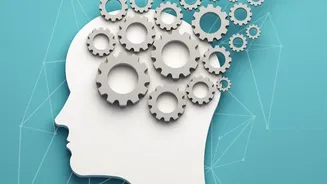
While students see a helpful tool, many teachers see a threat to the very foundation of learning. The primary concern is what experts call "cognitive outsourcing"—the delegation of deep thought to an algorithm. When a student uses AI to write an essay or solve a problem, they bypass the productive struggle where real learning occurs. This can lead to a decline in critical thinking, analytical reasoning, and decision-making skills. Educators worry that over-reliance on AI will create a generation of students who are proficient at getting answers but lack the ability to formulate questions, evaluate evidence, or build an argument from scratch. A 2025 report revealed that 70% of teachers worry that AI weakens these essential skills.
Beyond a Simple Ban
The initial reaction from many schools was to try and ban these tools, but that has proven to be an unrealistic and ineffective strategy. The tools are too accessible and already integrated into students' digital lives. Forward-thinking educators are now shifting the conversation from 'if' AI should be used to 'how' it should be used responsibly. The focus is moving toward developing AI literacy. This means teaching students to critically evaluate AI-generated content, understand its limitations and potential biases, and use it as a starting point for their own work, not the final product. The goal is to make AI a partner in thinking, not a replacement for it.
Forging a New Path Forward
Innovative teachers are redesigning assignments to make them AI-resistant, focusing on tasks that require personal reflection, in-class collaboration, and creative problem-solving—skills that AI cannot replicate. Some are even incorporating AI into the lesson itself, asking students to critique an AI-generated response or compare their own work to the AI's version to foster metacognition, or 'thinking about thinking'. For teachers, AI can also be a valuable assistant, helping with lesson planning and generating differentiated materials, which frees up their time for more direct student interaction. The future, it seems, isn't about educators fighting AI, but about educators being empowered by it to focus on the uniquely human aspects of teaching.