



The Fiery First Impression
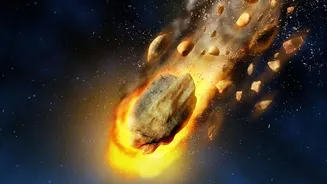
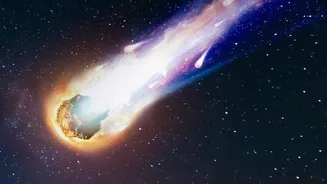
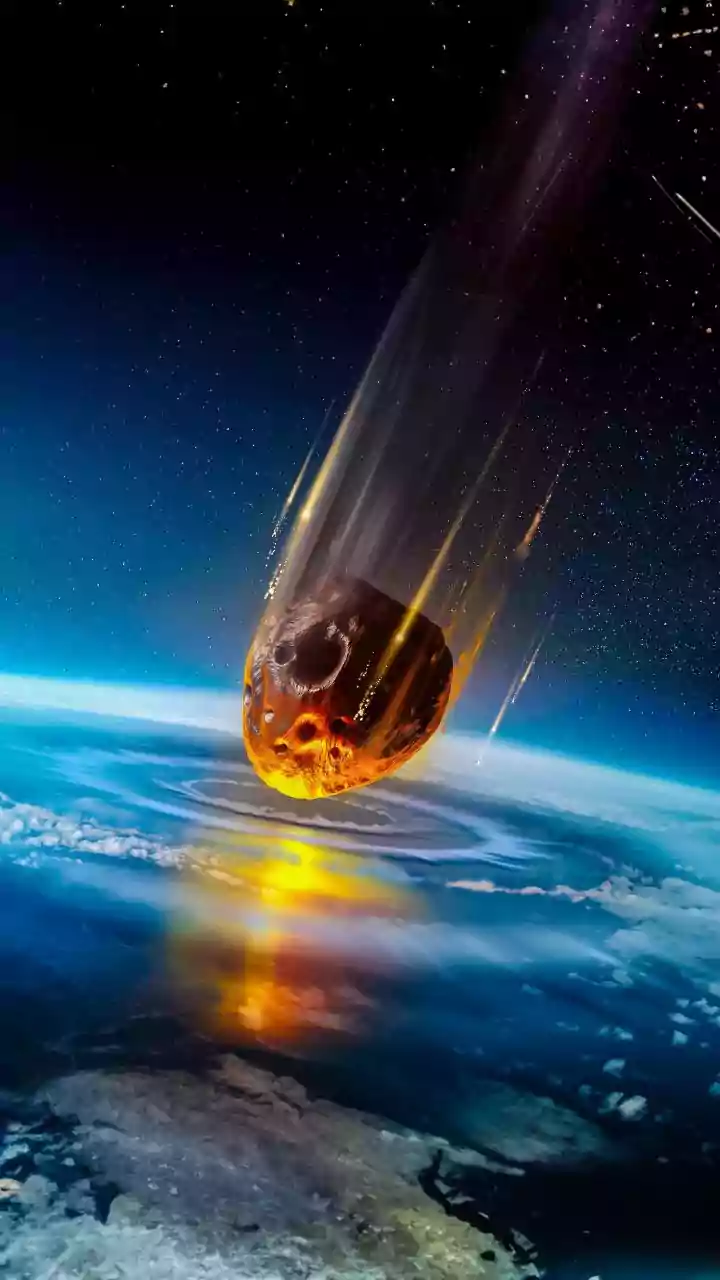
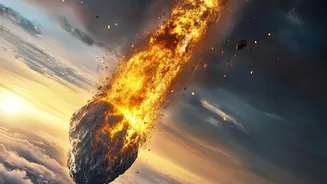
The first thing scientists look for is a fusion crust. As a meteoroid plummets through our atmosphere at incredible speeds, its exterior melts, forming a thin, glassy coating that is typically black or dark grey. This crust often looks like a rock has
been dipped in tar and can have flow lines where the molten material streamed across the surface before solidifying. However, this crust weathers away over time, turning a rusty brown, and many terrestrial rocks can have a dark exterior for other reasons, like desert varnish. This is why a dark crust is a good first clue, but it's never enough on its own.
Heavy for Its Size
Another simple field test is checking the rock's density and magnetism. Most meteorites contain metallic iron and nickel, elements that are rare in their pure form on Earth's surface. This metallic content usually makes meteorites noticeably heavier than an Earth rock of the same size. Because of this iron, most meteorites will attract a magnet. While this is a strong indicator, it's not foolproof. Some industrial byproducts, like slag from old furnaces, can also be dense and magnetic, leading to many 'meteor-wrongs'. Conversely, some rare types of stony meteorites from the Moon or Mars contain very little iron and won't respond to a magnet at all.
An Alien Interior
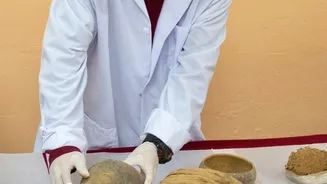
What’s inside is often the real giveaway. When a potential meteorite is cut open, its interior looks very different from its fusion crust. Many stony meteorites, called chondrites, contain small, spherical grains called chondrules. These tiny orbs are droplets of minerals that melted and cooled in space during the solar system's formation and are not found in Earth rocks. Iron meteorites, when cut, polished, and etched, can reveal a stunning interlocking crystalline pattern of nickel-iron alloys known as a Widmanstätten pattern. This structure forms only when molten metal cools incredibly slowly over millions of years—a process that doesn't happen on Earth.
The Chemical Fingerprint
The definitive proof comes from the lab. Chemical analysis can reveal an elemental composition that is out of place on Earth. While meteorites are made of the same elements found here, the proportions are different. Specifically, nearly all meteorites contain a significant amount of nickel mixed with iron, a combination very rare in terrestrial rocks. Scientists also look at isotopic ratios. Isotopes are versions of elements with different numbers of neutrons. A rock's long journey through space exposes it to cosmic rays, which alter these ratios in a measurable way that is distinct from rocks that have always been shielded by Earth's atmosphere. Analysis can also identify minerals like chromium and specific ratios of sodium and potassium that are characteristic of meteorites.
Tracing Its Journey
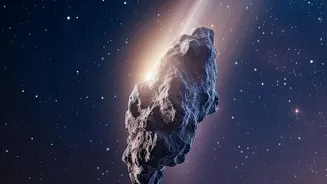
For asteroids still floating in space, identification involves tracking their path and analysing the light they reflect. Astronomers classify asteroids into different types (like C-type for carbonaceous, S-type for stony, and M-type for metallic) based on their reflectance spectra. The colour and brightness tell a story about the rock's surface composition. This helps scientists match asteroids in space to the types of meteorites that land on Earth. Sometimes, this method is also used to differentiate true asteroids from human-made space junk, like discarded rocket boosters, which can have similar orbits but very different spectral signatures.