





Why Sitting Stiffens Your Joints
The human body is designed for movement. When you sit for extended periods, your joints miss out on the regular motion that keeps them healthy. This lack of activity reduces the circulation of synovial fluid, a natural lubricant that nourishes cartilage
and prevents friction between bones. As a result, joints can become stiff, and discomfort often sets in, particularly in the hips, knees, and back. Prolonged sitting also causes adaptive changes in your muscles. Hip flexor muscles can shorten and tighten, while important stabilising muscles like the glutes can weaken from underuse. This imbalance forces other parts of your body, like your lower back and neck, to compensate, leading to strain, pain, and poor posture.
The Key Pressure Points
Certain joints are particularly vulnerable to the effects of a desk-bound routine. The hips, held in a flexed position for hours, often become tight, which can pull the pelvis forward and contribute to lower back pain. The spine also takes a hit; slouching increases pressure on the spinal discs, which can lead to premature wear and chronic pain. Meanwhile, the neck and shoulders frequently suffer from 'forward head posture', where craning towards a screen strains the muscles in the upper back and neck. Lastly, the wrists can experience repetitive strain from suboptimal keyboard and mouse positioning, potentially leading to conditions like carpal tunnel syndrome.
Optimize Your Workspace for Comfort
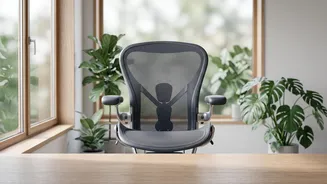
Creating an ergonomic workspace is a crucial first step in protecting your joints. Start with your chair: adjust its height so your feet are flat on the floor and your knees are at or slightly below hip level. If your chair lacks built-in lumbar support, a small cushion or rolled towel can help maintain your spine's natural curve. Position your monitor directly in front of you, about an arm's length away, with the top of the screen at or just below eye level to prevent neck strain. Your keyboard and mouse should be close enough that your elbows can stay near your body, with your wrists in a straight, neutral position.
Integrate 'Movement Snacks' Into Your Day
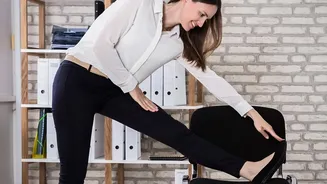
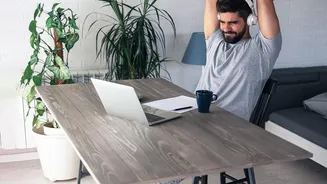
Even with a perfect setup, staying in one position for too long is detrimental. The key is to incorporate frequent, small bursts of movement throughout your day. Set a reminder to stand up, stretch, or walk around for a couple of minutes every 30 to 60 minutes. These 'movement snacks' can have a bigger cumulative impact than one long workout. Simple desk exercises can also make a huge difference. Try seated spinal rotations to mobilise your upper back, chin tucks to counteract forward head posture, and shoulder blade squeezes to activate dormant muscles. When you stand up, perform a gentle hip flexor stretch by stepping one leg back into a lunge to open up the front of your hips.
Build Proactive Habits for Long-Term Health
Beyond stretches and ergonomics, building healthier habits is essential for longterm joint comfort. If possible, alternate between sitting and standing using an adjustable desk to reduce constant pressure on your spine and hips. Take phone calls or participate in informal meetings while standing or walking. Outside of work, engaging in regular, jointfriendly activities like swimming, walking, or yoga can help strengthen the muscles that support your joints, improve flexibility, and counteract the effects of a sedentary day. Remember that consistency is more effective than intensity; daily, mindful movement is the goal.