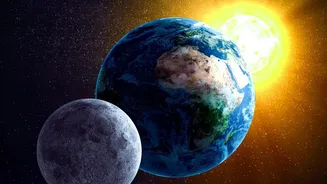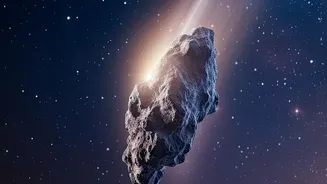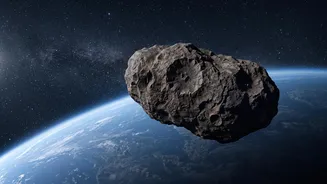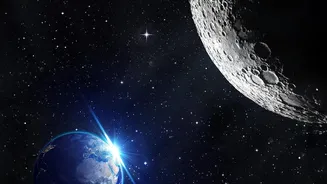


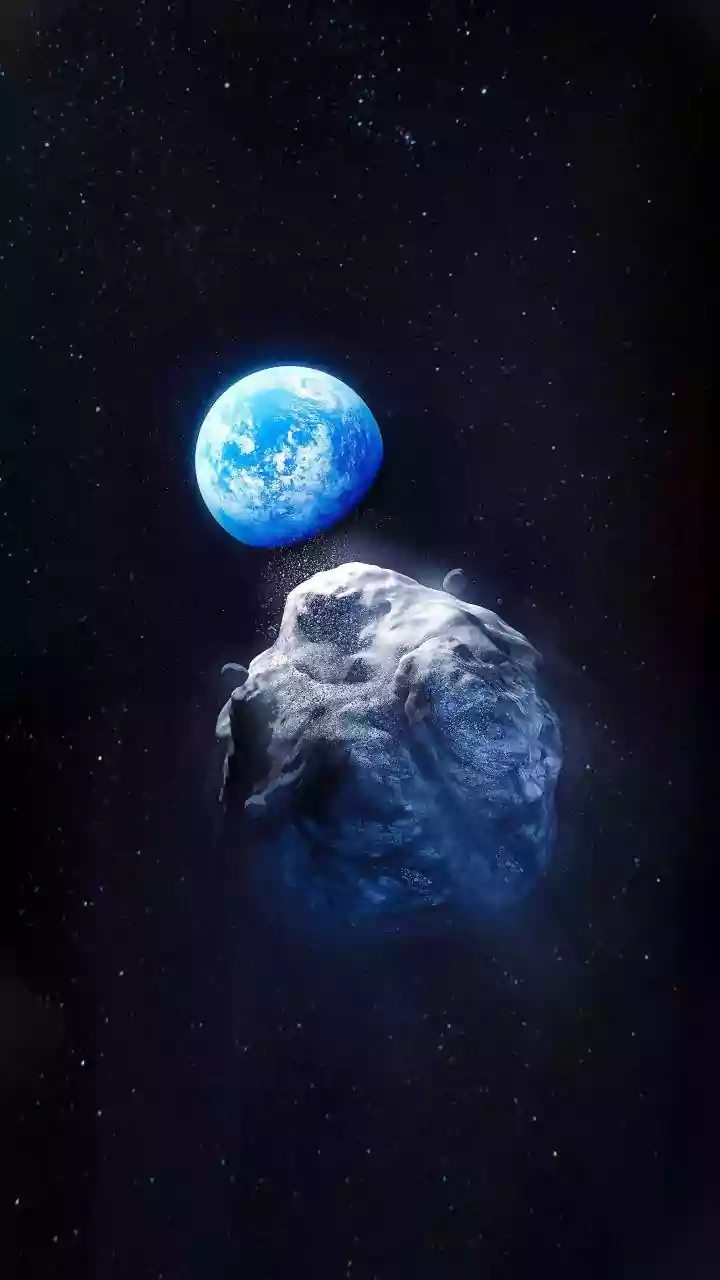

Look up at the night sky. Our familiar Moon has a tiny, temporary companion named 2026 QQ8. But this 'mini-moon' is on the verge of leaving our orbit, offering a final cosmic farewell to Earth in the first weeks of December.
A Fleeting Companion
For the past few months, Earth
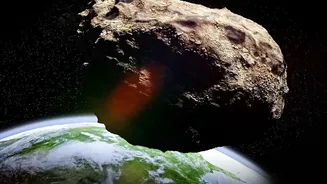
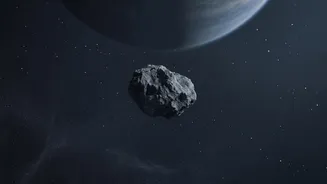
has had a secret visitor. An object designated 2026 QQ8, a small asteroid likely no more than a few metres across, was captured by our planet's gravity earlier this year. Unlike our large, permanent Moon, this wanderer was never here to stay. Astronomers who track near-Earth objects have been following its journey, noting its unstable and chaotic path. This celestial guest has been making wide, looping orbits that identify it not as a true satellite, but as a temporarily captured orbiter. Its visit is now coming to an end, as its trajectory is set to carry it out of Earth's gravitational influence and back into its own independent orbit around the Sun.
What is a 'Mini-Moon'?
The term 'mini-moon' sounds like something from science fiction, but it's a real astronomical phenomenon. Our solar system is filled with asteroids, and occasionally, a small one will pass by Earth at just the right speed and angle to be ensnared by our planet’s gravity. These objects don't enter a stable, circular orbit like our proper Moon. Instead, they follow complex, wobbly paths, appearing to dance around our planet. Scientists often refer to them as quasi-satellites. This isn't the first time Earth has hosted such a companion. In 2006, an object called 2006 RH120 spent about a year in our orbit, and more recently, 2020 CD3 also made a temporary home here. These events are a powerful reminder that our planet's gravitational domain is constantly interacting with its cosmic neighbourhood.
The Great Escape
So why is 2026 QQ8 leaving? An object in such an unstable orbit is like a ball rolling along the rim of a bowl; it doesn't take much for it to be flung out. The gravitational pulls of the Sun and our own Moon constantly tug on these mini-moons, destabilising their already tenuous paths. According to orbital projections, the cumulative effect of these forces will give 2026 QQ8 the final push it needs to escape Earth's gravity sometime in the first half of December. There is no cause for alarm; this is a perfectly natural and safe event. The asteroid is not on a collision course with Earth. It will simply drift away and continue its long journey through the solar system, once again becoming just another near-Earth asteroid.
Can You See It?
For aspiring stargazers hoping to catch a glimpse of our departing mini-moon, the news is unfortunately disappointing. 2026 QQ8 is incredibly small and faint. At just a few metres in diameter and thousands of kilometres away, it is completely invisible to the naked eye. Even for those with powerful amateur telescopes, spotting it would be an enormous challenge. Its brightness is far below the limit of what most backyard equipment can detect. Its discovery and tracking are the work of professional observatories with highly sensitive, automated sky surveys designed specifically to find and follow such dim, fast-moving objects. So while we can't see it off personally, we can appreciate the science that allows us to know it's there.
A Window into a Dynamic System
While the departure of 2026 QQ8 might seem like a minor cosmic event, it holds significant value for scientists. Each temporarily captured object is a real-world experiment in orbital mechanics. By studying how these asteroids are caught and released, astronomers can refine their models of the solar system and better understand the behaviour of the thousands of near-Earth objects that share our space. These mini-moons also offer a tantalising, if distant, glimpse of the materials that make up the asteroids in our vicinity. They are a constant, gentle reminder that the solar system is not a static, clockwork mechanism but a dynamic, ever-changing environment where even a planet can acquire a new moon, if only for a little while.