





A Cheaper, More Abundant Alternative
For years, lithium-ion has been the undisputed king of rechargeable batteries, powering everything from smartphones to electric vehicles. However, lithium and other essential materials like cobalt have significant drawbacks, including high costs and supply
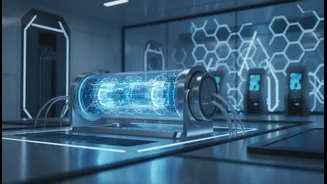
chains concentrated in a few countries. This has driven a global search for alternatives, with sodium emerging as a top contender. Sodium is one of the most abundant elements on Earth, found globally in salt, making it dramatically cheaper than lithium. A sodium-metal battery (SMB) uses a metallic sodium anode instead of the graphite or carbon used in more common sodium-ion batteries, which in theory makes them lighter and more powerful, closing the gap with lithium-ion. The potential is enormous: a cheaper, safer, and more sustainable battery that reduces our reliance on a volatile supply chain.
Solving the Dendrite Dilemma
The primary obstacle holding back sodium-metal batteries has been a tiny, destructive phenomenon known as dendrites. During charging, sodium ions move from one side of the battery to the other. In SMBs, these ions can deposit unevenly on the anode, forming sharp, spiky structures that look like microscopic stalagmites. These dendrites can grow right through the battery, eventually piercing the separator between the anode and cathode. This causes a short circuit, which can kill the battery and, in worse cases, lead to a fire. The recent breakthrough, announced by researchers in China, involves a new type of quasi-solid gel electrolyte. This special gel reinforces the battery's internal structure, promoting a more even flow of sodium ions and preventing the formation of these dangerous dendrites, even during ultra-fast charging.
The Four-Minute Charge Mythos
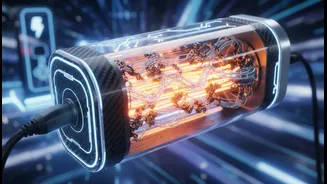
The headline-grabbing four-minute charge was achieved in a small, coin-sized laboratory cell under ideal conditions. In these tests, the battery demonstrated it could handle a very high charging rate while still retaining a respectable amount of its capacity. The special gel electrolyte proved its ability to suppress dendrite growth for over 6,000 hours in one test, and a cell retained 90% of its capacity after 2,000 cycles at a more moderate 20-minute charge rate. However, it's crucial to understand that these impressive figures were not all achieved in a single test on a single battery. They represent different experiments highlighting the potential of the new electrolyte, but they do not mean a single battery charged in four minutes while also lasting for thousands of cycles. This is a proof of concept, not a finished product.
The Long Road from Lab to Factory
The chasm between a successful lab experiment and a commercial product is vast, especially in battery technology. The researchers also built a prototype pouch cell, which more closely resembles batteries used in commercial products, but its performance was far less dramatic. It could not match the headline charging speed and showed significant capacity loss after a relatively small number of cycles. Scaling up production presents immense challenges. A process that works perfectly for a small coin cell can fail unpredictably when producing larger batches, leading to inconsistencies and performance issues. Furthermore, factors like operating temperature and the immense pressure required for some advanced batteries can create entirely new engineering problems when designing a large pack for an electric vehicle.
When Can We Expect Sodium Batteries?
While this specific four-minute battery is likely many years away from commercial reality, the broader field of sodium-ion technology is already on the move. Some commercial sodium-ion batteries, while not as energy-dense as their lithium counterparts, are already entering the market in China for electric cars and grid storage applications. These first-generation products offer lower costs and improved safety, especially in cold weather, at the expense of range and weight. This recent breakthrough in sodium-metal technology is a significant step, solving one of the core chemical challenges. But experts caution that commercialization is a long and incremental process. A realistic timeline for advanced solid-state batteries, a similar next-generation technology, places them around 2030 for niche applications. Sodium-metal will likely follow a similar, decade-long path of refinement.