







A Ritual Born of Rain
Across India, the arrival of the monsoon triggers a collective, unspoken agreement. As temperatures dip and the scent of wet earth—petrichor—fills the air, kitchens spring to life. The sequence is deeply familiar: water goes on to boil, ginger is crushed,
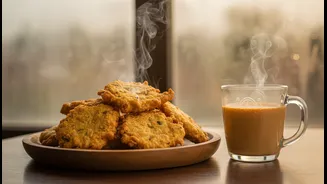
and soon the entire house is filled with the aroma of brewing tea. This craving isn't just about hunger. It's a response to a profound sensory shift. Psychologists note that after the intense heat of summer, the cooler, damp weather makes us naturally gravitate towards things that provide physical and psychological warmth. A steaming cup of chai does more than just warm our hands; it provides a comforting contrast to the world outside, making the experience deeply satisfying.
The Science of Comfort and Craving
At the heart of this obsession is the brain's reward system, a network that reinforces pleasurable behaviours. When you do something enjoyable, like sipping a sweet, warm beverage, this system releases a neurotransmitter called dopamine. Dopamine is often called the 'feel-good' chemical, but it's more about motivation and anticipation. Simply thinking about your favourite chai can trigger a dopamine release, creating that powerful 'wanting' sensation. Foods rich in sugar and fat are particularly effective at activating this system. Masala chai, often prepared with milk and sugar, fits the profile of a classic comfort food. It provides a quick mood boost, which the brain learns to associate with the act of drinking chai, reinforcing the craving every time the monsoon cue appears.
A Symphony for the Senses
Chai is not just a drink; it's a multi-sensory experience. The warmth of the cup, the aromatic steam carrying notes of cardamom, clove, and ginger, and the complex spicy-sweet taste all send signals to the brain. Our sense of smell has a uniquely direct line to the parts of the brain that handle emotion and memory—the amygdala and hippocampus. This is why a particular scent can instantly transport you back in time. The fragrance of brewing chai can evoke feelings of comfort, nostalgia, and happiness before you’ve even taken a sip, activating emotional brain regions more strongly than visual cues might.
The Power of Nostalgia and Association
For many, the link between chai and monsoons was forged in childhood. Rainy days often meant staying indoors, with the family gathered together while a parent or grandparent prepared tea and snacks. Psychologists call this 'associative learning.' When two experiences—like the sound of rain and the comfort of chai—repeatedly occur together, the brain wires them into a single unit. Over years, the monsoon becomes a trigger. The craving you feel isn't just for a beverage; it's for the feelings of safety, warmth, and togetherness associated with those memories. The food and drink become symbols of comfort, not just the source of it.
More Than a Drink, It's a Ritual
Beyond the chemical reactions, the act of making and drinking chai is a powerful ritual. Rituals, from daily morning coffee to larger cultural ceremonies, provide structure, predictability, and a sense of control in a chaotic world. They give us intentional moments to pause, reflect, and connect. The familiar process of brewing tea—the specific ingredients, the order of preparation, the wait—can be grounding and reduce stress. Sharing that chai with family or friends further strengthens social bonds, turning a simple drink into a meaningful shared experience. This ritualistic aspect provides a layer of psychological comfort that is just as rewarding as the drink itself.