



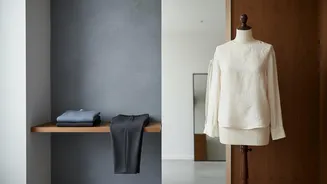

The Fabric Feel Test
The first and easiest quality check is simply touching the material. Low-quality fabrics often feel thin, rough, or synthetic. Hold the garment up to a light source; if it's see-through (unless designed to be), it's likely made from cheap, thin material that
won't last long. A quality fabric, whether it's cotton, wool, or a blend, should feel substantial. A good on-the-spot test is to scrunch a piece of the fabric in your hand for a few seconds. When you let go, does it spring back, or does it stay wrinkled? Fabrics that wrinkle excessively are often lower grade and will look worn out much faster.
Inspect the Stitching and Seams
The stitching is the skeleton of a garment, and it's where manufacturers often cut corners to save time and money. Turn the garment inside out to examine the seams. Quality seams are straight, neat, and have a high density of stitches—meaning the stitches are close together. Gently pull on a seam; if you can see gaps between the stitches, it's a sign of poor construction that could lead to the seam splitting. Look for loose or dangling threads, which indicate a lack of care during production. High-quality pieces will often have finished seams (like French or flat-felled seams) that enclose the raw edge of the fabric, preventing fraying and increasing durability.
Check the Hardware and Details
Buttons, zippers, and other details are small but telling indicators of a garment's overall quality. Zippers should glide smoothly without catching or snagging on the surrounding fabric. Metal zippers are often more durable than plastic ones, unless the garment is very lightweight. Buttonholes should be neatly stitched with no frayed edges. The buttons themselves should feel sturdy, not flimsy, and be sewn on securely. Check for a spare button sewn onto an inside label—it's a small but thoughtful sign that the manufacturer expects the garment to last.
Look for Pattern Matching and Lining
If you're buying something with a pattern, like stripes, plaid, or a floral print, check how the pattern lines up at the seams. On well-made clothing, the patterns will match up seamlessly, especially across the front, back, and at pocket placements. Misaligned patterns are a hallmark of rushed production. Also, check for a lining in items like blazers, skirts, and dresses. A lining not only helps a garment hang better on the body but also adds to its durability and opacity. A poorly attached or non-existent lining is another red flag.
Read the Care and Content Label
Finally, don't forget to check the little tag on the inside. The fabric composition can tell you a lot about how the garment will wear and wash. Natural fibers like cotton, linen, wool, and silk are generally breathable and comfortable. Synthetics like polyester and acrylic have their place, but a garment made of 100% cheap acrylic is likely to pill and feel scratchy after a few wears. The care instructions are also important. If a simple t-shirt requires hand washing or dry cleaning, it might be more trouble than it's worth and indicates a delicate, possibly low-quality construction.