








The Compulsory Health Certificate Is Non-Negotiable
Many first-timers underestimate the strictness of the health requirements. You cannot embark on the yatra without a Compulsory Health Certificate (CHC) issued by a doctor or hospital authorized by the Shri Amarnathji Shrine Board (SASB). A certificate
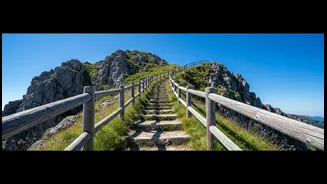
from your local family doctor will not be accepted if they are not on the official state-wise list published by the SASB. For the 2026 yatra, the CHC must be issued on or after the specified date of April 8, 2026. This is not a mere formality; it's a critical safety measure to ensure you are fit for the trek, which reaches altitudes of over 12,700 feet. Both online and offline registration processes require you to submit this valid CHC.
Acclimatization Is More Than Just Rest
The biggest health risk on the yatra is Acute Mountain Sickness (AMS), caused by ascending to high altitudes too quickly. Many pilgrims think acclimatization just means taking it easy. However, it's a specific physiological process. The official advice is to prepare by walking 4-5 km daily for at least a month before the yatra and practicing deep breathing exercises like Pranayam. Once you arrive in Jammu and Kashmir, spend a day or two at a lower altitude (like Pahalgam or Sonamarg) before starting the trek. During the trek, walk slowly, stay hydrated by drinking around 5 litres of fluid daily, and avoid over-exertion. A key principle is to 'climb high, sleep low', meaning you should ascend to a higher altitude during the day and return to a lower point to sleep, which helps your body adapt.
Registration and RFID Cards Are Mandatory
Showing up and expecting to join the pilgrimage is not an option. All pilgrims must register in advance, either online through the SASB website or offline at designated bank branches. This registration requires your CHC, an ID proof like an Aadhaar card, and passport-sized photographs. A recent and crucial addition is the mandatory RFID (Radio-Frequency Identification) card. Every registered yatri must collect their RFID card from designated centers in Jammu or Srinagar before starting the trek. This card must be worn at all times and is essential for your safety and tracking along the route. You will not be allowed to pass checkpoints without it.
Packing Goes Beyond Woollens
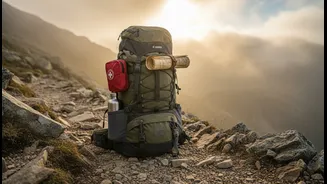
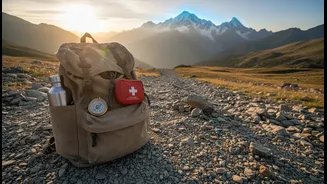
While warm clothes are obvious, the specific type of clothing and gear is what's often missed. The weather is highly unpredictable, with sun, rain, and snow possible in the same day. Layering is crucial: a thermal base layer, a fleece mid-layer, and a waterproof and windproof outer jacket. Waterproof trekking shoes with good grip are essential, not regular sports shoes. Also, pack a waterproof cover for your backpack. Other overlooked essentials include a sun hat, sunglasses, and sunscreen, as UV radiation is stronger at high altitudes. A small first-aid kit with medication for AMS (after consulting a doctor), painkillers, bandages, and antiseptic cream is also vital.
Connectivity and Cash Are Complicated
Do not rely on your prepaid mobile connection. In Jammu and Kashmir, only postpaid SIM cards from other states work, and even then, connectivity can be patchy along the trekking route. While facilities are available, it's wise to inform your family of your itinerary beforehand. Carry sufficient cash. While some services might be available, assuming you can use digital payments for everything from porters to snacks is a mistake. Smaller vendors on the route will likely only accept cash. Keep your money and important documents like your Yatra Permit and ID in a waterproof bag.
Respecting the Environment and Rules
The yatra is a spiritual journey in a fragile ecosystem. The SASB has strict rules that are often overlooked by beginners. For instance, women should avoid wearing sarees, which are impractical and unsafe for trekking; a salwar kameez or tracksuit is recommended. Use of plastics is strictly banned, and pilgrims are expected to use dustbins and lavatories provided at the camps. Do not attempt shortcuts, as they are dangerous and can lead to accidents. Stick to the marked path and always travel with a group. Finally, consumption of alcohol or non-vegetarian food is strictly prohibited.