
The Ultimate Blueprint for Life
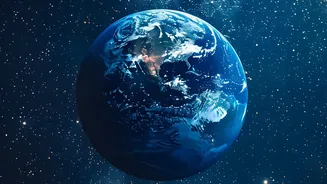
Earth is the only planet we know for certain harbours life. This makes it the ultimate template in the search for habitable worlds, or exoplanets, orbiting distant stars. Scientists use Earth as a 'control case' to understand what a living planet looks
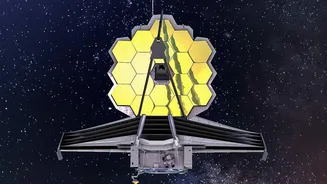
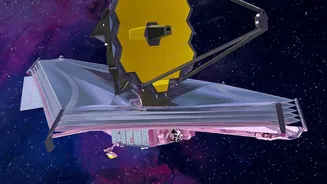
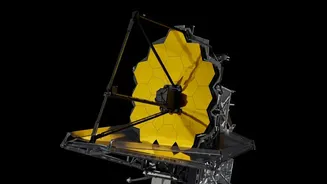
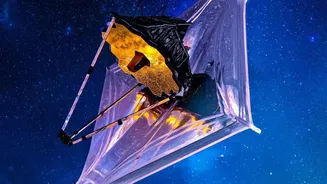
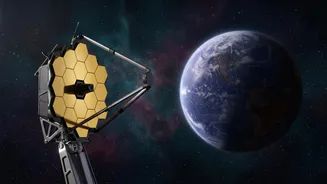
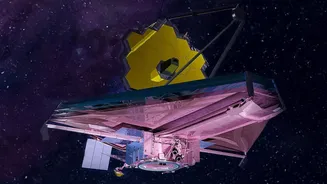
like from afar. By studying our own world, researchers can build models that tell them what to look for when they point powerful instruments like the James Webb Space Telescope (JWST) at a tiny speck of light many light-years away. This involves creating detailed templates of Earth not just as it is today, but as it was through different geological eras, offering a roadmap to identify planets at various stages of evolution.
Reading the Atmosphere for Clues
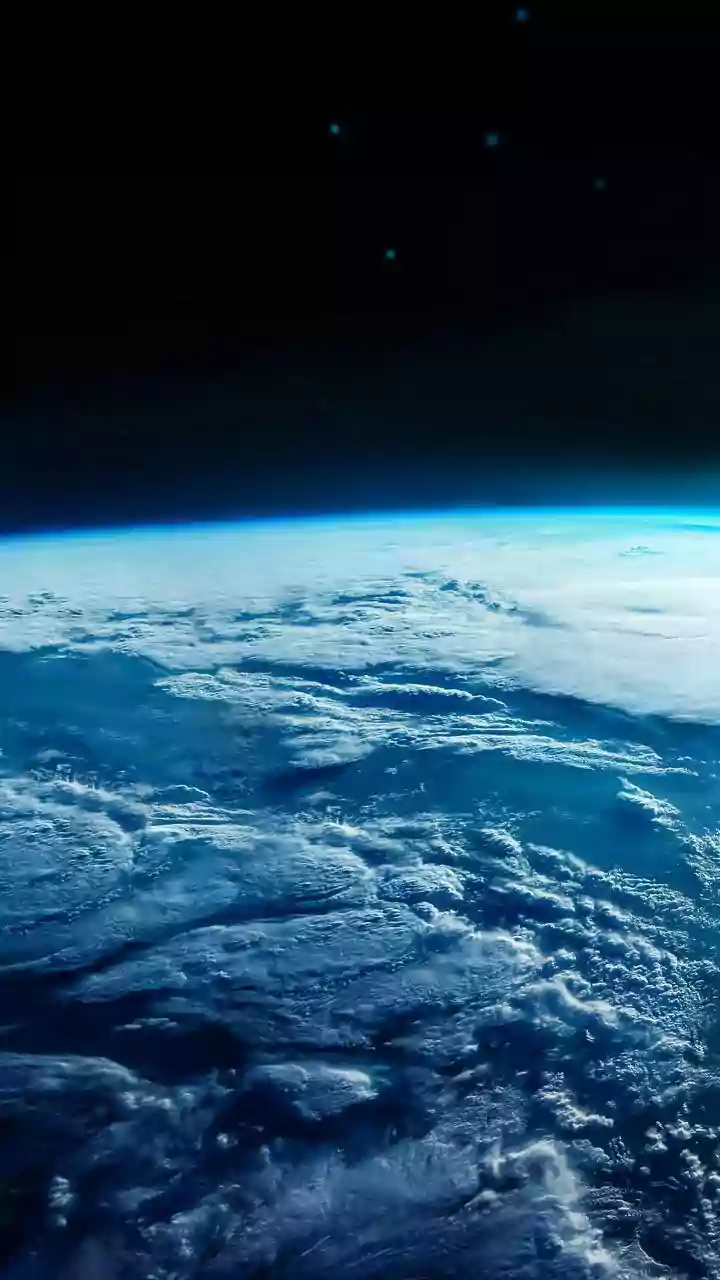
A planet's atmosphere is like its chemical fingerprint, and Earth's is full of tell-tale signs of life, known as biosignatures. The most prominent is oxygen, which is highly reactive and wouldn't exist in such large quantities without being constantly replenished by photosynthesis. The presence of oxygen, along with its byproduct ozone, and other gases like methane and carbon dioxide in specific combinations, can be a strong indicator of biological processes. Telescopes analyze the light from a distant star as an exoplanet passes in front of it. The gases in the planet's atmosphere absorb specific wavelengths of this light, leaving a barcode-like pattern that scientists can read to determine its composition and compare it to Earth's own atmospheric signature.
A Geologically Active Planet Is a Stable Planet
Habitability isn't just about the right chemicals; it's also about stability over billions of years. Earth's plate tectonics play a crucial role in maintaining a stable climate. This geological process acts like a planetary thermostat. Volcanic activity releases carbon dioxide into the atmosphere, warming the planet, while the weathering of rocks and the subduction of tectonic plates capture carbon and store it in the mantle, cooling the planet down. This long-term carbon cycle, driven by the movement of continents, has prevented Earth from becoming a frozen ice ball or a runaway greenhouse like Venus. When scientists assess an exoplanet, they consider its size and mass to infer whether it might have similar geological activity, a key ingredient for long-term habitability.
Redefining the 'Habitable Zone'
For a long time, the search for life focused on the 'Goldilocks Zone' — the orbital distance from a star where it's not too hot and not too cold for liquid water to exist on the surface. However, life on Earth has shown us that biology is far more resilient than we imagined. Scientists have discovered 'extremophiles,' microbes that thrive in the most hostile environments imaginable, from boiling hot springs and highly acidic waters to deep-sea volcanic vents without any sunlight. These hardy organisms show that life can exist in conditions once thought impossible. This has dramatically broadened the definition of a habitable environment, encouraging researchers to consider worlds previously dismissed as too extreme and look for signs of life in unexpected places, like the subsurface oceans of icy moons within our own solar system.
Earth's Own Alien Past
Looking back into Earth’s deep past is like studying an alien planet. Our world has changed dramatically over its 4.5 billion-year history. For billions of years, the atmosphere had virtually no oxygen, and the dominant life forms were microbial. By modeling Earth's ancient, anoxic (oxygen-free) environments, scientists can create templates for what a young, potentially habitable planet might look like. An alien civilization observing Earth two billion years ago would have seen very different chemical signatures than one looking today. This understanding allows astronomers to recognize that a habitable planet doesn't have to be a perfect twin of modern Earth. It could resemble a version of our own world from a bygone era, a crucial insight that prevents us from overlooking a planet that is just beginning its biological journey.