



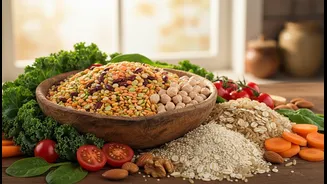




Demystifying 'Good' vs. 'Bad' Fats
Not all fats are created equal. The key to a healthy diet is understanding the difference. 'Unhealthy' fats, namely saturated and trans fats, can raise bad cholesterol (LDL) levels, increasing the risk of heart disease. On the other hand, 'healthy' fats, which
are unsaturated, can have the opposite effect. There are two main types of these beneficial fats: monounsaturated and polyunsaturated. Found in plant-based foods, they help lower bad cholesterol, reduce inflammation, and support everything from brain function to the absorption of essential vitamins. The goal isn't to eliminate fat but to replace unhealthy fats with these healthier alternatives.
A Handful of Health: Nuts Common in India
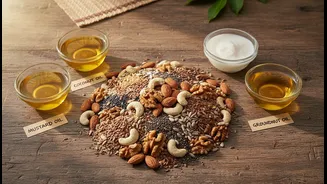
Nuts are a fantastic source of healthy fats, protein, and fibre. Almonds (badam), for instance, are rich in monounsaturated fats and vitamin E. Walnuts (akhrot) are one of the best plant-based sources of omega-3 fatty acids, which are crucial for brain health. Peanuts (moongphali), technically a legume but enjoyed as a nut, provide a good dose of protein and healthy fats. A small handful of mixed nuts makes for a filling snack that can help manage weight by keeping you feeling full for longer. They are a simple and delicious way to incorporate more healthy fats into your daily routine.
The Tiny Powerhouses: Seeds in Indian Cuisine
Seeds may be small, but they pack a significant nutritional punch. Flaxseeds (alsi), rich in omega-3 fatty acids and fibre, are best consumed ground to unlock their full benefits. Chia seeds are another omega-3 powerhouse, also high in fibre and calcium; they absorb water to form a gel, which aids in digestion and hydration. Sesame seeds (til), a staple in Indian kitchens for centuries, are an excellent source of healthy fats, protein, calcium, and iron. Sprinkling a tablespoon of these seeds over your oatmeal, yoghurt, salads, or even mixing them into chapati dough is an easy way to boost your intake of essential nutrients.
Choosing Your Regional Cooking Oil
The cooking oil you use every day is a major source of dietary fat. In India, regional oils offer excellent health benefits. Mustard oil (sarson ka tel), a staple in North and East India, has an ideal ratio of omega-6 and omega-3 fatty acids and is great for heart health. Groundnut oil (moongphali ka tel), popular across the country, is rich in monounsaturated fats and has a high smoke point, making it suitable for frying. Coconut oil, widely used in the South, contains medium-chain triglycerides (MCTs) that are easily digestible. While it is high in saturated fat, its effects are different from animal-based saturated fats and can be part of a healthy diet in moderation. Using cold-pressed or wood-pressed versions of these oils preserves more nutrients.
Smart Ways to Incorporate Healthy Fats
Integrating these foods into your diet doesn't have to be complicated. Start your day by adding a spoonful of chia or ground flaxseeds to your smoothie or porridge. For a mid-day snack, reach for a handful of almonds or walnuts instead of processed snacks. When cooking, choose an appropriate regional oil for your dish. Use mustard oil for a pungent tadka, groundnut oil for frying puris or samosas, and coconut oil for South Indian curries. You can also use olive oil, rich in monounsaturated fats, for sautéing vegetables or as a salad dressing. The key is variety; rotating different nuts, seeds, and oils ensures you get a wide range of beneficial nutrients.