







The AI and Data Explosion
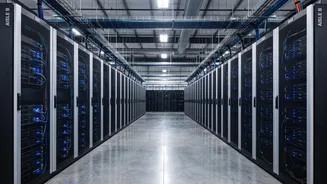
Every time you stream a video, use a digital payment app, or interact with an AI chatbot, you are using a data centre. These facilities are the physical backbone of the digital economy, housing the servers and storage systems that process and hold vast
amounts of information. Globally, their electricity consumption is immense, and according to the IEA, it's set to grow at a staggering pace. The agency projects that global data centre electricity demand could surge from around 485 terawatt-hours (TWh) in 2025 to nearly 1,000 TWh by 2030. That’s roughly equivalent to the entire current electricity consumption of Japan. The primary driver for this explosive growth is the artificial intelligence boom. Training and running AI models is extraordinarily energy-intensive; a single query on an advanced AI can consume up to ten times more electricity than a simple Google search. As AI is integrated into more services, the power demand from these specialised facilities is expected to skyrocket.
India's Data Centre Gold Rush
This global trend has a unique and powerful resonance in India, which is in the midst of a data centre construction boom. Driven by a combination of data localisation laws like the Digital Personal Data Protection Act, the rapid adoption of cloud services, and a push to establish 'sovereign AI' capabilities, India is on track to become one of the world's top five data centre markets. The country's installed capacity has grown dramatically, from under 500 megawatts (MW) in 2019 to nearly 1.8 gigawatts (GW) by mid-2026, with another 3.9 GW already in the development pipeline. This growth is concentrated in hubs like Mumbai, Navi Mumbai, and Chennai. Projections suggest India’s data centre electricity consumption could rise from around 13 TWh in 2024 to 57 TWh by 2030, a more than fourfold increase. This would represent a significant share of the country's total power generation, putting immense pressure on an already strained system.
The Challenge for India's Power Grid
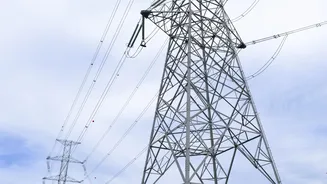
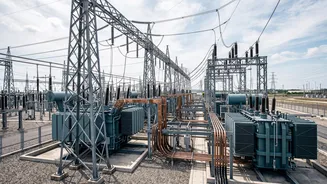
This unprecedented demand raises critical questions for India's power infrastructure. Unlike traditional industrial or residential loads that often dip overnight, AI data centres run at near-full capacity 24/7, creating a massive, constant power draw. This eliminates the overnight slack that grids rely on for stability and maintenance. The problem is not just about generating more electricity, but also about transmitting it. Building new high-capacity transmission lines can take more than 10 years due to planning and approvals, while a large data centre can be built in just two to five years. This mismatch creates a bottleneck, particularly in concentrated hubs like Mumbai. Experts warn that without proactive planning, this could lead to grid instability, voltage fluctuations, and even cascading failures. The costs associated with upgrading the grid to handle this new load are substantial, and the question of who bears that cost—the data centre operators or the public through higher tariffs—is becoming a central issue.
The Search for Sustainable Solutions
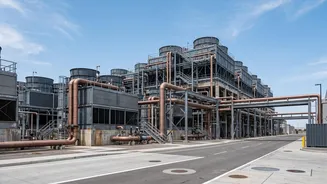
In response to these challenges, there is a growing push for 'green' data centres. State-level policies in places like Maharashtra and Tamil Nadu are already encouraging or requiring new facilities to source renewable energy. Major tech companies are among the largest corporate buyers of renewable power globally. However, the IEA warns that despite these efforts, the sheer pace of growth means fossil fuels may still be needed to fill the gap, particularly natural gas. The agency projects that data centre-related carbon emissions could rise by 70% by 2030. Beyond just sourcing green energy, the industry is also exploring advanced cooling technologies to reduce electricity use, as a significant portion of a data centre's power consumption goes towards keeping servers from overheating. Other potential solutions include locating data centres closer to power generation sources and designing them to provide services back to the grid, helping to balance load during periods of fluctuation.