






The Persistent Problem of Uranium
Uranium contamination is a serious threat to public health and ecosystems. When uranium leaches into groundwater from mining sites or waste disposal areas, it can become soluble. In this form, it travels easily, contaminating drinking water sources far
from the original site. Traditional cleanup methods, such as digging up contaminated soil or using chemical treatments, are often incredibly expensive, disruptive, and can even create secondary pollution problems. The radioactive and chemically toxic nature of uranium means that finding a safe, effective, and affordable way to manage these sites is a critical environmental priority.
Nature’s Cleanup Crew
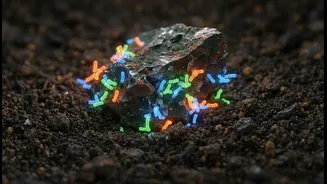
Enter the world of bioremediation, which uses living organisms to clean up pollutants. For decades, scientists have studied specific types of bacteria, particularly those from the Geobacter family, for their remarkable ability to interact with uranium. These naturally occurring microbes were first isolated from contaminated sites, including the soil of a former uranium ore processing facility. What makes them so special is their unique metabolism. In environments without oxygen, these bacteria can essentially "breathe" metals like uranium instead, using them in the chemical reactions that give them energy.
How Bacteria Neutralise a Toxin
The process is a feat of microbial engineering. These bacteria convert dangerous, water-soluble uranium (U(VI)) into a stable, solid form (U(IV)). This is done through a process called bioreduction, where the bacteria add electrons to the uranium ions. This chemical change causes the uranium to precipitate out of the water, forming a solid mineral called uraninite. Once it's in a solid state, the uranium is far less mobile and bioavailable, meaning it is locked in place and less likely to be absorbed by plants, animals, or humans. Some bacteria, like Geobacter sulfurreducens, use tiny protein filaments that act like wires to "zap" the uranium, while other molecules on their cell surface act like sponges to soak it up.
From the Lab to the Land
While laboratory studies have shown tremendous promise, the real world is far more complex. In controlled lab settings, scientists can create the perfect conditions for these bacteria to thrive and do their work. However, a contaminated field site has fluctuating water chemistry, the presence of other metals that might inhibit the process, and changing oxygen levels. Field pilot tests have shown that the process can work, with bacteria successfully reducing uranium concentrations in groundwater. Yet these studies also reveal challenges, such as how changes in groundwater chemistry can negatively affect the bacteria's performance. The leap from successful small-scale tests to widespread, reliable application is a significant one that requires much more evidence.
The Crucial Questions of Safety
Before we can deploy armies of microbes to clean our water, we must ensure they won't cause new problems. A primary concern is the long-term stability of the immobilised uranium. While the reduced form, U(IV), is insoluble, it can be reoxidized back into its soluble form if environmental conditions change, potentially re-releasing the contaminant. Researchers are investigating ways to create protective barriers, such as using iron sulfide, to shield the immobilized uranium from oxygen. There are also ecological questions about introducing large quantities of specific bacteria and the nutrients they need (like acetate or glycerol) into an ecosystem. Fully understanding these risks and ensuring the fix is permanent are non-negotiable steps before this technology can be considered a ready solution.