

Understanding Pranayama's Power
Pranayama translates from Sanskrit as the 'extension of life force'. The practice involves consciously controlling your breath to influence your physical and mental state. When you're stressed, your breathing becomes shallow and rapid, activating your body's
'fight or flight' response. Slow, deliberate breathing does the opposite. It stimulates the parasympathetic nervous system, often called the 'rest and digest' system, which lowers your heart rate, reduces stress hormones like cortisol, and signals to your mind that it's safe to relax and power down for the night.
Technique 1: Bhramari (Humming Bee Breath)
Named after the black Indian bee, Bhramari uses a gentle humming sound to instantly calm the mind. This vibration is incredibly soothing for the nervous system, helping to release anxiety and mental chatter. To practice, find a comfortable seated position. Close your eyes and gently place your thumbs on the cartilage of your ears to close them. Inhale deeply through your nose. As you exhale slowly, keep your mouth closed and make a low-pitched, continuous humming sound, like a bee. Focus on the vibration in your head. Repeat this for 5-10 rounds and notice the immediate sense of tranquility it brings.
Technique 2: Nadi Shodhana (Alternate Nostril Breathing)
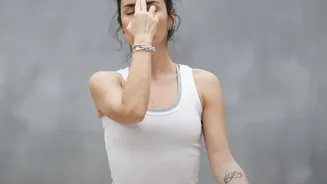
Nadi Shodhana, or 'channel purification' breath, is a balancing technique that helps to harmonise the left and right hemispheres of the brain, leading to a state of profound calm. To begin, sit comfortably and rest your left hand on your left knee. Bring your right hand to your nose. Use your right thumb to gently close your right nostril. Inhale slowly through your left nostril. Then, close your left nostril with your ring finger, release your thumb, and exhale slowly through the right nostril. Now, inhale through the right nostril, close it with your thumb, and exhale through the left. This completes one full cycle. Continue this pattern for 3-5 minutes, allowing your breath to be smooth and steady.
Technique 3: Ujjayi (Victorious Breath)
Often called 'ocean breath' for its gentle, soothing sound, Ujjayi is a technique that builds a gentle internal heat while calming the mind. It involves a slight constriction at the back of the throat, similar to the one you'd make when whispering. With your mouth closed, inhale and exhale slowly through your nose, allowing the breath to create a soft, audible sound like distant ocean waves. This sound becomes a point of focus, drawing your attention away from distracting thoughts. Practicing even 10 rounds of Ujjayi breath while lying in bed can help lull you into a state of deep relaxation, making it easier to drift off to sleep.
Building a Consistent Daily Practice
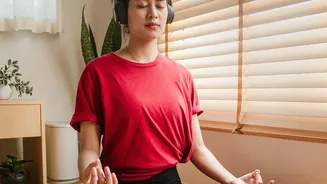
The key to reaping the benefits of pranayama is consistency. Start small by dedicating just five minutes each evening to your practice. Choose a quiet, comfortable space where you won't be disturbed. You can sit on a cushion on the floor or even on the edge of your bed. The best time for these calming techniques is right before you intend to sleep, as they help transition your mind and body into a restful state. Don't feel pressured to master all the techniques at once. Begin with the one that feels most natural to you and gradually explore the others as you become more comfortable. The goal is not perfection, but to create a peaceful ritual that signals to your body it's time to rest.