



The Journey Begins: An Intense Source
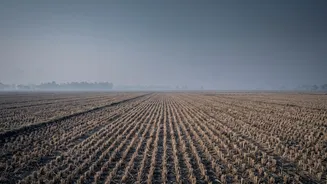
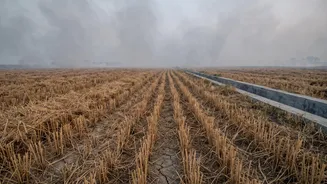
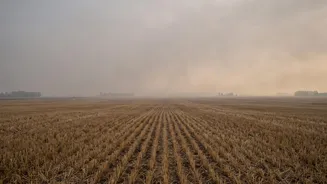
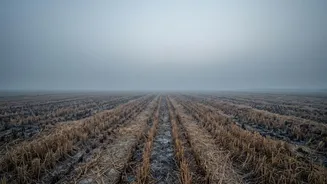
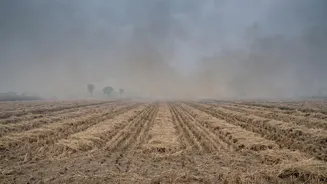
The story starts in the farm fields of states like Punjab, Haryana, and western Uttar Pradesh. After the paddy harvest, farmers are left with large amounts of crop residue, or stubble. Faced with a narrow window to clear their fields for the next crop,
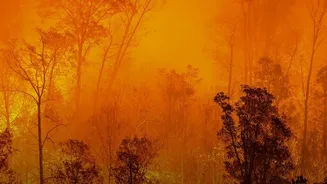
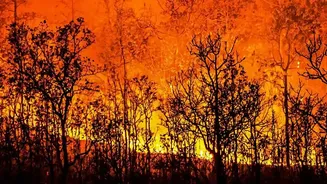
many resort to the quickest and cheapest method: burning. This practice, known as stubble burning, doesn't just produce a little smoke; it creates massive plumes containing a cocktail of harmful pollutants. The most dangerous of these are tiny particles called PM2.5, which are so small they can penetrate deep into the lungs and even enter the bloodstream. The sheer intensity of thousands of fires burning simultaneously creates a huge initial volume of polluted air, ready to be lifted into the atmosphere.
Catching an Updraft: Rising High
Smoke, like any hot air, naturally rises. The heat from these large agricultural fires gives the smoke and its embedded pollutants the initial vertical push they need. The smoke plumes are lifted from the ground level into the lower layers of the atmosphere, often reaching altitudes of a kilometer or more. At this height, they are no longer influenced by ground-level obstacles or localized, gentle breezes. Instead, they enter a different atmospheric domain, where faster, more consistent winds can take over. Think of it like a ship leaving a sheltered harbour and entering the open sea, where powerful currents will determine its path.
Riding the Atmospheric Highway
During the post-monsoon season (October and November), the prevailing wind patterns over North India shift. The winds in the upper atmosphere predominantly flow from the northwest. These steady winds act like a massive conveyor belt, or an atmospheric highway. They pick up the smoke plumes that have risen from Punjab and Haryana and carry them southeast, directly towards the Indo-Gangetic Plain, which includes Delhi-NCR. Because the smoke particles are so fine, they can remain suspended in the air for days, allowing them to travel hundreds of kilometers before they begin to descend. The speed of these winds determines how quickly the pollution arrives, often with a time lag of just one to two days.
The Winter Trap: Temperature Inversion
As the smoke-laden air arrives over cities like Delhi, another crucial weather phenomenon comes into play: temperature inversion. Normally, the air is warmer near the ground and gets colder with altitude, allowing pollutants to rise and disperse. However, during North Indian winters, the situation often flips, especially overnight and in the early mornings. The ground cools rapidly, creating a layer of cold, dense air near the surface, while a layer of warmer air sits on top of it. This warm layer acts like a lid, trapping the cold air below and preventing any vertical movement. The mixing height of the atmosphere—the altitude to which pollutants can be dispersed—drops dramatically.
The Final Descent and Accumulation
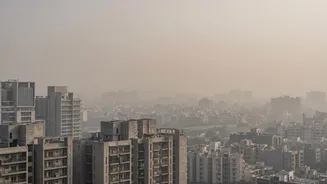
When the smoke travelling on the northwesterly winds reaches an area under a temperature inversion, it gets trapped. The pollutants cannot disperse upwards and are instead forced downwards, mixing with the already polluted air near the ground. This causes a rapid and severe spike in air pollution levels. The smoke from distant farms combines with local sources of pollution—vehicle emissions, industrial fumes, and construction dust—to form a thick, toxic smog. The region's geography, particularly the 'bowl-like' effect created by the Himalayas, can further trap these air masses, preventing them from escaping and leading to prolonged periods of hazardous air quality.