



A New Level of Ambition
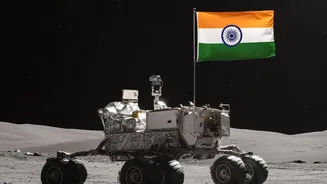
Chandrayaan-3 was a masterclass in landing, but its successor, Chandrayaan-4, is an entirely different league of complexity. The primary goal is to perform India's first lunar sample return, collecting soil and rock from the Moon's south polar region
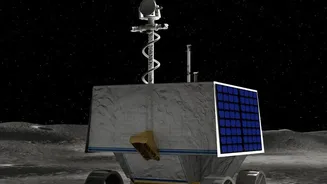
and bringing it safely home. This is a monumental undertaking, described by ISRO as its most complex lunar mission yet. Unlike previous missions that analyzed the Moon on-site, returning physical samples allows scientists to use advanced Earth-based laboratories to unlock deeper secrets about the Moon's origin and history. The mission, with a target launch around 2028, involves not just landing, but also launching off the Moon, docking in lunar orbit, and surviving a fiery re-entry to Earth.
The Five-Part Robotic Ballet
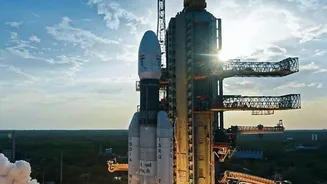
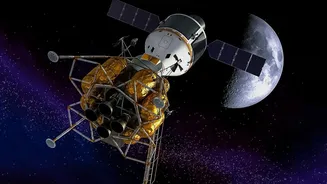
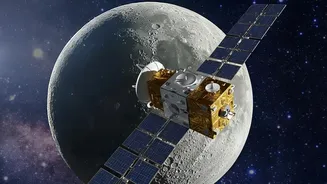
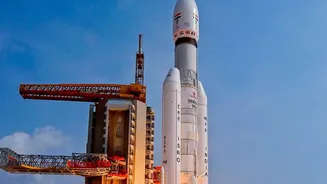
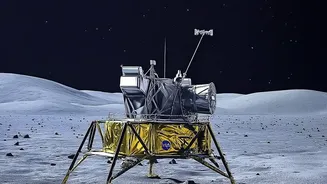
To pull this off, ISRO has designed a five-module spacecraft. Because the entire assembly is too heavy for a single rocket, it will be launched in two parts using India's powerful LVM3 rockets. The modules are a Propulsion Module to travel to the Moon, a Descender (lander) to touch down, an Ascender to launch back into lunar orbit, a Transfer Module to carry the sample in orbit, and a Re-entry Module to bring it back to Earth. In a first for India, these components will have to dock in Earth orbit to form the complete spacecraft before heading to the Moon. This intricate, multi-stage architecture highlights the mission's immense technical challenge.
Collecting the Lunar Treasure
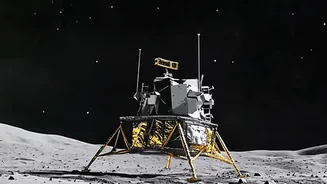
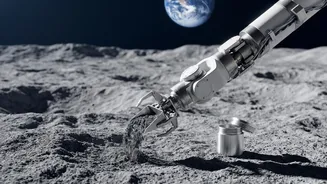
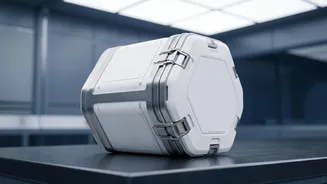
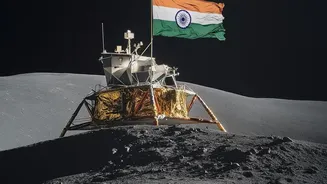
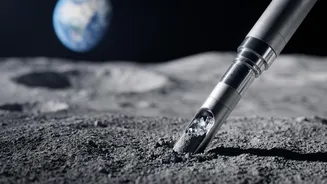
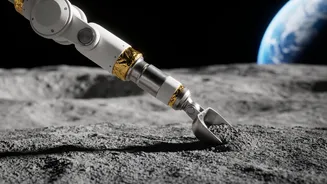
Once the lander touches down near the lunar south pole, the collection process begins. The mission plans to gather up to 3 kilograms of lunar material. The lander will be equipped with two primary tools for this task: a robotic arm with a scoop to collect surface soil, and a drill to dig for sub-surface samples. This dual approach is crucial. The surface is exposed to constant radiation, but samples from even a few centimetres below could be more pristine. Specifically, ISRO is interested in the potential for water ice, which studies suggest is more abundant beneath the surface in the frigid, permanently shadowed regions of the poles. Once collected, these precious samples will be sealed in a container for their long journey home.
The Daring Escape from the Moon
Here's where Chandrayaan-4 enters truly new territory for India: leaving the Moon. After the samples are secured, the Ascender module will fire its engine, using the lander as a launchpad, and lift off from the lunar surface. It must carry the sample container into a stable lunar orbit. This is followed by another critical manoeuvre: the Ascender must autonomously rendezvous and dock with the Transfer Module, which will have been waiting in orbit. During this docking, the sample container will be transferred to the Re-entry Module. This sequence of launching from another celestial body and performing a robotic docking in deep space is a feat of precision engineering that ISRO has been preparing for with precursor experiments like SPADEX.
The Final Fiery Plunge Home
With the sample safely aboard, the Transfer Module will fire its thrusters to push the Re-entry Module out of lunar orbit and onto a path back to Earth. The journey home culminates in the most dramatic phase: atmospheric re-entry. The Re-entry Module, a cone-shaped capsule, will separate and hit Earth's atmosphere at tremendous speed, creating a blazing fireball. It must withstand extreme temperatures and forces before deploying parachutes to slow its descent for a safe landing on Indian soil. Recovery teams will then retrieve the capsule, delivering the first-ever pieces of the Moon brought back by an Indian mission to the nation's scientists for analysis.