





The Lifeboat in the Sky
Before Indian astronauts, or 'Gaganyatris', can journey to low-Earth orbit, the Indian Space Research Organisation (ISRO) must first prove it can save them from a disaster that hasn't even happened. This is the paradoxical but essential purpose of the abort
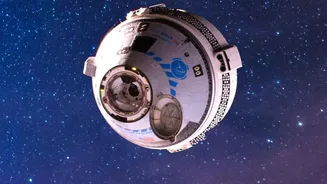
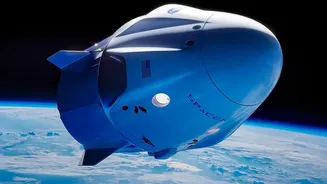
test series. At the heart of these tests is the Crew Escape System (CES), a powerful, rocket-powered mechanism designed to act as a high-speed lifeboat. In the event of a critical failure during launch—the most volatile phase of any space mission—the CES is engineered to fire its own motors, violently pulling the crew module away from the malfunctioning rocket in milliseconds. It then carries the astronauts to a safe altitude and distance, allowing their parachutes to deploy for a secure landing. Mastering this technology is non-negotiable, as it is the ultimate guarantee of astronaut safety.
A Symphony of Controlled Failure
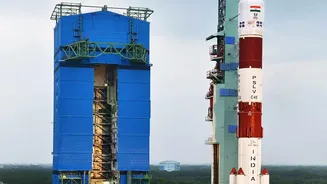
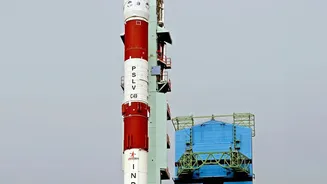
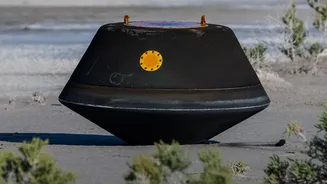
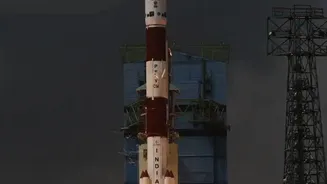
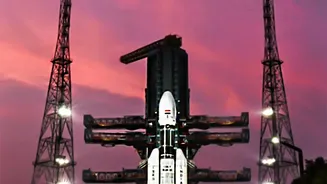
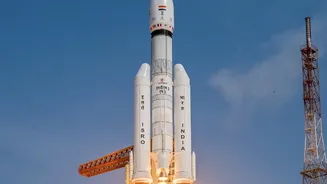
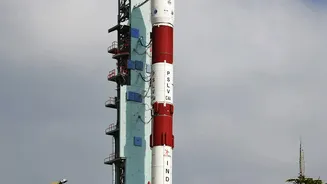
ISRO’s abort test series is not a single event but a carefully orchestrated sequence of high-stakes trials. These tests are designed to validate the CES under various stressful conditions. The first, a Pad Abort Test, demonstrated a successful escape from a simulated emergency on the launch pad itself. More complex is the in-flight abort, like the one successfully conducted during the Test Vehicle Abort Mission-1 (TV-D1). This mission tested the CES's ability to function at transonic speeds—around Mach 1.2—where the launch vehicle experiences maximum aerodynamic pressure. During the TV-D1 test, after a flawless launch, the command was given to abort. The CES fired perfectly, separating the crew module and pulling it clear before it parachuted to a gentle splashdown in the Bay of Bengal, where it was recovered by the Indian Navy. Even a launch-day computer hold, which briefly delayed the mission, was seen as a positive, demonstrating the system's automated safety logic working as intended.
A Public Display of Competence
By publicly and systematically testing its failure management systems, ISRO is sending a powerful message to the world. It signals a level of engineering maturity and transparency that inspires confidence. Unlike the early days of the space race, where risks were sometimes extreme, the modern approach to human spaceflight prioritizes safety above all else. Successfully demonstrating an abort system proves that ISRO is not cutting corners in its quest to become the fourth nation—after the United States, Russia, and China—to independently send humans into orbit. This methodical, safety-first approach is a clear declaration that India intends to be a responsible and reliable member of the exclusive club of spacefaring nations capable of human spaceflight.
Building Bridges Through Trust
This demonstrated reliability has significant geopolitical and strategic implications. A space agency with a proven safety record is an attractive partner for international collaboration. As nations from the US to Australia and Europe look for reliable partners in space, ISRO's successful tests make it a more credible candidate for joint missions, astronaut training exchanges, and even future commercial space ventures. For example, successful tests have already underpinned deeper collaboration with agencies like NASA and ESA on ground station support and astronaut training protocols. Global confidence isn't just about applause; it's about being trusted enough to participate in the next generation of collaborative space exploration, such as potential docking with the International Space Station or contributing to future lunar missions. A reliable crew vehicle is the ticket to that global stage.
The Path Forward to Orbit
The abort test series is a critical stepping stone in the larger Gaganyaan timeline. With the successful completion of the TV-D1 mission and advanced preparations for the next test, TV-D2, ISRO is systematically checking off the requirements for human-rating its launch vehicle. These tests pave the way for a series of uncrewed orbital missions, which will test the vehicle's full performance, re-entry, and recovery systems before any astronaut boards the capsule. While timelines have been adjusted to ensure every system is perfected, the first uncrewed orbital flight is anticipated in the near future, leading towards a crewed launch projected for 2027. Each successful abort test brings that historic moment one step closer to reality, building not just a spacecraft, but a foundation of trust.