





The Challenge of Lunar Living
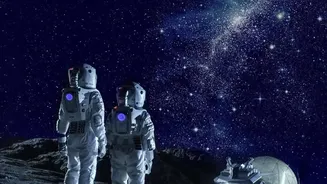
Establishing a permanent base on the Moon isn't as simple as just landing there. The lunar surface is one of the most hostile environments imaginable. With virtually no atmosphere, there is nothing to shield astronauts from the constant bombardment of dangerous
cosmic and solar radiation. Temperatures swing wildly, from a scorching 127 degrees Celsius in the sunlight to a frigid -173 degrees Celsius in the dark. Furthermore, the surface is constantly pelted by micrometeoroids, tiny particles traveling at incredible speeds that can damage suits and structures. Building surface habitats capable of withstanding these threats would require launching immense amounts of heavy shielding material from Earth, a costly and complex undertaking. This is why NASA is looking for a better, more natural solution that might already be there.
The Allure of Lunar Lava Tubes
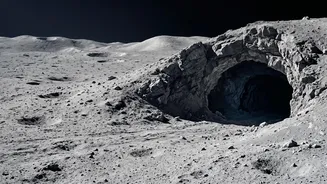
The most promising solution lies beneath the lunar surface in what are known as lava tubes. These are massive, underground tunnels believed to have been formed billions of years ago when the Moon was still volcanically active. As rivers of lava flowed, the outer surface cooled and hardened, creating a solid crust. The molten rock inside eventually drained away, leaving behind vast, hollow caverns that could stretch for kilometres. Scientists have long theorized their existence, but recent orbital data has identified several 'skylights'—collapsed sections of a tube's roof—that provide potential entry points. One such feature, the Marius Hills Pit, is a hole roughly the size of a football field that has become a prime target for exploration. If these pits do indeed lead to extensive cave systems, they could be the key to humanity's future on the Moon.
A Natural Shield and Stable Home
The appeal of a lunar cave is simple: it offers free, natural protection. The thick ceiling of rock would provide a powerful shield against the relentless radiation and the threat of micrometeoroid impacts, creating a much safer environment for astronauts. Inside a cave, the extreme temperature fluctuations of the surface would disappear. Data from one lunar pit suggests that areas in permanent shadow maintain a stable and almost comfortable temperature of around 17 degrees Celsius. This stability would dramatically reduce the energy needed to heat and cool a habitat. A confirmed, accessible lava tube could transform mission planning, influencing where NASA establishes its Artemis Base Camp and allowing for lighter, more efficient habitat designs. It would essentially provide a ready-made bunker, courtesy of the Moon itself.
The Tools for the Job
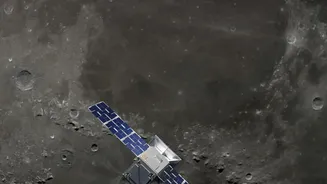
To confirm these theories, NASA has selected new investigations to study these features from the ground. One key mission is called GIMLI (Geophysical Instruments for Marius Lunar pit Investigation). With a fitting name borrowed from Tolkien's famous cave-dweller, GIMLI will send a rover equipped with a suite of specialized tools to the Marius Hills Pit. These instruments include ground-penetrating radar and seismic sensors to map what lies beneath the surface, effectively creating an underground image to see if a void exists. A gravimeter will measure subtle differences in gravity that could indicate a hollow space, while high-resolution cameras will image the pit's walls. These investigations, managed through NASA's Commercial Lunar Payload Services (CLPS) initiative, aim to provide the first direct, on-the-ground evidence of an accessible lunar lava tube.
What Comes Next?
The results from GIMLI and other related studies will be a critical step in planning for a sustainable human presence on the Moon. These investigations are part of a broader strategy that also includes instruments to search for water ice and monitor environmental hazards. If a large, stable lava tube is confirmed at the Marius Hills site, it would become a high-priority target for future robotic and, eventually, human exploration. Other mission concepts, like the Lunar-VISE rover, are also being developed to study the Moon's volcanic history, which will provide more context on how these massive tubes formed. While a crewed mission to live inside a lunar cave is still many years away, these initial reconnaissance missions are laying the essential groundwork, turning a science-fiction dream into a practical engineering goal.