


The Devastating Impact of Downy Mildew
For grape growers in Nashik, downy mildew is more than just a nuisance; it's an economic catastrophe waiting to happen. Caused by a fungus-like organism that thrives in warm, wet conditions, the disease attacks grapevine leaves, shoots, and fruit. It
first appears as yellowish, oily spots on leaves, followed by a white, cottony growth on the underside. If left unchecked, it can lead to premature leaf fall, shriveled berries, and significantly reduced photosynthesis. In severe outbreaks, farmers can face crop losses of 50% or more, a devastating blow to their livelihood. A study focusing on the region highlighted that pest and disease infestation, particularly downy mildew and powdery mildew, is the most significant constraint faced by local grape farmers.
The Old Way: A Slow and Costly Battle
Traditionally, fighting downy mildew has been a grueling and often inefficient process. It relies on manual scouting, where farm workers walk through acres of vineyards, visually inspecting plants for the first signs of disease. This method is not only labor-intensive and time-consuming but also prone to human error, as early symptoms can be easily missed. Once an infection is suspected, the common response is to spray fungicides across large sections of the vineyard, often as a preventative measure. This blanket-spraying approach leads to high costs for chemicals, significant water usage, and potential environmental harm from chemical runoff. It’s a reactive strategy that often comes too late, after the disease has already begun to take hold.
A New Eye in the Sky
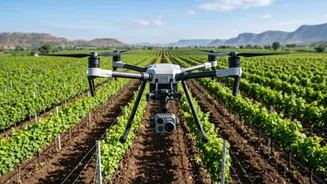
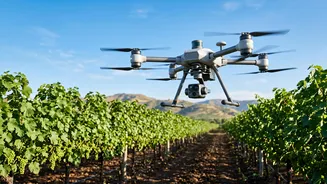
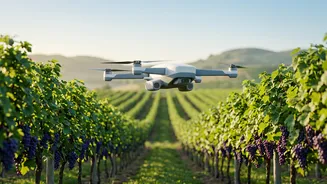
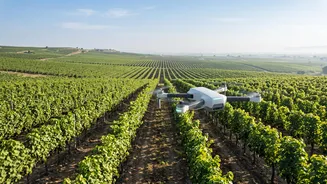
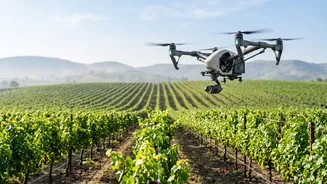
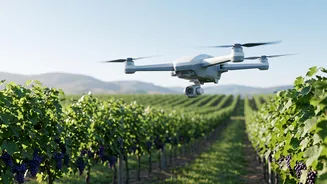
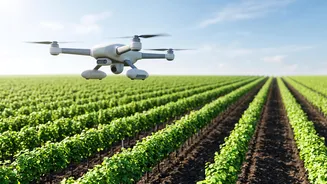
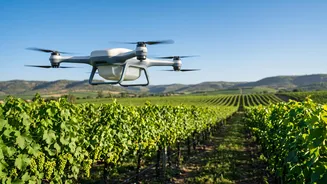
Enter the AI-powered drone. These unmanned aerial vehicles (UAVs) are equipped with advanced multispectral and hyperspectral cameras that see far more than the human eye. Flying programmed routes over the vineyards, they capture detailed images of the crop canopy, analyzing the way light reflects off the leaves. Healthy plants and stressed plants reflect light differently. An infection like downy mildew causes subtle changes in a plant's physiology and temperature long before visible spots appear. The drones capture this invisible data, creating a complete health record of the entire vineyard in a fraction of the time it would take a team on the ground.
The AI Brain That Sees the Unseen
The magic happens when this aerial data is processed by artificial intelligence. The images are fed into a sophisticated AI model that has been trained on thousands of pictures of both healthy and diseased grapevines. The AI algorithm scans for the unique spectral signatures associated with downy mildew, identifying patterns of stress across the field. It can distinguish between a plant suffering from water shortage and one in the early stages of a fungal attack. The system then generates a precise 'disease map' that highlights specific hotspots where the infection is emerging, often days before it would be visible to a farmer. This provides an invaluable early warning, transforming disease management from a reactive guess into a proactive, data-driven science.
From Detection to Precision Action
This disease map is not just for diagnosis; it's a direct instruction for targeted action. Instead of spraying the entire vineyard, a second drone equipped with a sprayer can be dispatched to the exact locations identified by the AI. This precision spraying has revolutionary benefits. Studies have shown it can reduce the use of pesticides by up to 40% and water consumption by as much as 90%. For farmers, this means massive cost savings on expensive chemicals and labor. For the environment, it means less chemical exposure and healthier soil. More importantly, by catching and treating the disease at its inception, this method prevents widespread outbreaks, secures crop yield, and improves the overall quality of the grapes.
The Future of Farming in India
This technology is no longer a distant dream. Several Indian agritech startups are making these services accessible to farmers across the country. While the initial cost of purchasing a high-end agricultural drone can be a barrier for small farmers, many companies are offering 'drone-as-a-service' models. Farmers can hire the service for a specific task like surveying or spraying, making the technology affordable without a large upfront investment. Government initiatives like the 'NaMo Drone Didi' scheme, which aims to empower women's self-help groups with drone technology, are further accelerating adoption. The success in Nashik's vineyards serves as a powerful blueprint for how technology can be used to tackle similar challenges in other crops and regions, making Indian agriculture more resilient, profitable, and sustainable.