
A Cosmic Detective Story
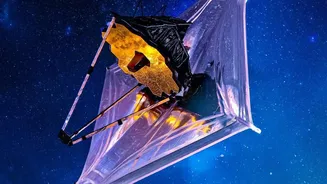
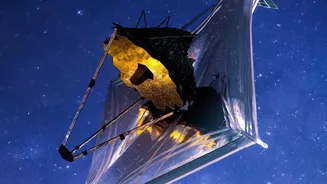
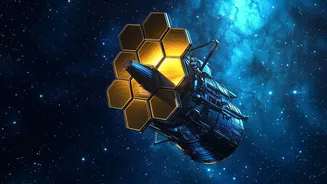
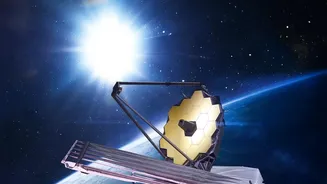
Since it began its mission, the James Webb Space Telescope (JWST) has been unveiling a universe more detailed and ancient than ever before. Among its most puzzling discoveries are objects astronomers have informally nicknamed 'little red dots' (LRDs).
These are extremely distant, compact sources of light, seen as they were when the universe was in its infancy, less than a billion years after the Big Bang. Their distinct reddish hue is a result of their immense distance; as the universe expands, it stretches the light travelling from these objects, shifting it towards the red end of the spectrum in a process known as redshift. Hundreds of these mysterious dots have been catalogued, each one a tiny clue in a grand detective story about the origins of the cosmos.
The Galaxy Hypothesis
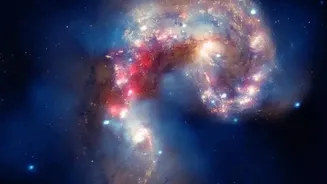
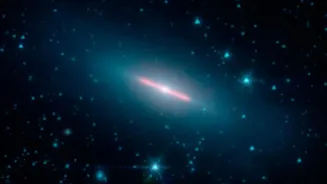
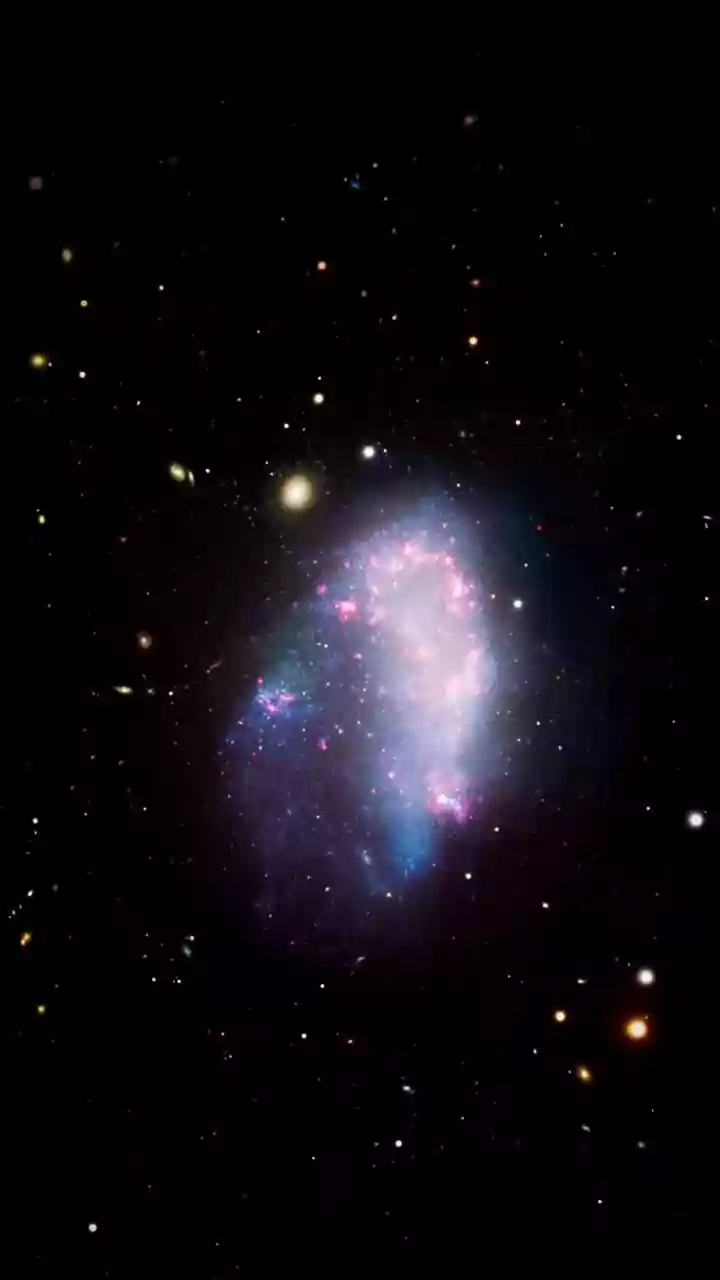
The initial and most straightforward theory was that these LRDs were the seeds of modern galaxies—extremely compact, young galaxies furiously forming stars. In this scenario, their small size and red colour could be explained by vast clouds of cosmic dust obscuring the blue light from newborn stars. If this were true, these objects would represent a crucial, missing link in our understanding of galaxy formation, the building blocks that eventually grew into colossal structures like our own Milky Way. The problem, however, was their implied mass. For them to be so bright, they would have to be incredibly massive, perhaps even more so than the Milky Way today—a seemingly impossible feat for such a young universe where there simply hadn't been enough time to accumulate that much matter.
Webb's New Clues Provide a Twist
This is where the 'latest study' comes in. Using Webb’s powerful spectroscopic instruments, which break down light to reveal its chemical composition and the motion of gas, astronomers have found that not all little red dots are alike. While some fit the profile of a star-forming galaxy, a significant number do not. Instead of showing the expected signatures of widespread star birth, they show signs of gas moving at incredible speeds, orbiting a central point at millions of kilometres per hour. This kind of extreme velocity is not caused by stars; it's the tell-tale sign of matter being whipped around by the immense gravity of a supermassive black hole.
Enter the Supermassive Black Hole
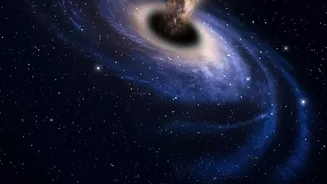
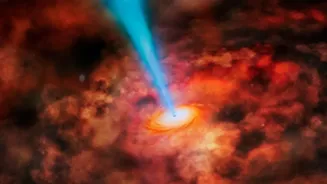
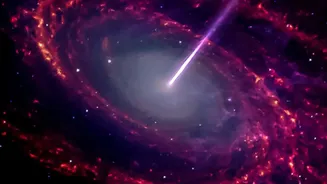
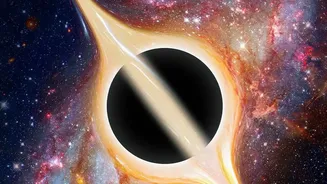
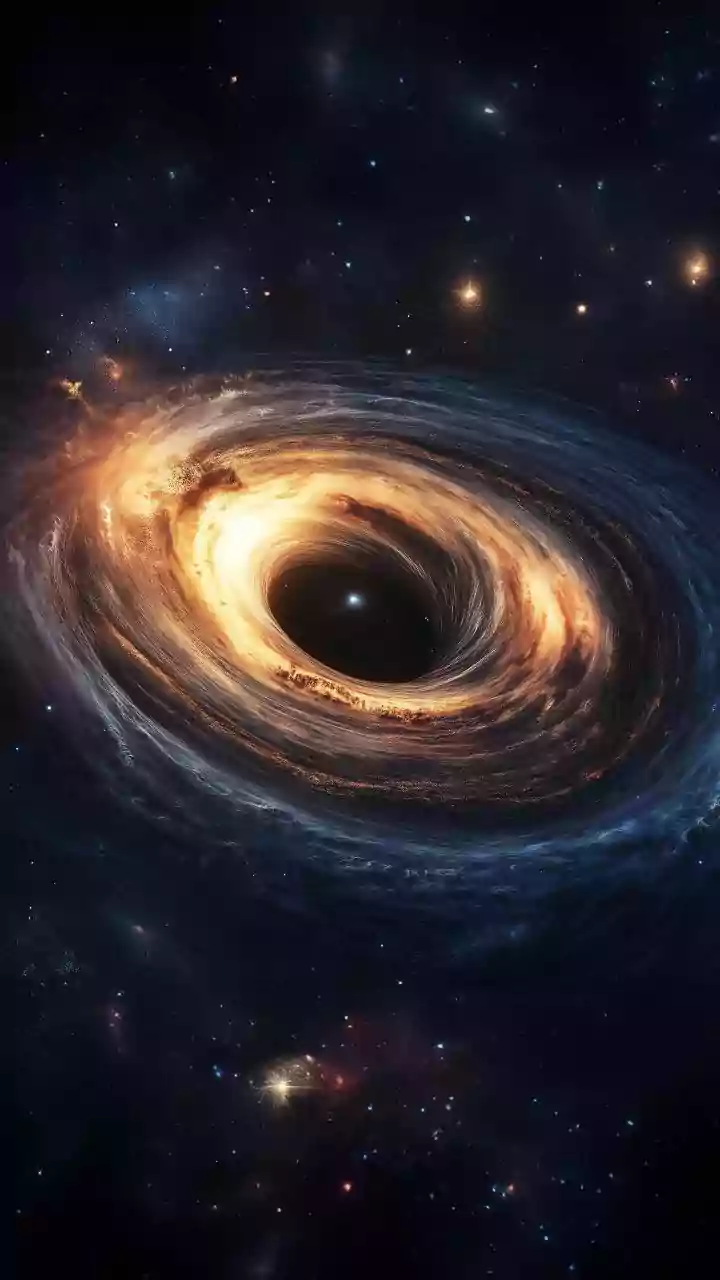
This leads to a compelling alternative theory: many of these little red dots are not galaxies at all, but quasars. A quasar, or an Active Galactic Nucleus (AGN), is a brilliant, compact region at the centre of a galaxy powered by a supermassive black hole actively feeding on gas and dust. As matter spirals into the black hole, it heats up and releases an astonishing amount of energy, often outshining the entire host galaxy. This would explain the LRDs' intense brightness and small size. Yet, these objects don't look exactly like the quasars we see in the nearby universe; they lack strong X-ray emissions and show other unusual spectral features, which has kept the debate alive.
Rewriting Cosmic History?
The latest findings don't provide a final answer but instead sharpen the question. It seems that 'little red dot' is a catch-all term for at least two different types of objects. The implications of this are profound. If a large fraction of these dots are indeed quasars, it means that supermassive black holes—monsters weighing millions or even billions of times more than our sun—existed and were actively growing much earlier than most cosmological models predict. This challenges our fundamental understanding of how these giants form. Did they grow from smaller, stellar-mass black holes over billions of years, or did they perhaps form from the direct collapse of massive gas clouds in the early universe, skipping the star phase entirely? Some theories even propose these objects could be a new type of object entirely, a 'black hole star' where a supermassive black hole is shrouded in a dense cocoon of gas.