






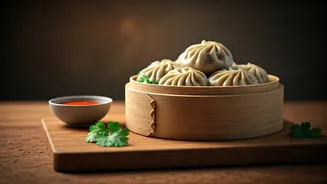


The Perfect Dough: Your Foundation
The secret to a great momo is a wrapper that’s thin but strong enough to hold the filling. Forget store-bought sheets; making your own dough is simple and yields far better results. All you need is 2 cups of all-purpose flour (maida), about ¾ cup of warm
water, and a pinch of salt. Combine the salt and flour in a large bowl. Slowly add the warm water, mixing with your fingers until a shaggy dough forms. Knead it on a lightly floured surface for 8-10 minutes until it’s smooth and elastic. The final texture should be firm, not sticky. Cover the dough with a damp cloth and let it rest for at least 30 minutes. This resting period is crucial; it relaxes the gluten, making the dough easier to roll out.
Crafting Your Flavourful Filling
Here’s where you can get creative. The key is a filling that’s flavourful but not watery. For a classic vegetable filling, finely chop 1 cup cabbage, ½ cup carrots, and 1 medium onion. Sauté them with minced ginger, garlic, a splash of soy sauce, and a pinch of black pepper until just tender. Let it cool completely. For a juicy chicken filling, mix 250g of minced chicken with 1 finely chopped onion, a tablespoon of minced ginger and garlic, fresh coriander, soy sauce, and a teaspoon of oil. Unlike the veg version, the chicken filling is traditionally used raw, as it cooks perfectly during the steaming process, keeping the momos incredibly moist inside. For both options, ensure your vegetables are chopped very finely to avoid tearing the wrapper.
The Art of the Fold
This is the fun part! Pinch off a small piece of dough and roll it into a thin circle, about 3-4 inches in diameter. Keep the centre slightly thicker than the edges. Now, let’s fold. For a simple half-moon (like a gujiya), place a spoonful of filling in the centre, fold the dough over, and press the edges to seal. For the classic pouch (potli), place the filling in the centre and start pleating the edge with your thumb and index finger, rotating the momo as you go until you reach the start. Pinch the top to seal the pleats together. Don’t worry if your first few aren’t perfect. The goal is a tight seal so the juicy filling doesn’t escape. Practice makes perfect!
Steaming to Perfection
A bamboo or steel momo steamer is ideal, but you don't need one to succeed. You can easily create a makeshift steamer by placing a metal colander or an idli stand inside a large pot with an inch or two of boiling water at the bottom, ensuring the water doesn't touch the momos. Lightly oil the surface of the steamer tray or colander to prevent sticking. Arrange the momos an inch apart to allow for expansion. Cover the pot with a tight-fitting lid and steam on high heat for about 10-12 minutes. You’ll know they’re ready when the wrappers look translucent and feel non-sticky to the touch. Over-steaming can make the dough tough, so keep an eye on the time.
Don't Forget the Fiery Chutney
A momo is incomplete without its iconic red chutney. To make a quick version, boil 3-4 large tomatoes and 5-6 dried red chillies until the tomato skin starts to peel. Let them cool, then peel the tomatoes. Blend the peeled tomatoes, soaked chillies, 4-5 cloves of garlic, a small piece of ginger, and salt to taste into a smooth paste. You can add a pinch of sugar to balance the heat and tang. This chutney provides the perfect spicy, tangy kick to complement the savoury, delicate flavour of the momos. It’s the final touch that brings the entire experience together.