







The long queues at immigration and the need to repeatedly present your passport are common travel frustrations. A new global study confirms this sentiment, showing passengers are increasingly fed up with complex entry rules.
The Growing Burden of Border Control
International travel may be
easier to book, but the process of actually crossing borders is becoming a significant deterrent for many. According to the International Air Transport Association's (IATA) 2026 Global Passenger Survey, 43% of travellers said they were discouraged from visiting a destination due to its immigration requirements. This is a sharp increase from 33% in 2025, indicating that cumbersome visa applications and entry procedures are a growing barrier to travel. While overall satisfaction with air travel remains high at 87%, it drops significantly for processes like border control and immigration (70%). The primary reason for this frustration isn't cost or privacy, but overwhelming complexity, cited by 53% of those deterred by immigration rules.
A Clear Mandate for Digital Solutions
The message from passengers is clear: they are ready to embrace technology for a smoother journey. The survey shows a strong willingness to go digital to speed things up. An overwhelming 86% of travellers said they are likely to share immigration information digitally before departure for a faster process, up from 83% the previous year. Furthermore, the desire to handle these formalities before even leaving for the airport is growing, with 45% of passengers preferring to complete immigration procedures in advance, compared to 41% in 2025. This preference extends to visa applications, where 60% would rather apply online, while only 25% prefer the traditional in-person visit to a consulate or embassy.
The Promise of a Biometric-Powered Journey
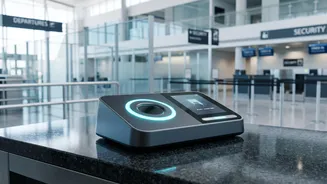
The solution, championed by IATA and increasingly accepted by passengers, lies in biometrics. Imagine walking through the airport—from check-in to security and boarding—without ever needing to show your passport or boarding pass. This is the vision of IATA's 'One ID' initiative, which uses a passenger's biometric data, like a facial scan, as a single travel token. Passenger experience with this technology is already proving positive. Nearly six in ten travellers (58%) have used biometrics in the last year, with 87% reporting they were happy with the experience. Crucially, 78% of passengers stated they would be willing to share their biometric data in exchange for a frictionless airport experience.
Digital Credentials: The Passport of the Future
The backbone of this seamless travel concept is the Digital Travel Credential (DTC). Developed by the UN's International Civil Aviation Organization (ICAO), a DTC is a secure, digital version of a physical passport stored on a personal device like a smartphone. It allows a traveller to control their own data, sharing only what is necessary for each step of the journey. For example, an airline may only need to verify a name and date of birth, while border control requires the full set of identity details. Passenger interest in this technology is high, with 84% interested in using a digital passport for online check_in.
Navigating the Path Forward
While the technology exists and passenger demand is evident, a fully biometric and paperless travel experience requires global cooperation. Governments must agree on a standardized framework for issuing and accepting DTCs to ensure they are interoperable across borders. Despite the convenience, passengers do have valid concerns about data security. The IATA survey found that the top worries regarding biometrics are data breaches (59%) and a lack of clarity on how personal information is handled (41%). Addressing these privacy concerns will be just as important as building the technology itself. As IATA's Senior Vice President Nick Careen noted, the benefits are smoother journeys for passengers and more efficient, secure processes for governments and airlines.