




A Fragile Foundation
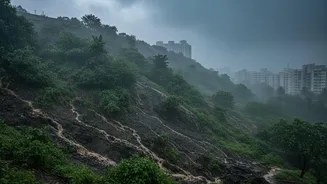
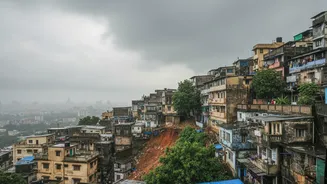
Mumbai is not entirely flat. The city is dotted with hillocks, especially in areas like Ghatkopar, Vikhroli, Chembur, and Malad. Geologically, many of these hills are composed of rock and soil that can become unstable. The top layer often consists of loose
soil and weathered rock sitting on a harder, less permeable layer below. During the dry season, this structure holds firm. However, when the monsoon arrives, this delicate balance is dangerously disrupted.
The Soaking Effect of Rain
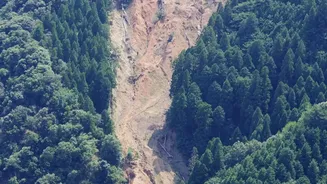
The primary trigger for most landslides is intense or prolonged rainfall. As rain continuously soaks the ground, water seeps into the porous topsoil, filling the tiny gaps between particles. This process dramatically increases the weight of the soil. At the same time, the water reduces the natural friction that holds the soil particles together. Eventually, the water reaches the hard rock layer underneath and pools, creating a slippery surface. The heavy, water-logged soil on top can then slide down this lubricated plane, leading to a debris flow or landslide. Climate change is also believed to be worsening the problem by causing more extreme rainfall events.
The Human Hand in the Hazard
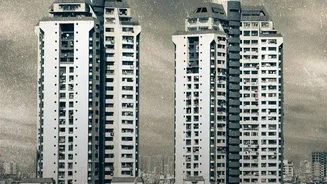
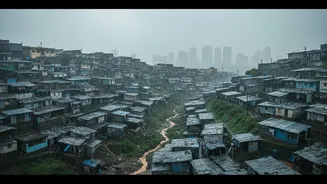
Natural geology is only part of the story; human activity significantly amplifies the risk. In a city as dense as Mumbai, every square foot of land is precious. This has led to widespread construction, both legal and informal, on the slopes and at the foothills of these vulnerable hillocks. Cutting into a hill to create a flat surface for a home or a road removes the natural support at the base of the slope. This 'toe-cutting' destabilises the entire mass of land above it. Furthermore, deforestation and the removal of vegetation to clear land for housing robs the slopes of the roots that help bind the soil together, accelerating erosion.
Construction and Blocked Drainage
The way structures are built and how waste is managed also plays a crucial role. Unplanned construction often leads to the blocking of natural streams and drainage channels that are meant to carry rainwater safely down the hills. When these paths are blocked, water is forced to find new routes, often causing it to concentrate in specific areas and saturate the soil much faster. The added weight of buildings on already unstable slopes further increases the downward pressure, making a collapse more likely. Many of the homes in these areas are informal settlements with weak foundations, making them disproportionately vulnerable.
A Known and Recurring Danger
Civic authorities like the Brihanmumbai Municipal Corporation (BMC) are well aware of the risks. Data from the BMC has identified hundreds of landslide-prone locations across the city, with a significant number of people living in these high-risk zones. Before each monsoon, the BMC issues notices urging residents in the most dangerous spots to relocate to temporary shelters. However, social and economic factors often make it difficult for families to leave their homes, jobs, and communities, even temporarily. The result is a perilous situation where thousands live with a known threat, hoping the next downpour doesn't bring disaster to their doorstep.