

A New Eye on Planet Earth
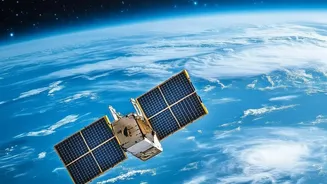
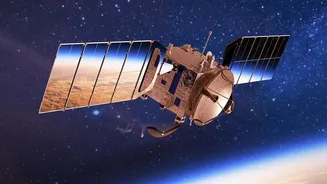
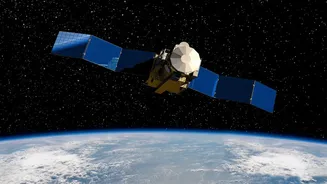
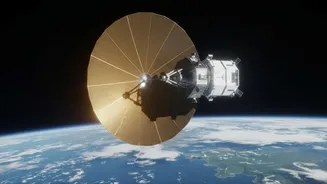
The NISAR (NASA-ISRO Synthetic Aperture Radar) mission is an unprecedented collaboration between the U.S. and Indian space agencies. At its heart is a sophisticated satellite equipped with dual-frequency radar (L-band and S-band) that can observe Earth's
surfaces day or night, regardless of cloud cover. While other satellites have monitored the planet, NISAR is a game-changer. It will scan nearly the entire globe every 12 days, detecting changes in the planet's surface as small as a centimeter. This consistency and incredible detail provide a continuous, reliable stream of information on everything from melting glaciers and shifting coastlines to the subtle breathing of forests and the strain on tectonic plates before an earthquake. It's like giving scientists a new set of eyes to watch the slow, often invisible processes that define our changing climate.
From Space to Your Hard Drive
Perhaps the most revolutionary aspect of the NISAR mission is its data policy. All science data is being made freely and openly available to the public. In July 2026, the mission began releasing its calibrated L-band data through NASA's portals, with S-band data available via ISRO's Bhoonidhi platform. This isn't just a small sample; it’s the beginning of a deluge of information. The mission is expected to generate a staggering volume of data, with earlier projections suggesting as much as 85 terabytes per day. By making this information accessible to anyone with an internet connection, from university researchers to startups and citizen scientists, the mission democratizes Earth observation. This open-access approach is a deliberate strategy to accelerate discovery and innovation far beyond what a small group of scientists could achieve alone.
Training the Next Generation of Climate AI
This massive, high-quality dataset is the fuel needed for the next generation of artificial intelligence and machine learning. The headline's focus on "climate data training" refers to using this information to teach algorithms how to spot patterns that are too subtle or vast for humans to analyze manually. For example, an AI could be trained on NISAR's 12-day repeat imagery to learn the visual signature of deforestation, illegal mining, or early-stage drought in agricultural lands. Researchers have already demonstrated the potential of using simulated NISAR data with machine learning to precisely estimate soil moisture, a critical factor in agriculture and water management. With the real data now flowing, these models can be refined and deployed globally, creating powerful tools for monitoring and predicting environmental changes with unprecedented speed and accuracy.
Real-World Applications Unlocked
The potential applications span nearly every sector. In agriculture, NISAR data will help monitor crop health, soil moisture, and land use, supporting food security and improving yield forecasts. For disaster management, the ability to detect centimeter-scale ground deformation can provide warning signs of landslides or volcanic eruptions. After an earthquake, the data can rapidly map damage to infrastructure, guiding relief efforts more effectively. The L-band radar is particularly effective at penetrating forest canopies to map flooding that would be invisible to optical satellites, and it can track the melt rate of ice sheets contributing to sea level rise. This data provides a crucial backbone for governments and businesses to make informed decisions on everything from infrastructure planning to climate resilience.
The Challenge of Big Data
While the data is free, working with it presents its own set of challenges. The sheer volume—potentially petabytes over the mission's lifetime—makes downloading it to a local computer impractical for many. This is why access is also being provided through cloud-based platforms, allowing users to process the data in the cloud without needing to download massive files. To help the global community get up to speed, NASA is offering training workshops and providing tools to help users access, visualize, and analyze the data. Building the skills and computational infrastructure to fully leverage this resource will be a key focus for the scientific and tech communities in the coming years. It represents a significant opportunity for companies specializing in data analytics and cloud computing to develop new services and platforms tailored to this firehose of information.