



Start with a Blank Slate
Before you can create a masterpiece, you need a clean canvas. The first and most crucial step is to take everything off your shelves. Give the surfaces a good wipe-down. This allows you to see the space with fresh eyes and stops you from simply rearranging
existing clutter. As you clear the shelves, sort your items into three piles: books to keep on display, decorative objects you love, and items that can be stored elsewhere. Be ruthless. A bookshelf is prime real estate; only the items that bring you joy or serve a purpose should make the cut.
Play with Book Orientation
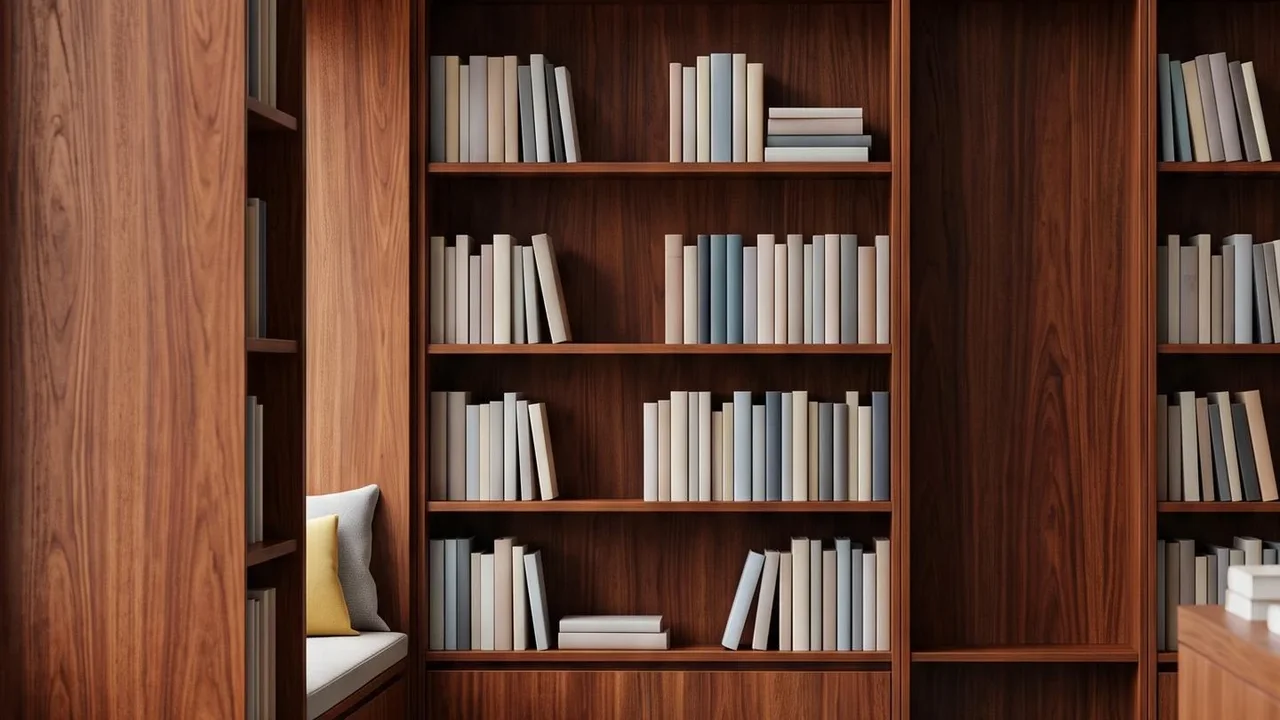
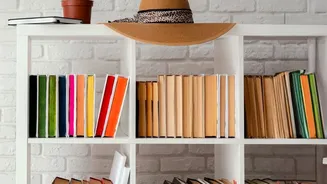
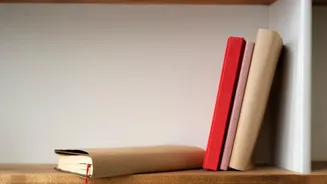
Who says all books must stand upright in neat little rows? One of the easiest ways to create visual interest is to vary how you place your books. Try stacking some horizontally and placing others vertically. Horizontal stacks create small platforms, perfect for placing a decorative object on top. This breaks up the monotony of endless spines and adds dynamic layers to your shelves. You can create a rhythm by alternating between vertical and horizontal stacks, leading the eye across the display in a more engaging way. This simple trick also helps you fit books of different sizes more cohesively.
Introduce Decorative Objects
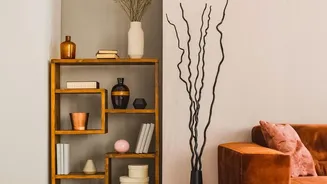
Your bookshelf is for more than just books; it’s a space to tell your story. Integrate personal items like framed photos, small sculptures, travel souvenirs, or beautiful vases. A good rule of thumb is the 60/40 principle: aim for about 60% books and 40% decorative objects. This ensures the primary function of the shelf is clear, but there’s enough personality to make it feel curated. When placing objects, think in terms of vignettes or small groupings. Layering is key: place taller items at the back and shorter ones in front to create depth.
Bring in Some Greenery
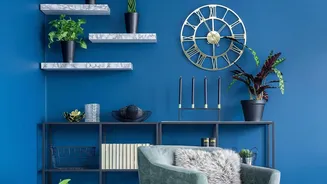
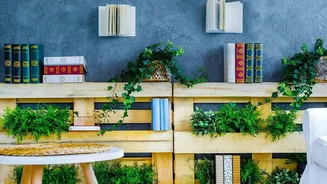
Nothing breathes life into a space quite like a plant. Adding a touch of green to your shelves provides an organic texture and a pop of natural colour. A trailing plant like a pothos can look stunning cascading down from a top shelf. Smaller succulents or air plants can be tucked into gaps or placed on a stack of books. If you're worried about maintenance or light conditions, high-quality faux plants are a fantastic, stress-free alternative. The key is to choose plants of varying sizes and shapes to complement your decor.
Create a Colour Story
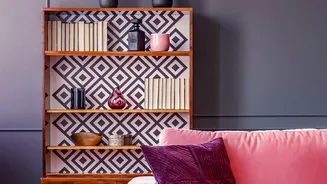
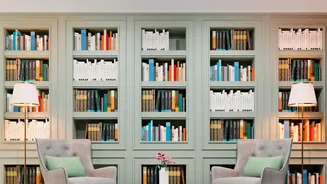
A cohesive colour palette can instantly make your bookshelf look more intentional and pulled together. This doesn't mean everything has to be the same colour. Instead, choose two or three accent colours and repeat them across the shelves through book spines, pots, frames, and objects. This creates a visual thread that ties everything together. You could group books by the colour of their spine to create a rainbow effect, or stick to a more neutral palette of whites, blacks, and metallics for a sophisticated look.
Use Baskets and Boxes
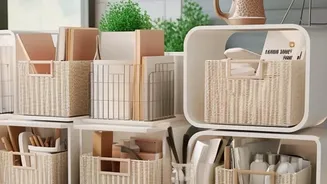
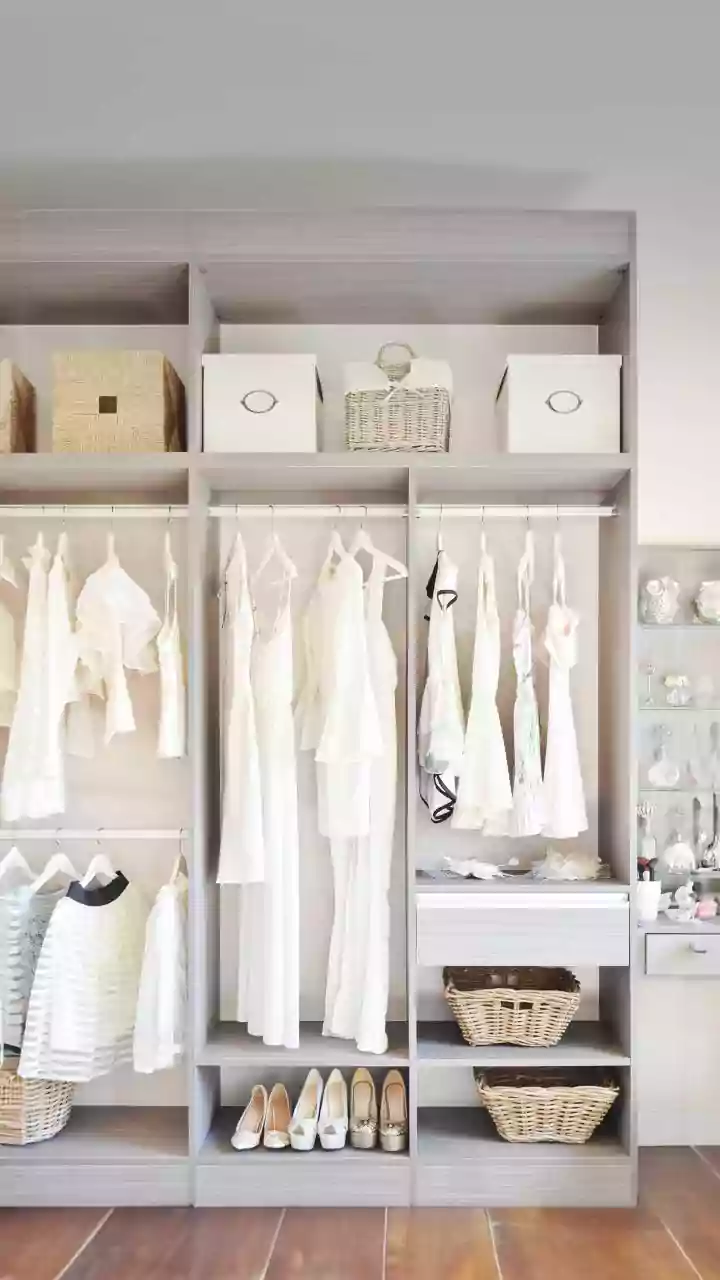
Even the most beautifully styled shelf needs to be practical. For the less aesthetic items—like cables, magazines, or kids’ small toys—use stylish baskets or decorative boxes. Placing these on the bottom shelves is a great strategy as they ground the entire unit visually and keep clutter hidden from immediate view. This keeps the overall look clean and organised while ensuring you have easy access to everyday essentials. Woven baskets add warmth and texture, while sleek boxes can contribute to a more modern feel.
Don’t Forget Negative Space
One of the biggest mistakes in bookshelf styling is over-stuffing. A successful display needs breathing room. Negative space—the empty areas around your books and objects—is just as important as the items themselves. It gives the eye a place to rest and prevents the shelf from looking chaotic. Avoid the temptation to fill every single inch. Leaving some areas intentionally bare makes the items you do choose to display feel more special and curated. Aim to leave at least a third of each shelf visually open.