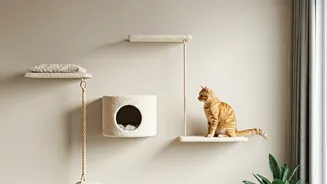



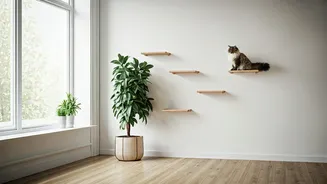
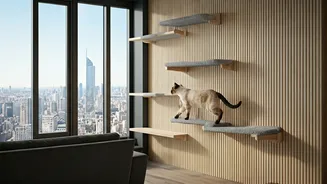
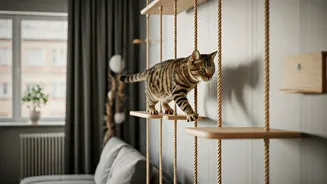


Why Cats Crave the High Ground
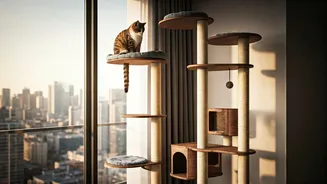
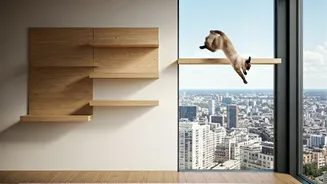
In the wild, a cat’s survival depends on its ability to survey its environment from a safe vantage point. This instinct doesn't disappear just because they live indoors with you. For a cat, height equals safety and control. From a high perch, they can
watch the household's comings and goings without being underfoot, reducing anxiety. It provides a secure escape from a boisterous dog, a curious toddler, or even another cat. In multi-cat households, vertical space is crucial for establishing hierarchy and allowing cats to share a territory peacefully. By providing shelves, you are giving them their own private real estate, expanding their world from a flat plane into a three-dimensional kingdom.
The 'Soft' Advantage for Comfort and Grip
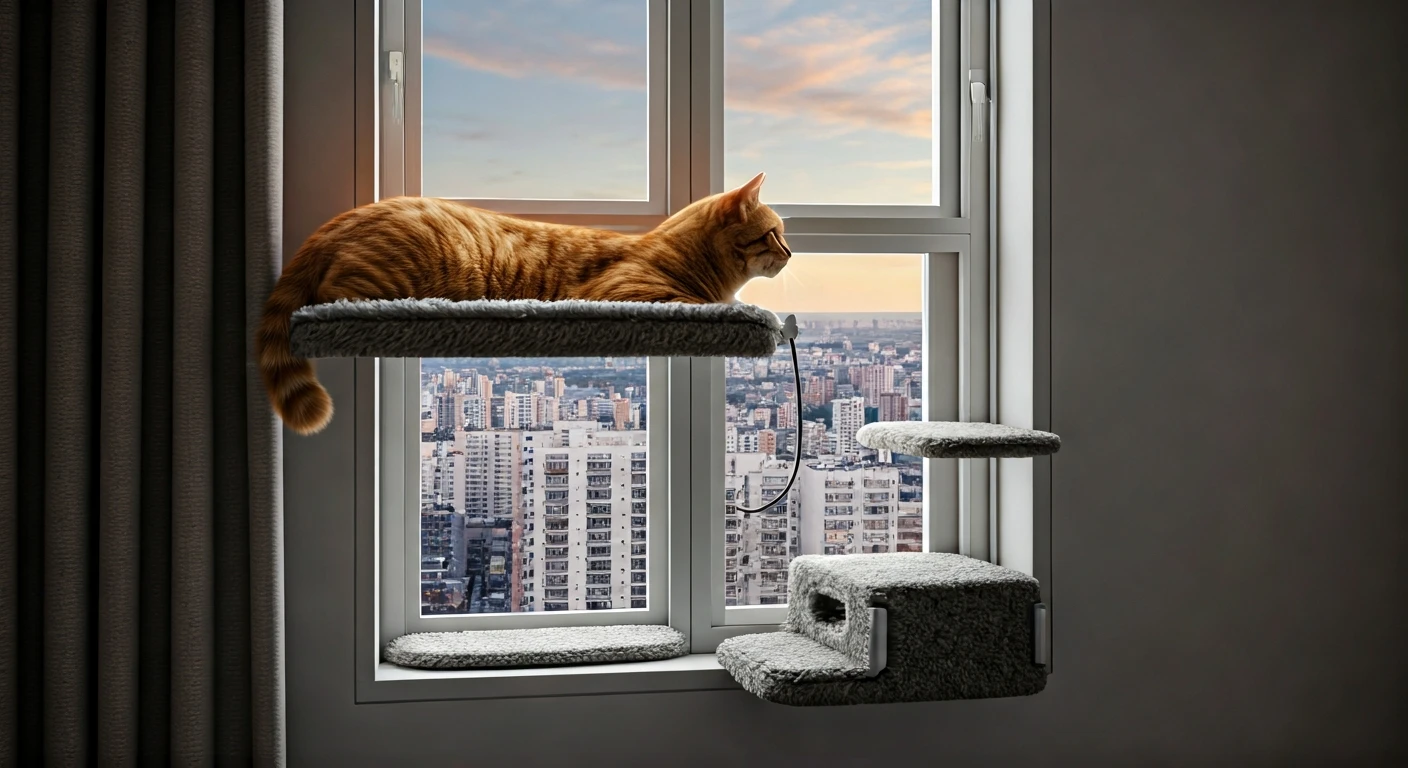
While any shelf is better than no shelf, a *soft* shelf is a game-changer. Think about it from a cat’s perspective. Hard, slippery surfaces like wood or laminate can be difficult to grip, especially during a speedy ascent or a clumsy landing. This can make a cat feel insecure and hesitant to use the space. Soft surfaces, like carpet or fleece, provide excellent traction, allowing for confident climbing and leaping. Furthermore, comfort is key. A hard shelf is a temporary viewpoint; a soft shelf is a destination. It’s a cosy, warm napping spot that invites your cat to lounge for hours, making it a functional part of their daily routine, not just a pathway.
Choosing Pet-Safe and Durable Materials
When creating your cat’s climbing paradise, material choice is everything. The goal is to find something that is both inviting for your cat and easy for you to maintain. Low-pile, tightly woven carpet remnants are a fantastic, durable option. Avoid shaggy or looped carpets, as a cat's claws can easily get snagged. Upholstery-grade fleece or faux shearling are other excellent choices, offering supreme softness. Ensure any fabric you use is securely attached to the shelf base (typically plywood) with non-toxic glue or stainless-steel staples that are hammered flat so no sharp edges are exposed. Prioritise materials that can be spot-cleaned or, for more advanced DIY designs, have removable covers that you can throw in the wash.
Planning Your Cat’s Vertical Highway
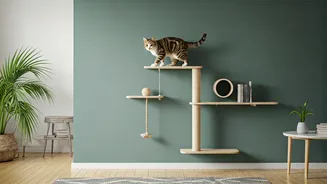
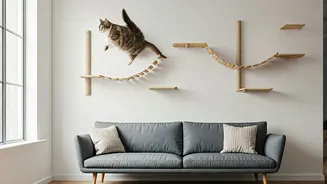
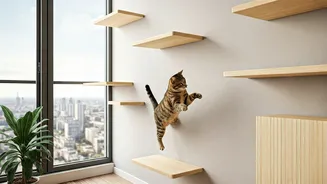
Don’t just stick a few random shelves on the wall. Think like an architect designing a transport system. The best setups are 'cat highways' that allow your pet to move from one area of a room to another without touching the floor. Start near a piece of furniture your cat already uses, like a sofa or a cat tree, to create an easy 'on-ramp.' Space the shelves no more than a foot or two apart, both vertically and horizontally, depending on your cat’s age and agility. Younger cats can handle bigger gaps, but seniors will appreciate a closer-knit path. Make sure the route has a purpose—perhaps it leads to a window with a view or a quiet, high-up bed in a corner. Avoid dead ends that could trap a cat if another pet is in pursuit.
Installation: Safety Is Everything
A wobbly shelf is more dangerous than no shelf at all. The stability of your installation is non-negotiable. Always mount shelves into wall studs for maximum strength. If a stud isn’t available in your desired location, use high-quality drywall anchors (like toggle bolts or screw-in anchors) that are rated to hold significantly more weight than your cat. This is especially important for brick and concrete walls common in many Indian homes, where you’ll need the correct wall plugs and a drill. The shelf brackets must be sturdy and rated for the load. After installing each shelf, give it a firm tug to ensure it’s completely secure before you let your cat explore. A bad experience can make a cat distrust the setup forever, so getting it right the first time is essential.