

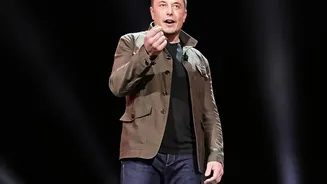
Musk's Millions and the American Model
In the United States, the rules around political donations are a tale of two systems. While direct contributions from an individual to a candidate are capped—at $3,500 per election for the 2025-26 cycle—the landscape was dramatically altered by court
decisions that paved the way for 'super PACs' (Political Action Committees). These organisations can raise and spend unlimited amounts of money from individuals, corporations, and unions to independently campaign for or against candidates. This is the arena where figures like Elon Musk operate. Reports from October 2026 show Musk has contributed over $445 million to Republican-aligned groups, making him the single largest donor of the election cycle. This money flows into advertising, canvassing, and other efforts to sway voters, all disclosed under Federal Election Commission filings. While controversial, the US system mandates a high degree of transparency; the public knows who is giving the money and which groups are receiving it.
India's Regulatory Framework
India’s approach to political funding is markedly different. The law has long sought to manage the influence of money in politics. Under the Companies Act, 2013, Indian companies can contribute to political parties. However, there are no limits on what a political party can spend during an election, even though individual candidates have strict expenditure caps. For years, a major source of debate was the rule requiring parties to disclose the identity of any person or company donating over ₹20,000. This created a system where large sums could be donated in smaller chunks to maintain anonymity. The entire system was upended by a series of reforms, most notably the introduction of Electoral Bonds in 2018.
The Electoral Bond Controversy
Electoral bonds were introduced as a way to cleanse the system by routing donations through banking channels instead of cash. Any Indian citizen or company could anonymously purchase these bonds from the State Bank of India and donate them to a political party. The party would redeem them, but the donor's identity remained secret from the public. Proponents argued this protected donors from potential retribution. However, critics contended that it created a system of institutionalised opacity, making it impossible for citizens to know which corporate interests were funding which parties. This debate culminated in a landmark decision in February 2024, when the Supreme Court of India struck down the electoral bond scheme as unconstitutional, ruling that it violated the citizen's right to information.
The Question of Foreign Funding
This brings us to the 'foreign' element. Could a foreign national like Elon Musk directly fund an Indian election? The short answer is no. The Foreign Contribution (Regulation) Act, or FCRA, explicitly prohibits political parties from accepting foreign contributions. This law is designed to prevent foreign influence over India's political discourse and national interest. However, the lines have blurred. An amendment to the FCRA now allows Indian subsidiaries of foreign companies to make political donations. This means that while a foreign company itself cannot donate, its Indian-registered entity can, provided it complies with regulations like the Companies Act. This loophole remains a significant point of contention, as it provides an indirect channel for foreign corporate interests to participate in electoral funding.
Transparency vs. Privacy: The Unresolved Debate
Elon Musk's spending in the US, while enormous, is largely public. The debate there revolves around whether unlimited spending itself is a problem. In India, following the Supreme Court's verdict on electoral bonds, the debate has recentered on the fundamental principle of transparency. The court's decision affirmed that voters have a right to know who is funding political parties, arguing that anonymity could foster quid pro quo arrangements between donors and politicians. Yet, the challenge of creating a transparent system that also protects donors from harassment and doesn't rely on untraceable cash remains. Striking this balance is the central question facing India's electoral system today.