



Peering Beneath the Lunar Dust
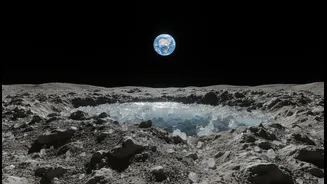
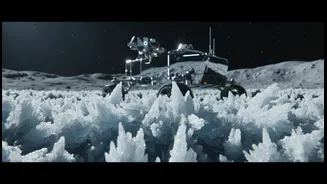
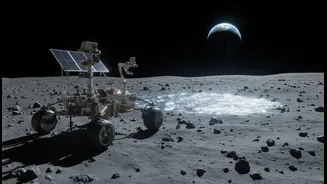
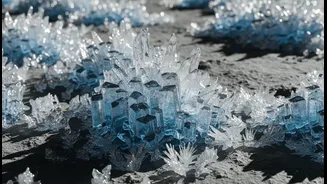
Scientists from ISRO and the Physical Research Laboratory (PRL) have announced compelling new evidence for subsurface water ice near the Moon's south pole. The data, gathered by the Chandrayaan-2 orbiter, points to ice deposits buried beneath the floors
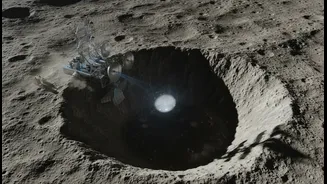
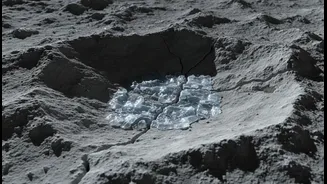
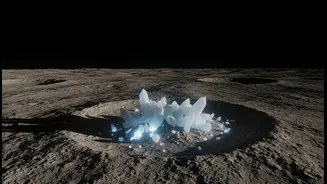
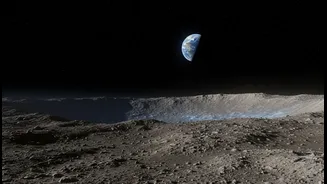
of some of the coldest places in the solar system: permanently shadowed regions. Specifically, the research focused on 'doubly shadowed craters'—craters that lie within larger, permanently dark craters, shielding them from both direct sunlight and reflected thermal radiation. Temperatures in these regions can plummet to a staggering -248 degrees Celsius, creating a perfect deep-freeze environment where ice could have been preserved for billions of years.
The Radar That Sees in the Dark
This discovery was made possible by a remarkable instrument circling the Moon since 2019: the Dual-Frequency Synthetic Aperture Radar (DFSAR) aboard the Chandrayaan-2 orbiter. Unlike a camera, which captures light, DFSAR is a microwave imaging instrument that fires radar signals at the lunar surface and analyses the echoes that bounce back. Because it uses two different frequencies (L-band and S-band), it can effectively penetrate several metres beneath the dusty lunar soil, or regolith, to map the structure below. The ISRO and PRL teams developed a sophisticated new method to distinguish the unique radar signature of ice from that of rough, rocky terrain, a major challenge in previous studies.
A Hotspot in the Faustini Crater
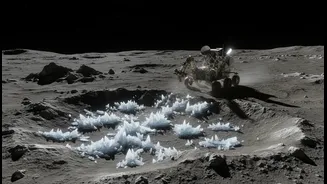
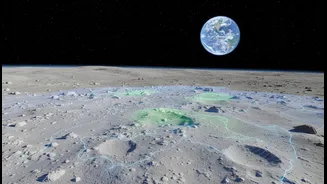
The analysis identified four craters with strong indications of subsurface ice. One location, in particular, stands out as a prime candidate. A small, 1.1-kilometre-wide crater located within the larger Faustini crater near the south pole showed exceptionally strong radar signatures consistent with buried ice. This evidence was reinforced by its unusual 'lobate-rim' morphology—a flowing, lobed appearance around the crater's edge. Scientists believe this feature could have been created when a meteorite impact slammed into an ice-rich layer, causing the material to slosh outwards before freezing in place.
The 'Gold' of the New Space Race
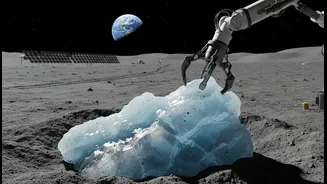
The confirmation of accessible water ice on the Moon is more than just a scientific curiosity; it's a game-changer for the future of space exploration. Water is considered the most critical resource for establishing a long-term human presence beyond Earth. It can be purified for drinking and can also be split into its component parts: oxygen for breathable air and hydrogen for rocket fuel. This concept, known as In-Situ Resource Utilization (ISRU), is the key to making lunar bases and deep-space missions sustainable, as it would drastically reduce the need to launch heavy resources from Earth.
India's Growing Lunar Leadership
These findings significantly enhance India's stature as a leading power in space. While the Chandrayaan-3 landing proved India's capability to reach the challenging south pole, the ongoing work of the Chandrayaan-2 orbiter demonstrates the nation's scientific prowess in mapping and understanding lunar resources. ISRO's data is not just a national achievement; it provides a vital roadmap for international efforts, including NASA's Artemis program and missions planned by other space agencies. By identifying potential ice-rich regions, India is helping to pinpoint the most valuable real estate for future lunar landings and the establishment of a sustained human presence on the Moon.