





The 'Wet & Dry Zone' Philosophy
The core of this packing method is to stop thinking of your luggage as one large space and instead treat it as two distinct environments: a protected 'dry zone' and a functional 'wet zone'. The goal is containment. Anything that is wet, has been wet, or could
get wet is kept strictly separate from everything that must remain perfectly dry. This isn't just about using a waterproof bag; it's a system for managing moisture throughout your trip, from a sudden downpour during a city walk to packing up a still-damp raincoat on your travel day.
The Dry Zone: Your Sacred Space
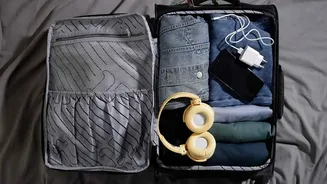
This is the heart of your bag, a sanctuary for items that cannot tolerate moisture. Think of it as the inner sanctum. This zone is for your most valuable and vulnerable items. Prime candidates for the dry zone include all electronics (laptops, phones, power banks, chargers), important documents like your passport and IDs, any medication, and your set of clean, dry clothes intended for evenings or the next day. To create this zone, use waterproof pouches for each electronic item. Your laptop should be in a waterproof sleeve before it even goes into the padded compartment of your bag for double-layered protection. Grouping these items inside a larger dry bag within your main luggage provides the ultimate defence against rain and pervasive humidity.
The Wet Zone: Managing the Inevitable
The wet zone is your tactical area for dealing with the realities of monsoon travel. This space is designated for items that are currently damp or might become so. This includes your compact umbrella, a used raincoat or poncho, shoes that got caught in a puddle, and a quick-dry microfibre towel. The key is isolation. A dedicated wet/dry pouch, a simple heavy-duty zip-lock bag, or a roll-top dry bag is essential for this zone. When you come in from the rain, your dripping umbrella goes directly into its designated bag, not loosely into your main compartment where it can dampen everything else. This zone also serves as a laundry bag for damp clothes, preventing them from making your fresh clothes smell musty.
Choosing the Right Gear
Your system is only as good as the tools you use. You don't necessarily need a fully waterproof suitcase, though a hard-shell case offers better protection than fabric. The real magic lies in compartmentalisation. Invest in a set of dry bags or waterproof stuff sacks. Unlike regular packing cubes, these are made from materials like PVC or coated nylon with roll-top closures that create a watertight seal. Simple zip-lock bags are a budget-friendly option for smaller items, while dedicated waterproof pouches are better for phones and documents. A backpack with a built-in rain cover is also a wise choice, but remember that the cover only protects the exterior; moisture can still get in when you open it.
Smart Fabric and Footwear Choices
Your clothing choices are a crucial part of your wet-and-dry strategy. Avoid cotton and denim at all costs. These fabrics absorb moisture and can take days to dry in high humidity, leading to mildew. Instead, pack quick-drying synthetic fabrics like polyester and nylon. These are lightweight and can often be washed in a hotel sink and be dry by morning. For footwear, bring one pair of waterproof sandals or shoes with good grip for walking in the rain, and keep a separate, completely dry pair of shoes packed away in your dry zone for evenings or travel days. This ensures you always have something comfortable and dry to change into.
The Finishing Touches
A few small additions can significantly boost your system's effectiveness. Distribute silica gel packets throughout your luggage, especially in the dry zone, to absorb ambient moisture caused by humidity. A travel clothesline can be invaluable for drying clothes inside your hotel room when it's raining outside. Also, pack an antifungal powder and insect repellent, as the damp conditions are ideal for both fungal infections and mosquitoes. Finally, always keep your rain cover or a poncho easily accessible, not buried at the bottom of your bag.