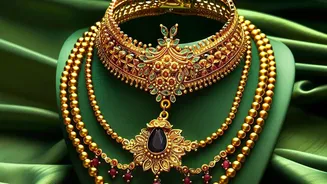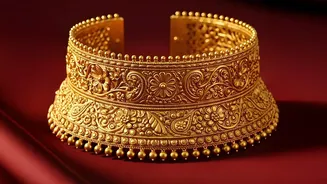





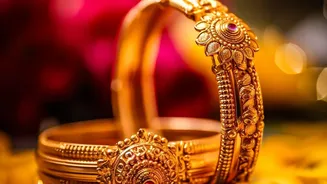


In an era of digital transactions and a booming stock market, one ancient asset continues to dominate the Indian household's financial strategy: gold. But why does this glittering metal, often in the form of jewellery, remain the ultimate backup plan?
A Cultural & Emotional Cornerstone
In India, gold is rarely just a financial asset; it is a cultural and emotional cornerstone. For generations, it has been interwoven with life's most significant moments. At weddings, brides are adorned with gold as a symbol of prosperity and security for their new life. Festivals like Dhanteras and Akshaya Tritiya see families purchase gold to welcome good fortune and the blessings of Goddess Lakshmi. This jewellery is then passed down through generations, becoming a treasured family heirloom that carries sentimental value far beyond its market price. This deep-rooted tradition ensures gold is seen not as a mere commodity, but as a symbol of family legacy, social status, and divine blessing.
The Comfort of a Tangible Asset
In a world of complex financial instruments, the physical nature of gold offers a powerful sense of security. Unlike stocks or mutual funds, which exist as digital entries on a screen, gold jewellery can be held, seen, and stored. This tangibility creates a psychological comfort that abstract financial products cannot replicate. For many, especially in rural and semi-urban areas, there is a lingering distrust of market-linked instruments that can feel distant and unpredictable. Holding a physical asset gives a feeling of direct control over one's wealth, free from intermediaries and market fluctuations that can seem opaque and daunting.
Unmatched Liquidity in Times of Need
One of gold's most practical advantages is its incredible liquidity. When a family faces a sudden financial emergency, selling a few shares of stock can be a time-consuming process involving brokers and settlement periods. Pledging gold for a loan, however, is a quick and straightforward affair. Gold loans are widely available from banks and non-banking financial companies (NBFCs) and often require minimal documentation. Crucially, they don't depend on credit scores, making them accessible to a vast portion of the population that may be underserved by the formal credit system. The ability to unlock cash within hours, without permanently selling a cherished asset, makes gold an unparalleled emergency fund.
A Shield Against Volatility and Inflation
The word 'volatile' in the headline is key. The Indian stock market, while capable of generating high returns, is also known for its sharp swings. For households that prioritise capital preservation over aggressive growth, this volatility can be unsettling. Gold, in contrast, is widely perceived as a stable store of value and a reliable hedge against inflation. Over the long term, gold has historically helped preserve purchasing power, especially when the value of currency declines. While academic studies show mixed results on gold being a perfect shortterm inflation hedge, its reputation as a safehaven asset during economic uncertainty makes it a preferred choice for riskaverse investors.
The Numbers Tell the Story
Recent data confirms this preference. Despite a surge in retail participation in equity markets through SIPs, gold's share in Indian household assets has grown significantly. According to a September 2026 report, the share of gold in household assets jumped to 24.2% in March 2026 from 15.4% three years prior. In contrast, the share of equities moved only marginally from 5.6% to 5.7% in the same period. This indicates that while new money is flowing into stocks, the foundational wealth of Indian families remains firmly anchored in gold. In total, Indian households are estimated to hold over 25,000 tonnes of gold, a testament to its enduring role as the nation's primary financial security blanket.