



The Science Behind the Magic
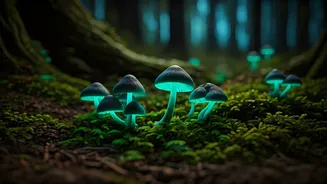
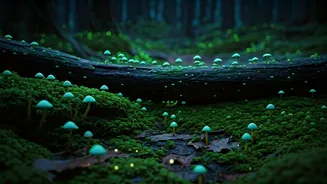
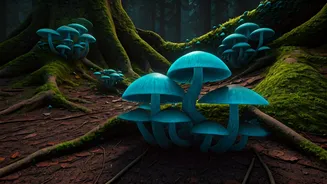
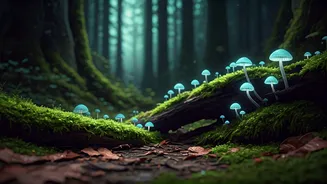
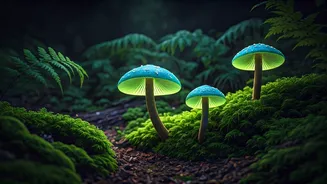
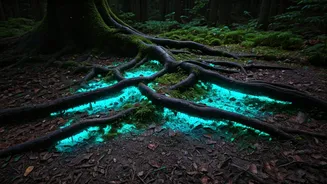
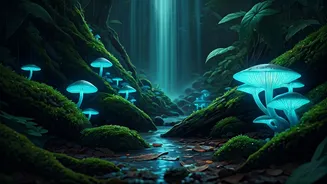
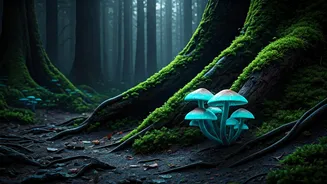
This otherworldly glow is a natural process called bioluminescence, the same phenomenon that makes fireflies light up. In fungi, it’s a chemical reaction involving a compound called luciferin and an enzyme, luciferase. When these two interact with oxygen,
they produce energy in the form of a cool, green-blue light. Scientists believe this glow might serve several purposes. It could attract nocturnal insects that help in spore dispersal, allowing the mushrooms to reproduce and spread. Alternatively, the light could act as a warning, deterring animals from eating them. Whatever the reason, the effect is nothing short of enchanting, turning a damp forest into a scene from a fairytale.
India's Glowing Stars
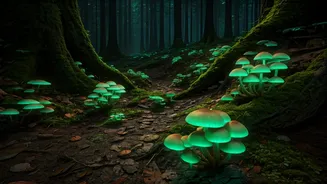
India is home to several species of these glowing fungi, many of which have only been recently documented by scientists. The most well-known belong to the genus *Mycena*. These tiny, delicate mushrooms are often found growing on decaying logs, twigs, and leaf litter. In 2020, researchers also formally identified a new species in Meghalaya, *Roridomyces phyllostachydis*, which grows on bamboo stalks. Locals have known about these glowing forests for generations, often incorporating them into folklore. For scientists and nature lovers, they represent a fascinating and still largely unexplored part of India's incredible biodiversity.
Destination 1: The Forests of Meghalaya
Meghalaya, aptly named 'the abode of clouds', is one of the premier destinations to witness this phenomenon. The state’s wet, humid climate provides the perfect breeding ground for bioluminescent fungi. The East Khasi Hills and West Jaintia Hills districts are particularly known for these glowing forests. During the monsoon, local guides can lead you on night treks to spots where the forest floor and bamboo groves emit a steady, ghostly light. The experience is often described as surreal, with the darkness punctuated by thousands of tiny, living lanterns. The species *Roridomyces phyllostachydis* is particularly bright and can be seen lighting up bamboo forests.
Destination 2: The Western Ghats
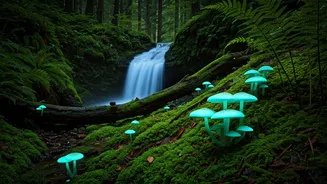
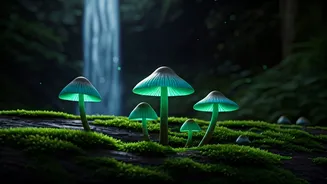
The Western Ghats, a UNESCO World Heritage Site, also offer spectacular displays during the monsoon season. In Maharashtra, the Bhimashankar Wildlife Sanctuary becomes a hotspot for glowing fungi, primarily of the *Mycena* variety. Trekkers exploring the trails at night are often surprised by clusters of glowing mushrooms on tree bark and rotting wood. Further south, in Goa, the forests of the Mhadei Wildlife Sanctuary come alive with bioluminescence. The damp, mossy environment near streams and waterfalls—the 'cascades' of the headline—are prime locations to spot this magical glow.
Planning Your Glowing Adventure
Timing is everything. The best time to see bioluminescent mushrooms is during the peak monsoon months, from June to early October, when humidity is at its highest. The glow is most visible on moonless nights, away from any artificial light pollution. When you go, be prepared. Wear sturdy, waterproof footwear and long trousers to protect against insects and leeches. Carry a torch, but use it sparingly to allow your eyes to adjust to the dark. A red filter on your torch is ideal as it disturbs nocturnal wildlife less. Most importantly, hire a local guide. They know the exact locations and can ensure your safety on slippery, dark trails. Remember to be a responsible tourist: look, but don’t touch. These fungi are delicate, and picking them can harm the local ecosystem.