




The Promise of a Smaller Bag
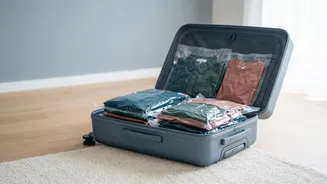
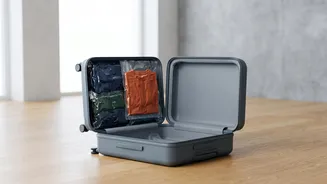
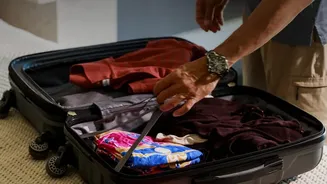
Vacuum packing for travel involves placing soft items, like clothing, into a specially designed plastic bag and removing the air. This is typically done in one of two ways: with a small, often battery-powered pump, or by manually rolling the bag to force
air out through a one-way valve. The result is dramatic. A bulky pile of sweaters, jackets, and towels can be compressed into a dense, flat rectangle that takes up significantly less volume in your luggage. For travelers trying to fit a week's worth of clothing into a small carry-on, this space-saving promise is incredibly appealing. By shrinking down your most voluminous items, you free up precious real estate for other essentials.
The Critical Weight vs. Volume Reality
Here is the most important fact to understand: vacuum bags reduce volume, not weight. Your clothes will take up less space, but they will weigh exactly the same. The 7kg limit set by many airlines is a measure of mass, not size. Therefore, vacuum packing is not a magic wand that makes your heavy luggage lighter. Instead, it's a strategic tool. The risk is that the extra space might tempt you to pack more items, pushing your bag over the weight limit. A compressed bag of clothes is much denser, which can be deceptive. The real trick is to use the space you’ve saved not to add more clothes, but to make packing more organised and less of a struggle. It allows you to fit your carefully chosen, lightweight items without having to sit on your suitcase to zip it shut.
Best Practices for Smart Compression
To make vacuum bags work for you, follow a few simple rules. First, target the right items. They work best on bulky, soft textiles like puffer jackets, fleece sweaters, and knitwear. Don’t bother with items like jeans or structured shirts, which don’t have much air to remove and will wrinkle badly. Fold items neatly before placing them in the bag to minimise creasing. Don't overfill the bags; leave some space near the seal to ensure it closes properly and remains airtight. When packing your suitcase, place the dense, compressed bags in the middle of your case, close to your back, to create a stable and balanced load that is more comfortable to carry. Finally, always weigh your bag after packing to ensure you are under that 7kg limit.
The Potential Downsides to Consider
While effective, vacuum packing isn’t without its drawbacks. The number one complaint is wrinkles. Compressing clothes under pressure will inevitably lead to deep-set creases, so this method isn't ideal for formal wear or delicate fabrics. Another major consideration is repacking for the journey home. If you used a vacuum cleaner at home, you won't have one in your hotel room. This is why travel-specific bags that use a small hand pump or a roll-up mechanism are essential. Cheaper bags can also be prone to leaking air, slowly re-inflating inside your luggage during transit. Lastly, airport security might ask you to open a compressed bag for inspection, so being able to reseal it on the go is crucial.
So, Is It the Ultimate Trick?
Vacuum packing is a powerful technique, but it's only one part of a larger strategy. It excels at creating space, which is half the battle when dealing with compact cabin bags. For trips involving bulky winter clothing, it can be a true game-changer. However, it’s not a substitute for packing light. The ultimate trick for 7kg travel is a combination of methods: choosing lightweight, versatile clothing, wearing your heaviest items on the plane, minimising toiletries, and then, using vacuum bags strategically to make everything fit neatly. It solves the volume problem, leaving you to focus on the weight problem. By understanding its true purpose—to manage space, not weight—you can use it to become a smarter, more efficient traveler.