







The Splashdown Scrutiny
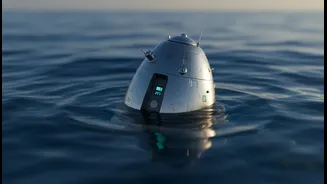
When the Artemis II astronauts return to Earth, their mission is far from over. Their Orion capsule, after a fiery re-entry at speeds of up to 40,000 km/h, will splash down in the Pacific Ocean. Awaiting them is a highly trained US Navy and NASA team
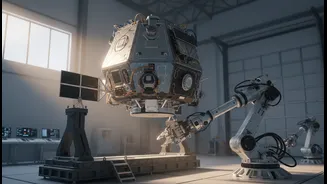
tasked with recovery. But this isn't just about picking up astronauts; it's about retrieving a priceless trove of information. Once hoisted onto a naval ship, the spacecraft begins a new journey of intense scrutiny. Technicians will meticulously inspect every inch, especially the heat shield that protected it from the immense heat of re-entry. This post-flight analysis is not just a routine check; it's a forensic investigation to ensure the vehicle is safe for future, more complex missions. Every piece of data informs the next step in humanity's return to the Moon and beyond.
A Treasure Trove of Data
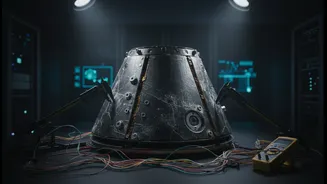
The Orion spacecraft is more than just a transport vehicle; it is a flying laboratory packed with thousands of sensors. These sensors record everything from structural stresses and temperature fluctuations to the performance of life support systems and the radiation environment inside the cabin. After the mission, engineers will spend months, if not years, poring over this data. This information is critical for validating their computer models and engineering designs. It helps them understand how materials behave in the harsh environment of space and during the violent process of atmospheric re-entry. For Artemis, this data is gold. It confirms what worked, reveals what can be improved, and builds the confidence needed to send astronauts on longer journeys, first to the lunar surface and eventually to Mars.
The Gaganyaan Parallel
This focus on post-flight recovery and data analysis holds a mirror to India's own ambitions with the Gaganyaan mission. ISRO is preparing to send Indian astronauts into Low Earth Orbit and, most importantly, bring them back safely. The final phase—re-entry, splashdown, and recovery—is universally considered the most complex and critical part of any human spaceflight mission. Like NASA, ISRO has been conducting extensive trials to perfect this process. A key partner in this endeavour is the Indian Navy, which has been working closely with ISRO to establish detailed procedures for locating and retrieving the crew module from the Bay of Bengal. These exercises use mock-ups that simulate the size, weight, and shape of the actual crew capsule, ensuring the recovery teams are prepared for every eventuality.
ISRO's Recovery Playbook
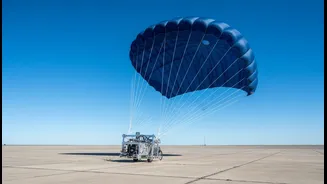
India isn't starting from scratch. ISRO has built a solid foundation of experience in spacecraft re-entry and recovery technology. The Space Capsule Recovery Experiments (SRE) were crucial learning steps that helped ISRO master the intricacies of thermal protection systems and guidance. This homegrown expertise is the bedrock upon which the Gaganyaan recovery plan is built. The procedures being fine-tuned with the Indian Navy include everything from attaching buoys and towing the capsule to safely lifting it onto a ship. Just like with Orion, the Gaganyaan crew module will be a data-rich prize. Its post-flight analysis will be essential for validating ISRO's designs and paving the way for a sustainable human spaceflight programme.
A Shared Future in the Stars
While Gaganyaan and Artemis are separate programmes, they are part of a shared global push into space. India's decision to sign the Artemis Accords signals a shift towards greater international collaboration in space exploration. The success and data from missions like Artemis II provide invaluable benchmarks and learning opportunities for all spacefaring nations. As ISRO prepares for Gaganyaan, the challenges faced and solutions found by NASA in recovering and analysing the Orion capsule offer a relevant and timely case study. It reinforces the universal principles of human spaceflight: test, fly, analyse, and improve. The a-ISRO Strategic Framework for Human Space Flight Cooperation, signed in 2025, further cements this partnership, promising deeper collaboration in the future.