





What Exactly Happened?
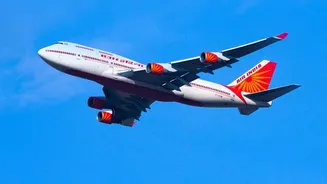
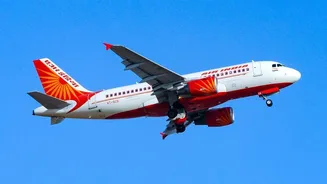
On October 14, Air India flight AI2030, a Boeing 787-9 carrying 293 passengers and 13 crew members, was en route from Frankfurt to Delhi. While in Indian airspace and being monitored by Mumbai Air Traffic Control (ATC), the aircraft's transponder began
'squawking' the code 7500. This specific code is the internationally recognized signal for an unlawful interference, or hijacking. Following strict security protocols, and despite the pilots reportedly telling ATC that everything was normal, the flight was immediately diverted to Jaipur International Airport. It landed safely and was moved to a remote isolation bay, where a multi-agency security operation commenced, involving checks of the aircraft, passengers, and all baggage. After several hours, the flight was cleared and resumed its journey to Delhi.
The 'Hijack Code' Explained
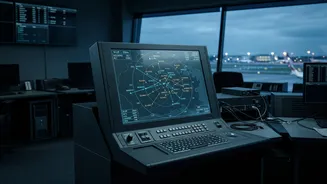
So, what makes the code 7500 so serious? Every aircraft is equipped with a device called a transponder, which communicates with ground-based radar. Air traffic controllers assign a unique four-digit code to each flight for tracking. However, a few codes are reserved for emergencies. Code 7700 signals a general emergency, 7600 indicates a radio failure, and 7500 is exclusively for hijacking. When a pilot enters 7500, it instantly changes the flight's appearance on the controller's screen, often turning it red and triggering an alarm. This allows the crew to signal extreme distress silently, without making a verbal radio call that could alert perpetrators in the cockpit. Because of its gravity, any 7500 signal is treated as a real threat until proven otherwise, setting off a major security response on the ground.
The Focus of the Investigation
The Directorate General of Civil Aviation (DGCA) is now leading a thorough investigation to determine the root cause of the false alarm. The inquiry is focused on two main possibilities: human error or a technical malfunction. The pilots have reportedly denied entering the hijack code, and some senior pilots argue that accidentally keying in the four-digit sequence is extremely unlikely due to the manual process involved. This has shifted significant attention towards the technical systems. Investigators are closely examining the aircraft's transponder and flight data recorders. A key line of inquiry is also scrutinizing a newly installed radar system at the Mumbai ATC, questioning whether a software glitch on the ground could have incorrectly generated or displayed the hijack alert.
Why Finding the Cause Is Critical
While the passengers and crew of flight AI2030 are safe, the incident caused significant disruption, involving hours of delay and a massive deployment of security resources, including the Central Industrial Security Force (CISF) and anti-terror squads. False alarms, particularly for something as serious as a hijacking, can erode confidence and lead to 'cry wolf' scenarios. Aviation authorities must ensure that emergency alerts are reliable. Pinpointing the cause is essential for preventing a recurrence, whether it requires revising pilot training protocols, issuing a software patch for ATC systems, or inspecting aircraft equipment. Civil Aviation Minister K. Rammohan Naidu has stated that the government will wait for the DGCA's final report before deciding if any changes to security procedures are needed.